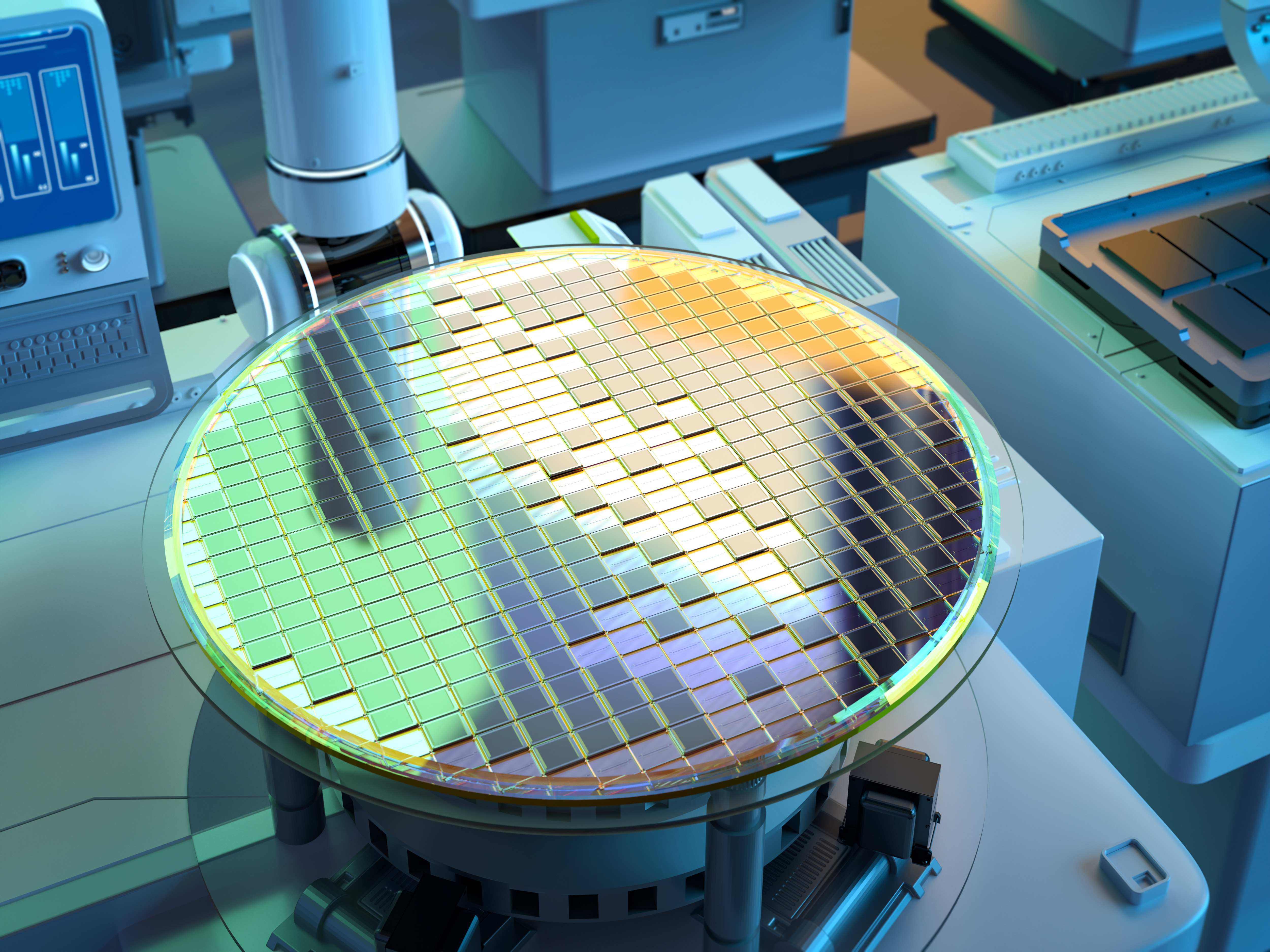
The current obsession with artificial intelligence necessitates a corresponding investment in the physical infrastructure that supports it. These ‘data centers’, as they are called, are not ethereal cloud formations, but concrete and energy-intensive facilities. Projections indicate a surge in spending – a 32% increase, amounting to some $650 billion – is anticipated this year. Such figures demand scrutiny, not celebration. It is not the technology itself that is remarkable, but the predictable economic consequences of its pursuit.
The question for any investor is not merely where to place capital, but how to avoid being swept along by the prevailing mania. The temptation to chase the latest novelty is strong, but prudence suggests a focus on the foundational elements. In this instance, that means semiconductors. Regardless of the sophistication of the software – be it a complex algorithm or a simple browsing program – it is ultimately reliant on these unassuming chips.
These are not objects of glamour, but of quiet utility. They combine the properties of conductors and resistors, enabling the miniaturization and increasing power of computation over the past half-century. To consider that the smartphone in one’s pocket possesses a computational capacity exceeding that of the Apollo 11 guidance computer is not a testament to human ingenuity, but a reflection of the relentless drive for efficiency – and, inevitably, for control.
Within the semiconductor industry, one name consistently dominates: Taiwan Semiconductor Manufacturing (TSM). This is not a matter of superior innovation, but of sheer scale and strategic positioning.
The Modern Equivalent of Picks and Shovels
The analogy to the ‘picks and shovels’ of a gold rush is often invoked, and while somewhat crude, it contains a kernel of truth. Taiwan Semiconductor is, in effect, the provider of essential tools for the current ‘silicon rush’. ASML Holding, with its lithography machines, plays a similar role, but the foundry market – the actual manufacturing of chips – is where the true leverage lies. Taiwan Semiconductor doesn’t design the chips; it makes them – for nearly every major player in the AI hardware industry.
Apple and Nvidia are its largest customers, the latter utilizing Taiwan Semiconductor’s Arizona facility for its Blackwell chips. Advanced Micro Devices, Broadcom, Qualcomm, and even Intel contract with the company. This concentration of power is not necessarily a sign of a healthy market, but it is the reality. As of the third quarter, Taiwan Semiconductor controls 72% of the foundry market, dwarfing its nearest competitor, Samsung, which holds a mere 7%.
The company is further expanding its manufacturing footprint, aided by a recent trade agreement between the U.S. and Taiwan, involving an investment of $250 billion in American factories. Taiwan Semiconductor is committing $100 billion to this expansion. Such large-scale investment, driven by geopolitical considerations as much as economic ones, should be viewed with a degree of skepticism.
Profit Margins and the Illusion of Growth
In the fourth quarter, Taiwan Semiconductor reported net revenue of $33.75 billion, a 25.5% increase year-over-year. Earnings per share climbed 35%, and profits grew across the board. These figures are presented as evidence of success, but they should be interpreted with caution. Growth, in and of itself, is not necessarily virtuous.
The company’s gross margin increased by 3.3 points to 62.3%, operating margin by 5 points to 54%, and net profit margin by 5.2 points to 48.3%. These improvements are driven largely by the advanced chips – those 7 nanometers or smaller – which are essential for AI applications. The high-power computing segment, including AI chips, is the fastest-growing revenue source, accounting for 58% of revenue in 2025 and growing 48% year over year. While diversification exists – the smartphone market accounts for 29% of revenue – the reliance on this single sector introduces a significant vulnerability.
Taiwan Semiconductor’s cash and cash equivalents totaled $97 billion at the end of Q4 2025, compared to total liabilities of $78.2 billion, of which $28.3 billion is long-term interest-bearing debt. Free cash flow grew 42.7% year-over-year. These figures are undoubtedly impressive, but they mask a fundamental truth: the pursuit of technological advancement is becoming increasingly concentrated, and the potential for disruption – or even collapse – is ever-present.
In conclusion, the semiconductor industry is currently experiencing a period of robust growth, fueled by the demand for data centers and AI hardware. Taiwan Semiconductor Manufacturing, with its dominant market position and expanding manufacturing capacity, appears well-positioned to benefit from this trend. However, investors should approach this opportunity with a clear understanding of the underlying risks and a healthy dose of skepticism. The pursuit of profit, after all, is rarely aligned with the common good.
Read More
- Games That Faced Bans in Countries Over Political Themes
- Gold Rate Forecast
- Silver Rate Forecast
- Unveiling the Schwab U.S. Dividend Equity ETF: A Portent of Financial Growth
- 22 Films Where the White Protagonist Is Canonically the Sidekick to a Black Lead
- The Best Directors of 2025
- 15 Films That Were Shot Entirely on Phones
- Superman Flops Financially: $350M Budget, Still No Profit (Scoop Confirmed)
- 20 Movies Where the Black Villain Was Secretly the Most Popular Character
- Brent Oil Forecast
2026-02-28 04:22