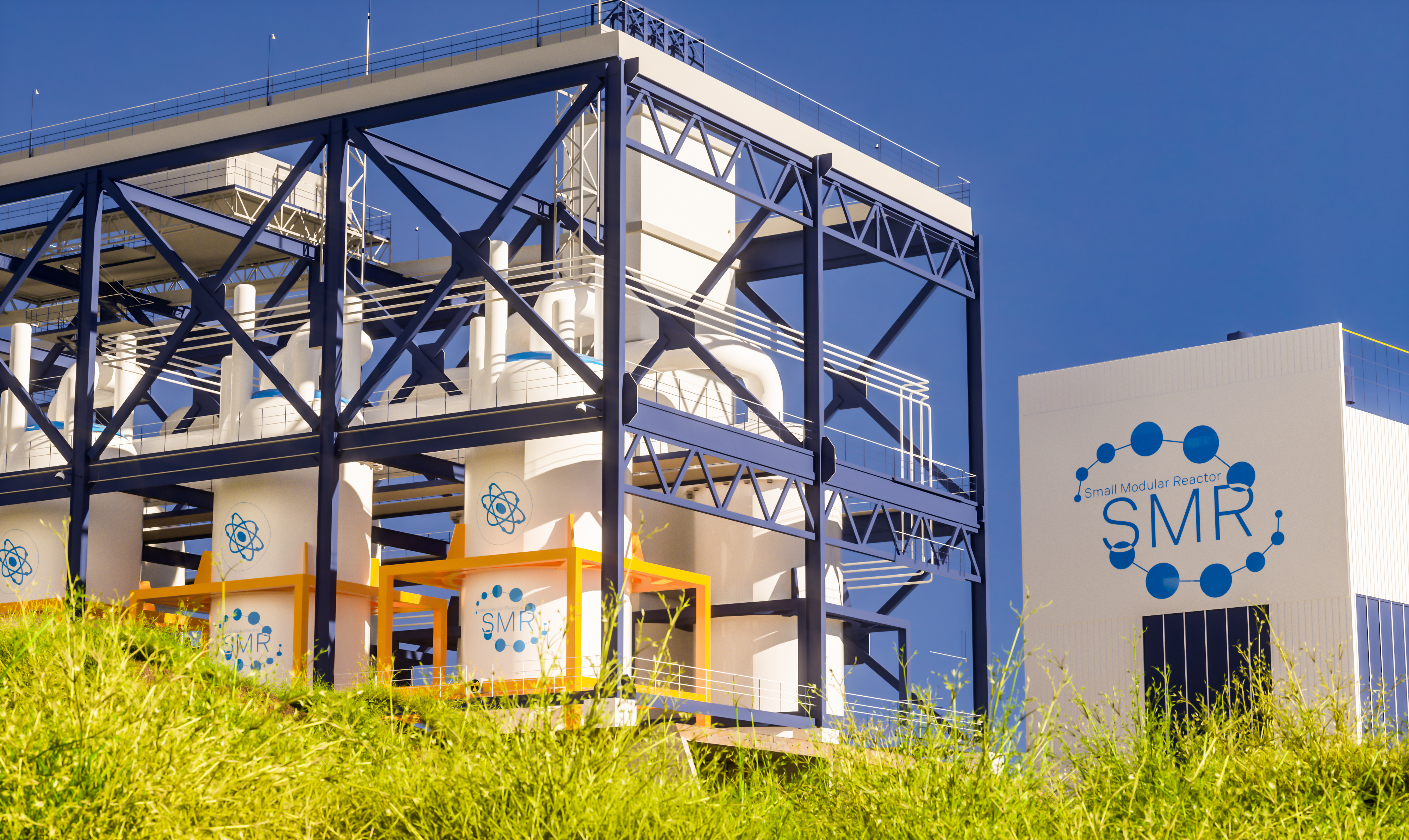
So, the world is hurtling towards an insatiable appetite for power, largely thanks to these artificial intelligence things. Apparently, they require a truly astonishing amount of electricity – enough to make a power station blush. It’s a bit like discovering your pet hamster is secretly a black hole; unexpected, and potentially problematic. This has, understandably, got people thinking about alternative energy sources, and one particularly intriguing idea is the small modular reactor – or SMR, as the acronym-inclined like to call it.
These aren’t the hulking, Chernobyl-esque behemoths of yesteryear. Think of them as, well, pint-sized power plants. They can be largely constructed in a factory – which is a rather clever idea, really, because trying to build a nuclear reactor on site is a bit like assembling a complicated clock while standing on a wobbly ladder. Several companies are having a go, and two in particular, Oklo and BWX Technologies, have garnered quite a bit of attention. Both are attempting to solve a very pressing problem, but with markedly different approaches and, crucially, different levels of financial stability.
Liquid Metal & Lofty Ambitions
Oklo, you see, isn’t just building a small reactor; they’re building a different small reactor. Their Aurora design uses liquid sodium as a coolant instead of the more conventional water. Now, sodium is a perfectly good element – in fact, it’s essential for life, in very small doses – but it’s also rather reactive. It doesn’t appreciate being exposed to air or water, which presents a few engineering challenges, to put it mildly. But the potential benefits – greater fuel efficiency, lower operating pressures, and better heat management – are compelling. They’re also venturing into nuclear fuel recycling, aiming to reuse about 95% of what’s currently considered “spent” fuel. It’s a laudable goal, and if they pull it off, it would be a genuine step forward. They’ve even invested a substantial $1.68 billion into a facility in Oak Ridge, Tennessee.
However, and it’s a rather significant ‘however’, Oklo isn’t currently generating any revenue. They’re losing money at a rate that would make even a seasoned gambler raise an eyebrow. A $36.3 million loss in a single quarter isn’t just a dip; it’s a rather dramatic plunge. I admire their ambition, truly, but as a macro strategist, I’m rather fond of companies that, you know, actually make money. It’s a peculiar habit, I admit.
The Elder Statesman of Miniaturization
BWX Technologies, on the other hand, has been tinkering with small reactors for a rather long time. They started back in the 1950s, building nuclear reactors for the USS Nautilus, the world’s first nuclear-powered submarine. They’ve produced over 400 ship-mounted reactors since then, which is a rather impressive feat. It’s like the difference between building a model airplane and actually flying a Boeing 747. They’re now applying that experience to their BWXT Advanced Nuclear Reactor (BANR), a 50-megawatt gas-cooled reactor that can be partially built in a factory.
They’re also working on Project Pele, an even smaller reactor that can generate 1.5 megawatts of power and be transported on a standard truck. Imagine that – a nuclear power plant on wheels! It sounds like something out of a science fiction novel, but it’s very much a reality. And, crucially, unlike Oklo, BWX Technologies is actually generating revenue and turning a profit. In 2024, their revenue grew by 18%, and their adjusted earnings per share were up 20%. They’re running a healthy 15% net income margin and grew operating cash flow by 17%. These are numbers that make a macro strategist smile.
Both Oklo and BWX are still in the prototype phase, and neither is currently generating revenue from their SMRs. But BWX isn’t solely reliant on this technology, which makes it a far more stable and, in my view, sensible investment. It’s a bit like choosing between a high-wire act and a solid, well-built bridge. Both might get you to the other side, but one is considerably less likely to result in a dramatic fall.
Read More
- Gold Rate Forecast
- Silver Rate Forecast
- Games That Faced Bans in Countries Over Political Themes
- 15 Films That Were Shot Entirely on Phones
- Unveiling the Schwab U.S. Dividend Equity ETF: A Portent of Financial Growth
- 20 Movies Where the Black Villain Was Secretly the Most Popular Character
- Brent Oil Forecast
- New HELLRAISER Video Game Brings Back Clive Barker and Original Pinhead, Doug Bradley
- Superman Flops Financially: $350M Budget, Still No Profit (Scoop Confirmed)
- 14 Movies Where the Black Character Refuses to Save the White Protagonist
2026-02-27 15:14