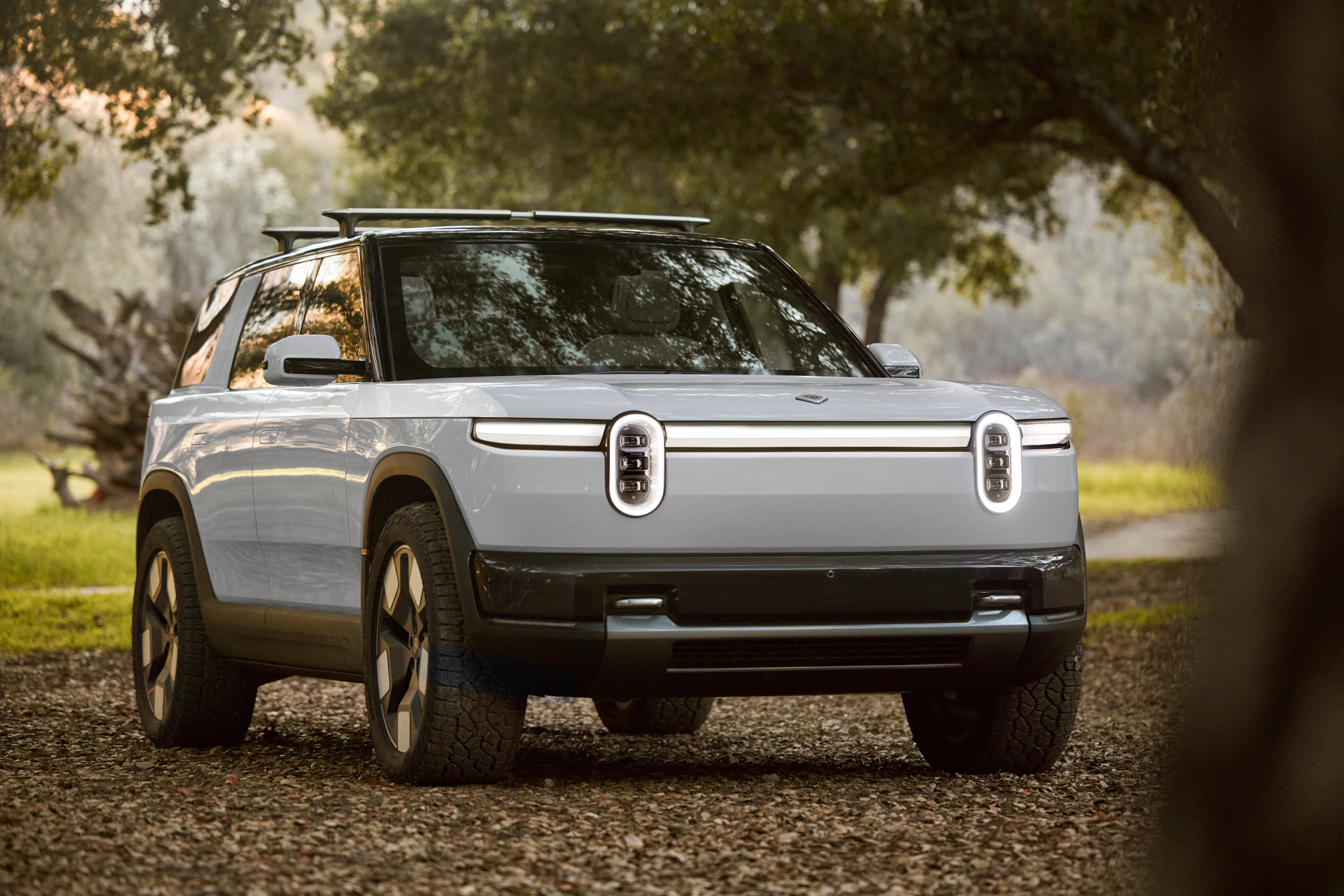
The automotive world, as anyone who’s ever tried to parallel park will attest, is a relentlessly complicated business. It’s a swirling vortex of engineering, economics, and, increasingly, electrons. You’ve got these massive global trends – the push for electric vehicles, the fiddly business of tariffs, and governmental policies that change more frequently than the weather – all colliding at once. Trying to predict what will happen next feels a bit like attempting to forecast the migratory patterns of particularly stubborn geese.
Into this delightful chaos steps Rivian Automotive (RIVN 5.68%), a company attempting the particularly tricky feat of launching a new car, and not just any car, but an electric one. Their R2, the company’s first real stab at a mass-market vehicle, is carrying a rather substantial weight of expectation. It needs to succeed, and that, as anyone who’s ever launched anything will tell you, is easier said than done.
Let’s have a look, then, at this R2 and its rather surprising $60,000 price tag. It’s a bit higher than some initially anticipated, but before we all reach for the smelling salts, let’s unpack what’s going on. It’s rarely as straightforward as it appears.
Why the Sixty Grand?
Some investors, understandably, are scratching their heads. Wasn’t the R2 supposed to be, you know, affordable? The $45,000 figure was bandied about quite a bit. And you’re right to wonder. But here’s the thing about car launches. It’s not a simple matter of building them and shipping them. It’s a carefully choreographed dance of trims, features, and, crucially, profit margins.
Automakers, almost universally, begin production with the fancier, more expensive models. It’s just good business. They need to recoup those enormous development costs, and there’s nothing quite like an eager, well-heeled early adopter to help with that. It’s a bit like selling the premium tickets to a concert first – you get the most money from the people who are willing to pay the most. And, of course, it gives the impression of exclusivity, which is never a bad thing.
Then there’s the matter of supply chains. If components are scarce, or if geopolitical events – a conflict in Iran, for example, which tends to send gasoline prices soaring – make certain materials expensive, it makes perfect sense to prioritize the vehicles with the highest profit margins. It’s a matter of simple arithmetic, really.
And let’s not forget the marketing aspect. Launching with a top-tier trim showcases the best technology and features Rivian has to offer. It’s about building a brand image, creating a perception of quality and innovation. For a young automaker like Rivian, still establishing itself in a crowded market, that’s incredibly important. It’s like dressing for the job you want, not the job you have.
The $45,000 Dream Still Lives?
Fear not, budget-conscious drivers. The dream of a $45,000 R2 isn’t entirely dead. Rivian plans to roll out lower-priced versions of the vehicle over time. In fact, a premium trim at around $55,500 will be available later this year. And a long-range model, priced at $49,985, is slated for the first half of 2027.
Finally, the base-trim R2, the one with the promised $45,000 price tag, is expected to arrive in late 2027. This is where things get interesting. It’s a direct challenge to Tesla‘s Model Y – currently the best-selling EV in the U.S., and priced around $41,600 with shipping – and a crucial step in Rivian’s quest for market share.
So, investors, don’t panic about the initial $60,000 sticker price. It’s all part of the plan. It’s a carefully orchestrated strategy, a bit like a chess game played with millions of dollars and a whole lot of engineering. It may not be entirely predictable, but it’s not necessarily a disaster, either. And in the wonderfully complex world of automobiles, that’s often the best you can hope for.
Read More
- Games That Faced Bans in Countries Over Political Themes
- Gold Rate Forecast
- Silver Rate Forecast
- 15 Films That Were Shot Entirely on Phones
- Unveiling the Schwab U.S. Dividend Equity ETF: A Portent of Financial Growth
- 22 Films Where the White Protagonist Is Canonically the Sidekick to a Black Lead
- 20 Movies Where the Black Villain Was Secretly the Most Popular Character
- The Best Directors of 2025
- Brent Oil Forecast
- Superman Flops Financially: $350M Budget, Still No Profit (Scoop Confirmed)
2026-03-20 18:02