My Aunt Mildred, bless her heart, keeps asking me about “cloud computing.” She thinks it has something to do with weather patterns and is deeply suspicious. I try to explain Oracle, and it usually ends with her offering me a prune danish and a lecture on the dangers of trusting anything you can’t physically touch. Which, frankly, feels relevant when discussing a company whose backlog is now the size of a small country. Last week’s earnings report – a surprisingly cheerful dispatch from the tech trenches – sent the stock up nine percent. Nine percent! It’s enough to make a person consider a career change, maybe prune danish artisan.
The thing is, Oracle has been…well, let’s just say it hasn’t exactly been setting the world on fire. Six months ago, the stock was down nearly fifty percent. Fifty percent! That’s the kind of drop that makes you check your portfolio while bracing for impact. The concerns were familiar: a reliance on OpenAI (which always feels like outsourcing your thinking), and a frankly alarming amount of debt being accrued to build these…data centers. Massive, humming boxes of servers. It sounded less like innovation and more like an elaborate science fiction plot. But this last report? It threw a bit of a wrench in the narrative.
So, what happened? Turns out, Oracle is being…smart. Which, in the tech world, feels like a revelation. Revenue jumped twenty-two percent, exceeding expectations. Earnings were up twenty-one percent. Numbers, numbers, numbers. I usually glaze over, but this felt…different. The cloud infrastructure business is booming, up eighty-four percent. That’s a lot of cloud. And the remaining performance obligations – the RPO, as they call it – soared a ridiculous 325 percent to $553 billion. That’s not a backlog; that’s a commitment. It’s the kind of number that makes you wonder if they’re accidentally counting the national debt twice.
They’re even stealing business from SAP and Workday, which, let me tell you, is like winning a particularly vicious office rivalry. But the real surprise? They’re now embracing a “bring your own hardware” model. Apparently, they’re letting partners foot the bill for much of the infrastructure. It’s like saying, “Hey, you build the spaceship, we’ll worry about the destination.” It sounds…risky. But it’s working. They signed $29 billion worth of these contracts. Twenty-nine billion! They claim it’s enabling expansion without any negative cash flow. Which, if true, is a modern miracle.
They’ve secured ten gigawatts of data center power capacity, expecting to bring it online over the next three years. Ten gigawatts. That’s enough to power a small planet, or at least a very enthusiastic theme park. And the best part? Their partners will fund ninety percent of it. Bernstein estimates a single gigawatt costs $35 billion to build. So, Oracle is essentially getting a free ride. It’s a clever strategy, if a little unsettling. It feels like they’ve discovered a loophole in the laws of physics.
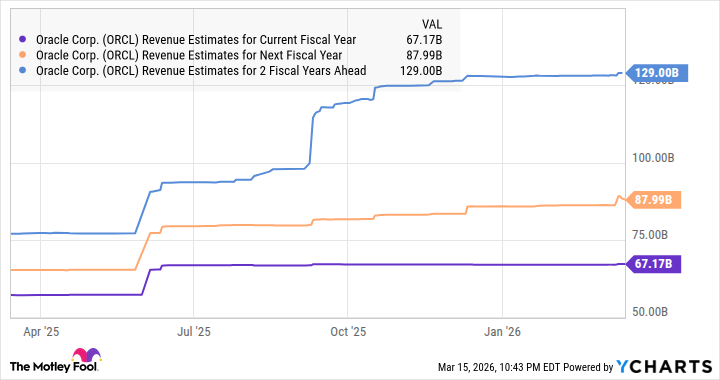
So, is it too late to buy? That’s the question, isn’t it? Oracle spent $8.5 billion on capital expenditures last quarter, and expects to spend $50 billion this year. That’s a lot of money. A truly alarming amount. Analysts expect earnings to increase twenty-four percent this fiscal year, but then slow down next year. But what if they don’t slow down? What if this whole “bring your own hardware” thing really takes off? What if they can convert that massive backlog into revenue faster than anyone expects?
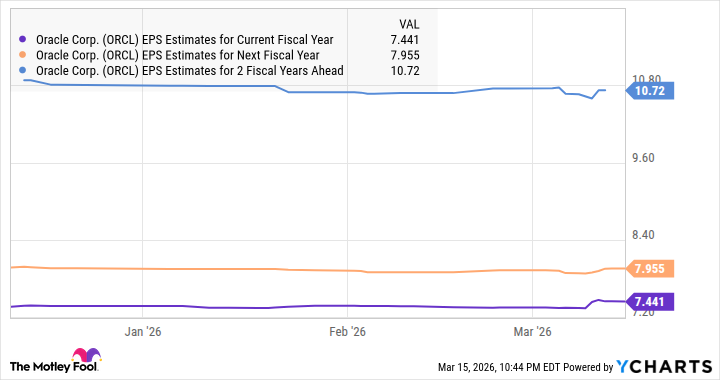
If Oracle hits $10.72 per share in fiscal 2028 – and that’s a big “if” – the stock could jump to $331. Based on the Nasdaq-100’s earnings multiple of around 31. That’s more than double where it’s trading now. It’s a tempting prospect, even for someone who usually avoids anything involving the word “cloud.” It’s still a gamble, of course. But sometimes, a little bit of risk is worth it. Especially if it means finally having a good story to tell Aunt Mildred. Maybe I’ll even bring her a prune danish.
Read More
- Gold Rate Forecast
- Games That Faced Bans in Countries Over Political Themes
- Silver Rate Forecast
- 15 Films That Were Shot Entirely on Phones
- Unveiling the Schwab U.S. Dividend Equity ETF: A Portent of Financial Growth
- 20 Movies Where the Black Villain Was Secretly the Most Popular Character
- Brent Oil Forecast
- New HELLRAISER Video Game Brings Back Clive Barker and Original Pinhead, Doug Bradley
- Superman Flops Financially: $350M Budget, Still No Profit (Scoop Confirmed)
- 14 Movies Where the Black Character Refuses to Save the White Protagonist
2026-03-20 11:52