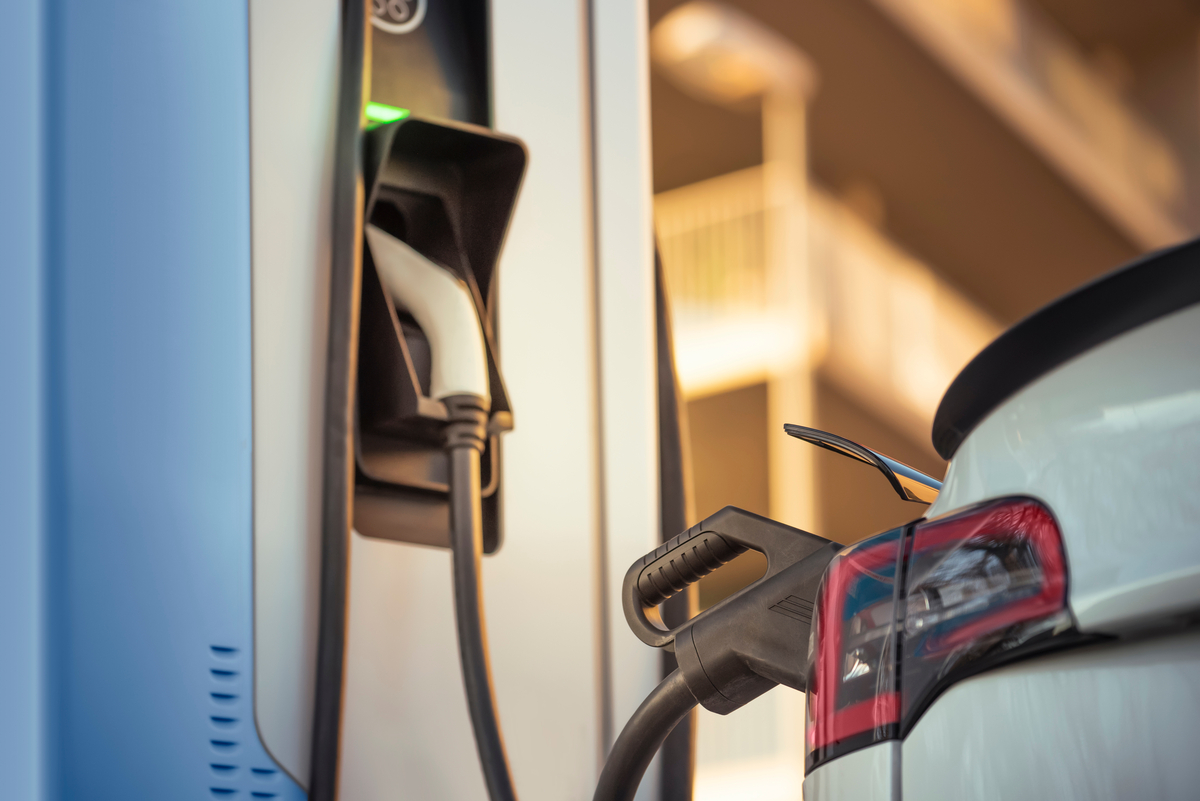
The contest between Ford Motor Company and Tesla is not merely a clash of assemblers of metal and wire, but a stark illustration of the burdens of legacy and the temptations of unbridled aspiration within the automotive sector. It is a chronicle of shifting sands, a struggle for dominance poised to reshape the very foundations of personal transportation. To observe this unfolding drama is to witness the predictable agonies of a behemoth attempting reinvention, and the audacious gamble of a newcomer seeking to define a new order.
The Tesla Conjecture
Much commentary has focused on the deceleration of Tesla’s electric vehicle deliveries and revenue—a natural ebb in the tide of early adoption. But to dwell solely on these figures is to mistake a temporary fluctuation for a fundamental failing. The true contest lies not simply in the volume of vehicles dispatched, but in the very nature of their creation and the economic realities underpinning their propagation. The proliferation of competitors, including Ford, is a given. The critical question is whether this competition manifests as genuine innovation or merely as a subsidized race to the bottom.
For there exists a distinction, a chasm even, between healthy rivalry and the reckless expenditure of capital in pursuit of market share. Ford’s recent performance within its Model e segment—a cumulative loss exceeding $14.5 billion over the past three years—is not an anomaly, but a symptom of a deeper malady: the unsustainable practice of absorbing immense losses to gain fleeting advantage. A system built on such foundations is inherently fragile, a house constructed upon shifting ground.
| Ford Segment-Wise EBIT* | 2023 | 2024 | 2025 |
|---|---|---|---|
| Ford Pro | $7,222 million | $9,007 million | $6,843 million |
| Ford Blue | $7,462 million | $5,269 million | $3,024 million |
| Ford Model e | ($4,701) million | ($5,105) million | ($4,806) million |
The late 2025 reckoning, marked by a $19.5 billion write-down of EV assets and a revised strategic direction, was not a surprise, but an inevitability. The proposed $5 billion investment in a universal EV platform, promising affordability with a midsize pickup slated for 2027, is a necessary, if belated, attempt to stabilize the situation. However, it is a gamble predicated on the assumption that volume can overcome inherent inefficiencies.
The Shadow of Concern
Any serious investment in lower-cost electric vehicles warrants attention. But to suggest that Ford’s efforts pose an existential threat to Tesla is to misapprehend the fundamental dynamics at play. The ability to sell vehicles is distinct from the capacity to do so profitably. Ford’s projected timeline for achieving profitability within its EV segment—2029—is a testament to the magnitude of the challenge. The stated ambition to achieve a lower total cost of ownership over five years compared to a three-year-old Tesla Model Y is, on its face, ambitious.
Ford’s embrace of lower-cost lithium-iron phosphate (LFP) batteries mirrors Tesla’s own initiatives—a Nevada LFP factory and a lithium refinery—suggesting a convergence in technological approach. Tesla, however, has already deployed lower-cost “standard” models, effectively preempting the conventional EV market. This is not merely a response to competition, but a deliberate strategy to broaden accessibility and capture a wider segment of the consumer base.
A Divergent Vision
The most crucial distinction lies not in the mechanics of battery chemistry or vehicle price, but in the overarching vision for the future of transportation. Tesla, under the direction of Elon Musk, envisions a future dominated by autonomous vehicles, with robotaxis forming the cornerstone of a new mobility paradigm. This is not a tactical maneuver, but a fundamental re-imagining of the automotive landscape.
Ford’s previous pledge to launch a robotaxi network by 2021—a promise unfulfilled—reveals a fleeting awareness of this impending shift. The inherent advantage of electric vehicles is amplified when deployed in high-utilization scenarios, such as robotaxi fleets. The Tesla Model 3, despite its higher upfront cost, is already a prominent vehicle within the U.S. taxi market—a testament to the power of lower operating costs. This advantage will only be magnified with the advent of fully autonomous robotaxis, such as Tesla’s Cybercab.

The Weight of the Future
Ford’s track record in bringing commercially viable electric vehicles to market is, at best, uneven. More importantly, if Tesla’s vision of autonomous driving materializes, the value proposition of a vehicle capable of self-operation—whether deployed as a robotaxi or simply offering enhanced convenience—will far outweigh the allure of a low-cost Ford EV. The Cybercab, if it achieves the projected growth, could fundamentally alter consumer behavior, diminishing the perceived need for individual vehicle ownership.
Therefore, for those who follow the fortunes of Tesla, the maneuvers of Ford, while deserving of observation, should not inspire undue apprehension. Tesla’s success is not predicated on winning a price war, but on realizing a bolder, more ambitious vision—a vision that transcends the limitations of conventional automotive thinking.
Read More
- Gold Rate Forecast
- 22 Films Where the White Protagonist Is Canonically the Sidekick to a Black Lead
- Games That Faced Bans in Countries Over Political Themes
- Silver Rate Forecast
- Celebs Who Narrowly Escaped The 9/11 Attacks
- Brent Oil Forecast
- Unveiling the Schwab U.S. Dividend Equity ETF: A Portent of Financial Growth
- How to Do Sculptor Without a Future in KCD2 – Get 3 Sculptor’s Things
- Superman Flops Financially: $350M Budget, Still No Profit (Scoop Confirmed)
- 14 Movies Where the Black Character Refuses to Save the White Protagonist
2026-03-23 19:12