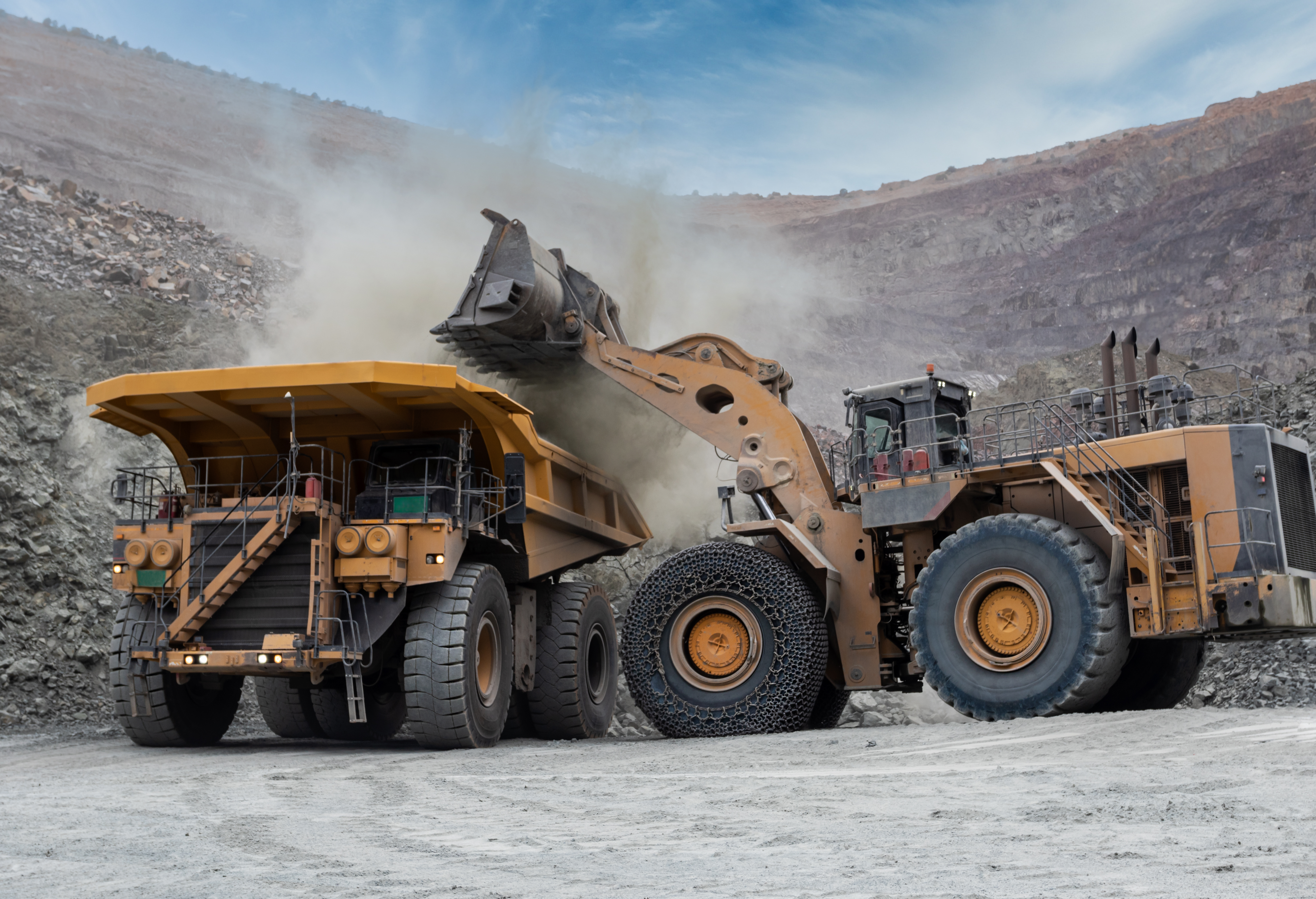
Vulcan Materials. The name conjures images of fiery forges and gods hammering out the world, doesn’t it? Except, in this case, it’s mostly crushed rock. And a company that sells said crushed rock, sand, and gravel – the very building blocks of roads and, let’s face it, the foundations of our increasingly precarious civilisation. They call it ‘aggregate.’ Sounds terribly…solid. Which, again, is the point. They’re due to tell us how solid their last quarter was on February 17th. A date which, if you believe in numerology, is best spent avoiding sharp objects and questionable financial decisions. But we’re talking about the stock market, so that’s just Tuesday.
What Happened Last Time? (Or, The Tale of the Rising Stones)
Last quarter, back in October, Vulcan announced figures that, while not quite miraculous, were…robust. Revenue up 14.4%, earnings per share leaping a frankly alarming 80%. The market, naturally, did what markets do: it got briefly excited. The stock wobbled upwards, like a newly awakened earth elemental. It opened at $285.50 and closed at $290. A five percent bump. Which, in the grand scheme of things, is less a mountain and more a rather enthusiastic pebble. As of February 11th, it’s around $311. They claimed improved margins, and a mysterious quantity called ‘cash gross profit per ton’ – $11.51, if you’re keeping score. They’ve been improving this metric for eleven consecutive quarters. Eleven! That’s a lot of quarters. One begins to suspect a very dedicated accounting department, possibly powered by gnomes.1
What Does the Future Hold? (Or, Gazing Into the Aggregate Crystal Ball)
Vulcan is predicting a 3% increase in aggregate shipments for 2025. Optimistic, but not entirely unreasonable. They’re also forecasting adjusted EBITDA of $2.35 to $2.45 billion. Which sounds like a lot of money, even if you’re used to counting it. Analysts, however, appear to be suffering from a distinct lack of enthusiasm. They’re predicting a 2.7% drop in revenue for the current quarter. And a decline in earnings per share from $2.17 to $2.11. A fall. A downward trajectory. A worrying sign, unless you happen to be a vulture.
For a clue, we turn to Martin Marietta, a competitor who reported their figures on February 11th. They managed a 9% increase in revenue, despite a slowdown in single-family home construction. But their earnings per share fell by 4%, due to…well, ‘increased acquisition, divestiture, and integration expenses.’ A polite way of saying they spent a lot of money rearranging the furniture.2
Should You Buy Before February 17th? (Or, A Word of Caution from a Cynic)
Let’s be blunt. If Vulcan’s numbers fall short of expectations, the stock will likely take a tumble. It’s trading at over 38 times earnings, which is…ambitious. The building materials sector average is closer to 27. That’s a significant premium. A rather optimistic assessment of their future prospects, wouldn’t you say? And there’s the small matter of tonnage shipped. They moved 64.7 million tons last quarter, a 12% increase. But they’re already predicting slower growth. A decline in tonnage would be…unfortunate. A rather large crack in the foundation, so to speak.
If the stock does fall, a cautious dip-buy might be considered. Vulcan has been around for over a century, which, in the volatile world of finance, is practically an eternity. They also pay a dividend, albeit a rather modest one (around 0.6%). But they’ve been increasing it for eight consecutive years, including a 7% rise in 2025. A small consolation, perhaps, while waiting for the dust to settle. A pebble of hope in a landslide of uncertainty.
1Gnome accounting is notoriously meticulous, but prone to errors involving misplaced decimal points and an overreliance on enchanted abaci.
2 Rearranging furniture in the corporate world involves a lot of paperwork, legal fees, and the inevitable rebranding exercise. It’s rarely as satisfying as it sounds.
Read More
- Top 20 Dinosaur Movies, Ranked
- 20 Movies Where the Black Villain Was Secretly the Most Popular Character
- 25 “Woke” Films That Used Black Trauma to Humanize White Leads
- Silver Rate Forecast
- Spotting the Loops in Autonomous Systems
- Gold Rate Forecast
- Celebs Who Narrowly Escaped The 9/11 Attacks
- From Bids to Best Policies: Smarter Auto-Bidding with Generative AI
- 22 Films Where the White Protagonist Is Canonically the Sidekick to a Black Lead
- Can AI Lie with a Picture? Detecting Deception in Multimodal Models
2026-02-12 21:03