
The matter of United Parcel Service, or UPS as it is more commonly known, presents a familiar conundrum to those who observe the currents of commerce. It is a company poised, one might say, upon the precipice of considerable growth, yet shadowed by immediate uncertainties. A patient consideration is required, a weighing of prospects against present realities. To rush to judgment would be, as my grandmother used to say, to count chickens before they are hatched – a particularly foolish endeavor in the volatile world of logistics.
The Long View: A Shifting Landscape
There is a prevailing notion, fueled by the relentless expansion of a certain online retailer, that the established carriers are destined to be swept aside. This, however, is a simplification. Demand for delivery services, while evolving, remains robust. The true challenge for UPS lies not in securing volume, but in extracting a reasonable return from each parcel entrusted to its care. It is a matter of refinement, of pruning the unprofitable branches to nourish the more promising shoots.
Thus, the company’s decision to recalibrate its relationship with the aforementioned online giant—to reduce its reliance on a partner whose demands have proven increasingly exacting—appears, upon closer inspection, entirely sensible. To cling to volume at the expense of margin is a strategy fit only for those with a peculiar disregard for long-term viability. Furthermore, the company’s focus on specialized sectors—healthcare logistics, the support of smaller enterprises—suggests a recognition that true growth lies not in pursuing the mass market, but in cultivating niches where expertise and reliability command a premium.
The figures speak for themselves. Revenue from healthcare services has doubled in the space of seven years, rising from five to ten billion dollars. The ambition to reach twenty billion by 2026, bolstered by the recent acquisition of Andlauer Healthcare Group, is not merely optimistic; it is, given the trajectory, quite plausible. Similarly, the Digital Access Program, designed to empower small and medium-sized businesses with enterprise-level shipping capabilities, is yielding encouraging results, steadily increasing their contribution to overall volume. It is a quiet revolution, perhaps, but a revolution nonetheless.
The ongoing investment in automation and modernized facilities, a relentless pursuit of efficiency, is equally noteworthy. To consolidate, to streamline, to eliminate waste—these are not merely cost-cutting measures, but expressions of a deeper commitment to sustainability and responsible stewardship. The anticipated reduction in structural costs, a substantial $3.5 billion, is a testament to the efficacy of these efforts.
All of this points towards a leaner, more profitable UPS in the years ahead. For those investors who seek a steady stream of income, the current dividend yield of six percent is, shall we say, not entirely unappealing.
Shadows on the Horizon: Near-Term Concerns
Yet, to speak only of promise would be to present an incomplete picture. The future, even for a company as well-established as UPS, is rarely without its anxieties. The restructuring underway is logical enough, but the broader economic climate remains, shall we say, less accommodating.
The manufacturing sector, a vital component of UPS’s business-to-business deliveries, is currently experiencing a period of contraction. The Purchasing Managers’ Index, a reliable barometer of economic health, has remained below the crucial threshold for ten consecutive months. This is not a propitious sign, particularly for a company that relies on the smooth flow of goods between businesses. The recent earnings call revealed a decline in average daily volume, a reflection of this underlying weakness.
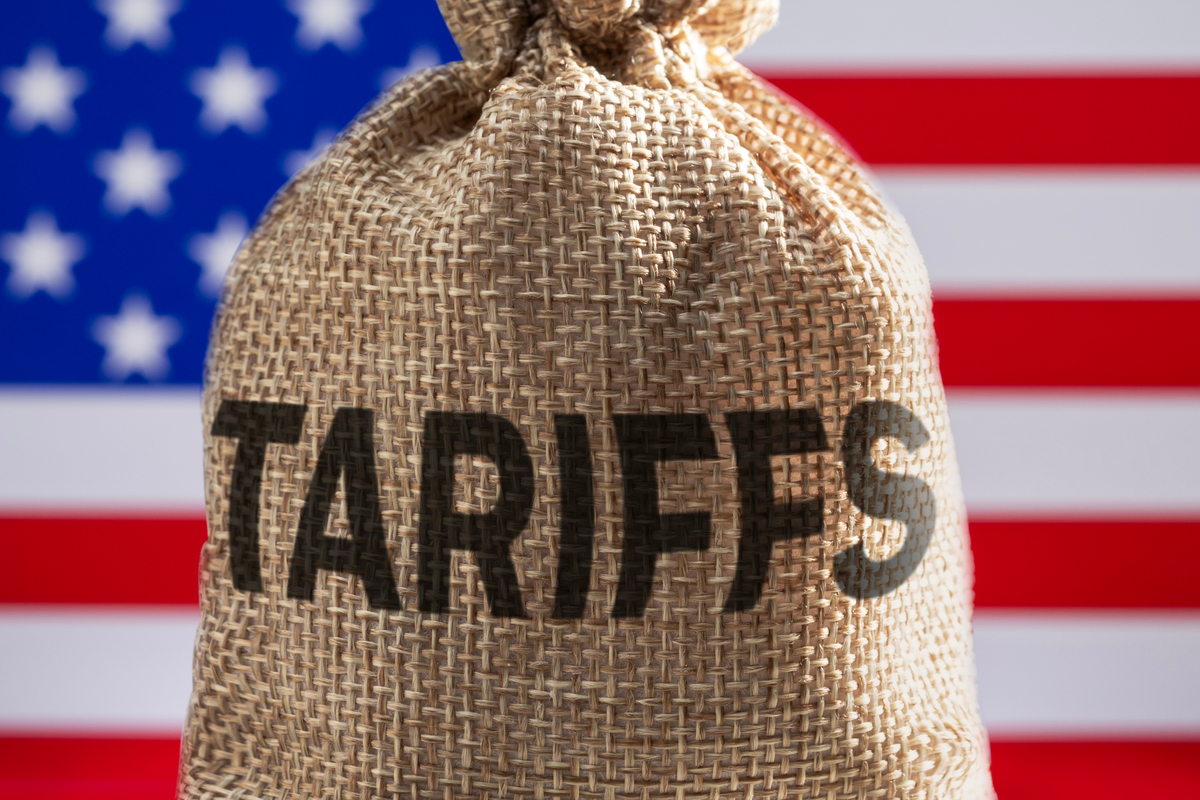
Furthermore, the small and medium-sized enterprises, which UPS is so diligently courting, have yet to fully feel the impact of recent tariffs. Many were able to draw down existing inventories, and shift sourcing to alternative countries. This respite, however, is temporary. As inventories are replenished, and the full weight of the tariffs is felt, these businesses will inevitably face higher costs.
Finally, and perhaps most critically, the current projections for free cash flow—$4.6 billion in 2025, with a modest increase anticipated in subsequent years—fall short of covering the company’s annual dividend payout of $5.5 billion. This is a discrepancy that cannot be ignored, a subtle warning that the company may be stretching its resources.
A Measured Conclusion: Prudence and Patience
UPS, it seems, is a company at a crossroads. Its best days are, quite possibly, still to come. For those willing to accept a degree of short-term risk, now might be a propitious time to acquire shares, and hold them for the long term. But caution is also warranted. The more conservative investor may wish to await further guidance from management, particularly regarding the outlook for the small and medium-sized enterprise market, before committing capital.
In the end, it is a matter of temperament, of assessing one’s own tolerance for uncertainty. The world of commerce is rarely predictable, and even the most well-established companies are subject to the vagaries of fate. Patience, prudence, and a healthy dose of skepticism—these are the qualities that will serve any investor well.
Read More
- Gold Rate Forecast
- 22 Films Where the White Protagonist Is Canonically the Sidekick to a Black Lead
- Games That Faced Bans in Countries Over Political Themes
- Silver Rate Forecast
- Unveiling the Schwab U.S. Dividend Equity ETF: A Portent of Financial Growth
- How to Do Sculptor Without a Future in KCD2 – Get 3 Sculptor’s Things
- Celebs Who Narrowly Escaped The 9/11 Attacks
- 14 Movies Where the Black Character Refuses to Save the White Protagonist
- 20 Movies Where the Black Villain Was Secretly the Most Popular Character
- The Best Directors of 2025
2026-01-19 20:54