The universe, as anyone who’s accidentally read a physics textbook will tell you, is a profoundly improbable place. Silicon Valley, viewed from a sufficiently distant galaxy, is even more so. Consider Peter Thiel. Not a cosmic entity, as far as we know, but a man who seems to operate on a slightly different plane of financial reality than most. He made a fortune with PayPal, which, let’s be honest, felt like a good idea at the time (and still does, if you ignore the sheer volume of spam it enables). Then he wandered into Facebook, Palantir (a name that suggests a particularly gloomy Tolkien enthusiast was involved in the branding), and generally demonstrated a knack for being precisely where the interesting money was about to appear.
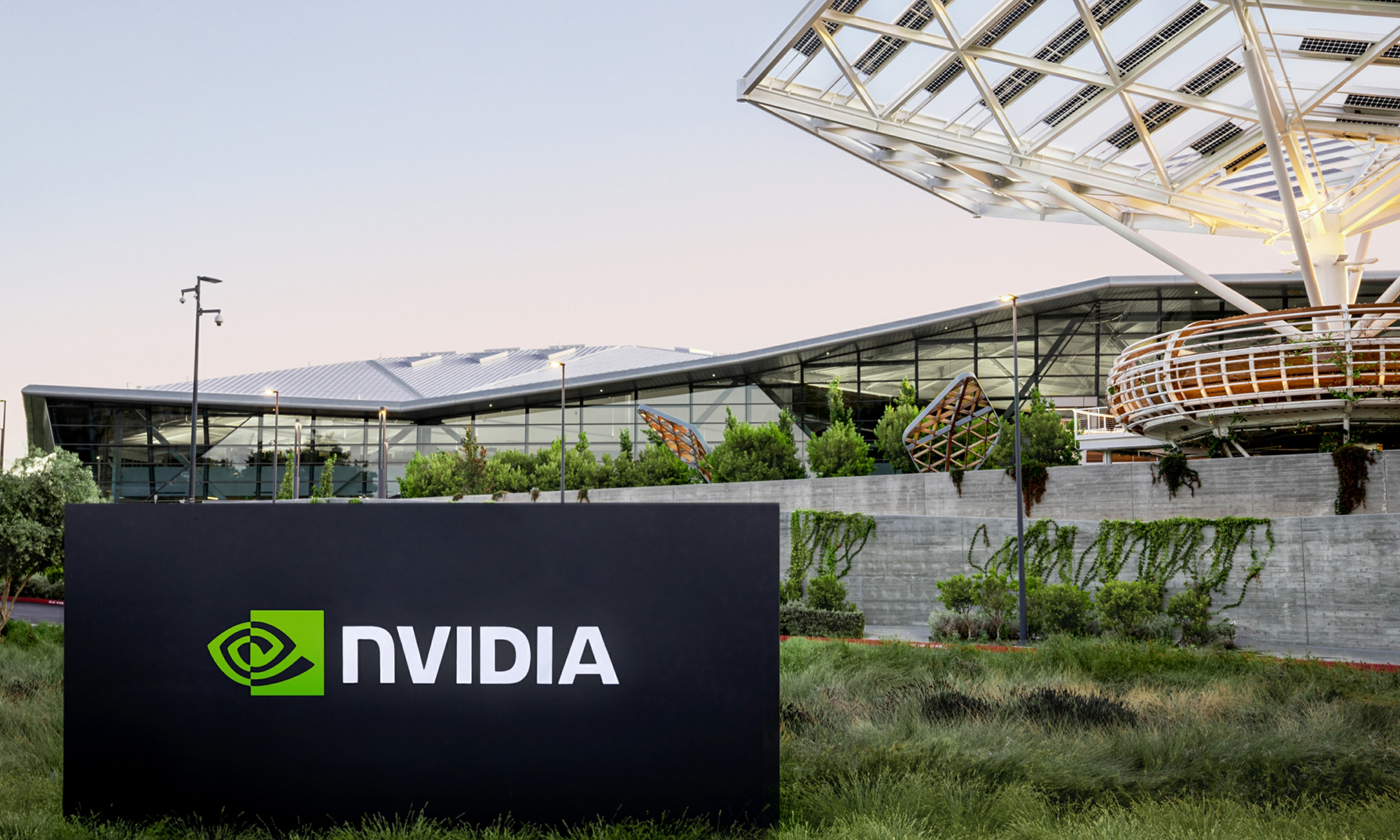
Now, Thiel Macro, his hedge fund (a sort of collective consciousness dedicated to making more money, which, when you think about it, is a rather alarming concept), has done something… curious. It’s sold all its Nvidia stock. All of it. This is like deciding you no longer require oxygen, or the continued structural integrity of your planet. Nvidia, you see, has been on a bit of a tear. A parabolic tear, to be precise. (A parabola, for those unfamiliar with the geometry of success, is a curve that goes up, up, up… and then, eventually, doesn’t.) It’s become, effectively, the most valuable company in the world, which, as any economist will tell you, is almost always a sign that something is about to become terribly complicated.
Instead of doubling down on the GPU-powered future, Thiel has opted for a pair of… well, let’s call them ‘established entities’: Apple and Microsoft. This is like swapping a rocket ship for a rather comfortable, albeit slightly dented, steam train. On the surface, it seems… illogical. But then, logic rarely has much to do with the movement of vast sums of money.
Why Abandon the Rocket Ship?
Nvidia’s success has been, shall we say, enthusiastic. Investors have been throwing money at it as if it were the last life raft in a rapidly sinking market. This creates a certain… pressure. A sort of collective delusion that the price can only ever go up. (Which, of course, is demonstrably untrue. Gravity, both literal and financial, exists.) To sell at this point seems… counterintuitive. Unless, of course, you’re Peter Thiel, in which case, counter-intuitiveness is practically a job requirement.
The problem isn’t that Nvidia is a bad company. It’s that it’s become… too popular. Too crowded. It’s reached a point where its market capitalization ($4.5 trillion, at last count – a number that’s slightly larger than the GDP of several small countries) is increasingly divorced from its actual growth prospects. It’s no longer just a technology company; it’s a macroeconomic indicator, susceptible to everything from geopolitical squabbles to the whims of customs officials. (And don’t even get us started on the potential for tariffs on silicon.) It’s become, in essence, a very expensive weather vane.
The risk, as Thiel likely sees it, is that Nvidia’s future growth is already baked into the price. The easy money has been made. The company is now reliant on consistently exceeding expectations, which, as any student of probability will tell you, is a statistically improbable proposition.
Apple and Microsoft: The Slightly Less Improbable Future
Apple and Microsoft, for years, were dismissed as dinosaurs. Relics of a bygone era. Apple hadn’t released a genuinely groundbreaking device in… well, a while. Microsoft was measured by its cloud platform, Azure, which, while perfectly functional, lacked the certain… je ne sais quoi of a company on the verge of world domination. But Thiel, it seems, sees something others don’t.
Don’t expect Apple to suddenly unveil a revolutionary AI model. They’re not trying to be the AI. They’re aiming to be the landlord. The rent collector. (A surprisingly lucrative profession, when you consider the scale of the digital ecosystem.) Apple’s strength lies in its ecosystem – the 2 billion+ devices, the hardware, the software, the app store, the services. They don’t need to create the AI; they just need to ensure that everyone who does create it pays them a small percentage of the profits. It’s a remarkably efficient business model, when you think about it.
Microsoft, meanwhile, is quietly building an AI-centric operating system. They’re a major player in cloud infrastructure (Azure), programming (GitHub), enterprise workflows (Office, Teams), and data analytics (Fabric). They’re essentially providing all the plumbing and wiring for the AI revolution. And, crucially, they have a lock-in at the enterprise level. Businesses are notoriously reluctant to switch platforms, even if a slightly shinier alternative appears. It’s a bit like trying to convince a herd of elephants to learn a new dance.
The Long View
Let’s consider an analogy. Imagine a gold rush. Nvidia is the pick and shovel supplier. They get rich initially, providing the tools for everyone else to dig. But the gold eventually runs out. The landowners, however, continue to profit as property values increase. Apple and Microsoft, in this scenario, are the landowners. They own the systems, the distribution layer, the marketplaces where all the AI digging is taking place.
By the 2030s, these companies should have evolved into AI empires, essentially taxing every operation that leverages their platforms. It’s a remarkably stable and predictable revenue stream. (Assuming, of course, that the robots don’t decide to revolt.)
Thiel’s decisions, ultimately, suggest a long-term perspective. He’s not looking for a quick profit; he’s looking to maximize his risk-adjusted returns over decades. Nvidia, in the current environment, is simply too obvious a pick. It’s become a consensus trade, and consensus trades, more often than not, end in tears. (Or, at the very least, a significant reduction in portfolio value.)
Read More
- Gold Rate Forecast
- Games That Faced Bans in Countries Over Political Themes
- Silver Rate Forecast
- Unveiling the Schwab U.S. Dividend Equity ETF: A Portent of Financial Growth
- 22 Films Where the White Protagonist Is Canonically the Sidekick to a Black Lead
- 20 Movies Where the Black Villain Was Secretly the Most Popular Character
- Superman Flops Financially: $350M Budget, Still No Profit (Scoop Confirmed)
- How to Do Sculptor Without a Future in KCD2 – Get 3 Sculptor’s Things
- Celebs Who Narrowly Escaped The 9/11 Attacks
- 14 Movies Where the Black Character Refuses to Save the White Protagonist
2026-01-17 10:02