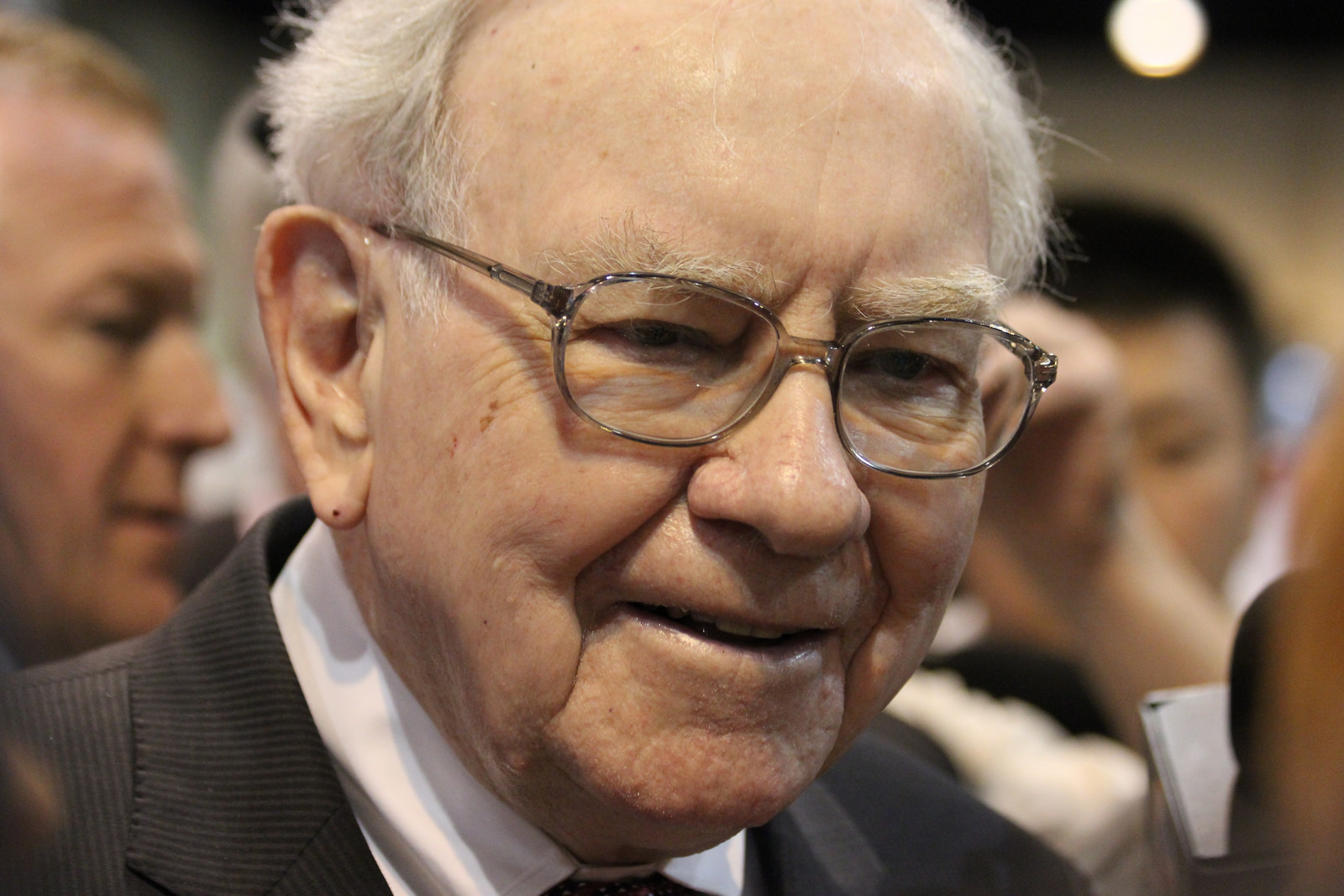
It is now entering the third year since Warren Buffett relinquished the direct command of Berkshire Hathaway, receding into the role of Chairman. A transition, not of power, precisely, but of responsibility – a passing of the burden. One observes this not with celebratory fanfare, but with a quiet assessment of what endures, what remains as testament to a lifetime spent navigating the currents of capital. The holdings, of course, are the most visible residue of his stewardship – a portfolio built not on speculative frenzy, but on a glacial patience, a long-term reckoning with the inherent vulnerabilities of enterprise. Two names, in particular, warrant scrutiny: American Express, and the ubiquitously distributed Coca-Cola.
American Express: A Cardboard Citadel
Recent pronouncements from the political sphere – a temporary cap on credit card interest rates – have caused a ripple of unease amongst shareholders of American Express. A surface disturbance, perhaps, but one that exposes the fragility inherent in any system reliant on regulatory forbearance. The President’s declaration, while potentially lacking firm legal grounding, functions as a stark reminder: no privilege is absolute, no arrangement impervious to the shifting winds of public sentiment. The initial reaction – a selling of shares – was predictable, a flight from perceived risk. It revealed a disheartening lack of perspective, a tendency to equate short-term volatility with fundamental weakness.
American Express, it must be understood, occupies a unique position. It is not merely a facilitator of transactions, but a curator of aspiration. The Black Card, a symbol of access and, let us admit, a certain conspicuous consumption, carries a weight beyond its plastic dimensions. The company’s strength lies in this dual function – issuer and processor – allowing it to extract value from both the extension of credit and the movement of funds. This is a comfortable arrangement, a well-oiled machine, yet it is also a source of potential vulnerability, susceptible to the whims of those who wield regulatory power.
The most recent quarterly report offered a predictable narrative: revenue increased by 11% to $18.4 billion, net income rose by 16% to $2.9 billion. These are not spectacular figures, but they are indicative of a consistent, reliable performance. A slow, steady accretion of wealth, built not on innovation, but on the perpetuation of existing patterns of consumption. It is a system that works, undeniably, but one that offers little in the way of genuine progress.
Coca-Cola: The Sweetening of Existence
Coca-Cola, that dark, effervescent liquid, has achieved a level of global penetration that borders on the unsettling. It is present in nearly every corner of the world, a constant companion to meals, celebrations, and moments of quiet desperation. The company’s portfolio extends beyond its namesake beverage – Minute Maid, Costa Coffee, Dasani water – yet it is the original formula that remains the engine of its success. This is not a triumph of innovation, but of distribution, of relentless marketing, and of a carefully cultivated image of refreshment and vitality.
To find a grocery store, a restaurant, or a vending machine that does not stock Coca-Cola products is a rare occurrence. This ubiquity is a testament to the company’s logistical prowess, but it is also a source of concern. A single entity controlling such a significant share of the global beverage market wields a considerable degree of power, a power that could be used to manipulate prices, suppress competition, and influence consumer behavior.
The most recent quarterly report revealed a modest increase in net revenue – 5% to $12.5 billion – and a corresponding rise in net income – 6% to $3.5 billion. These figures are not particularly impressive, but they are sufficient to maintain the company’s status as a reliable cash-generating machine. A slow, incremental accumulation of wealth, built not on risk-taking, but on the perpetuation of existing patterns of consumption.
Coca-Cola’s appeal, for many investors, lies in its status as a Dividend King – 63 consecutive years of annual dividend increases. The current quarterly dividend of $0.51 per share yields 2.9%. This is a reliable source of income, a predictable return on investment. But it is also a symptom of a larger problem – a tendency to prioritize short-term profits over long-term sustainability. The pursuit of dividends, while appealing to investors, often comes at the expense of innovation, of reinvestment, and of genuine progress. It is a system that works, undeniably, but one that offers little in the way of hope.
Read More
- 20 Movies Where the Black Villain Was Secretly the Most Popular Character
- Top 20 Dinosaur Movies, Ranked
- Silver Rate Forecast
- Can AI Lie with a Picture? Detecting Deception in Multimodal Models
- 25 “Woke” Films That Used Black Trauma to Humanize White Leads
- 22 Films Where the White Protagonist Is Canonically the Sidekick to a Black Lead
- Top 10 Coolest Things About Invincible (Mark Grayson)
- When AI Teams Cheat: Lessons from Human Collusion
- From Bids to Best Policies: Smarter Auto-Bidding with Generative AI
- Unmasking falsehoods: A New Approach to AI Truthfulness
2026-01-20 23:22