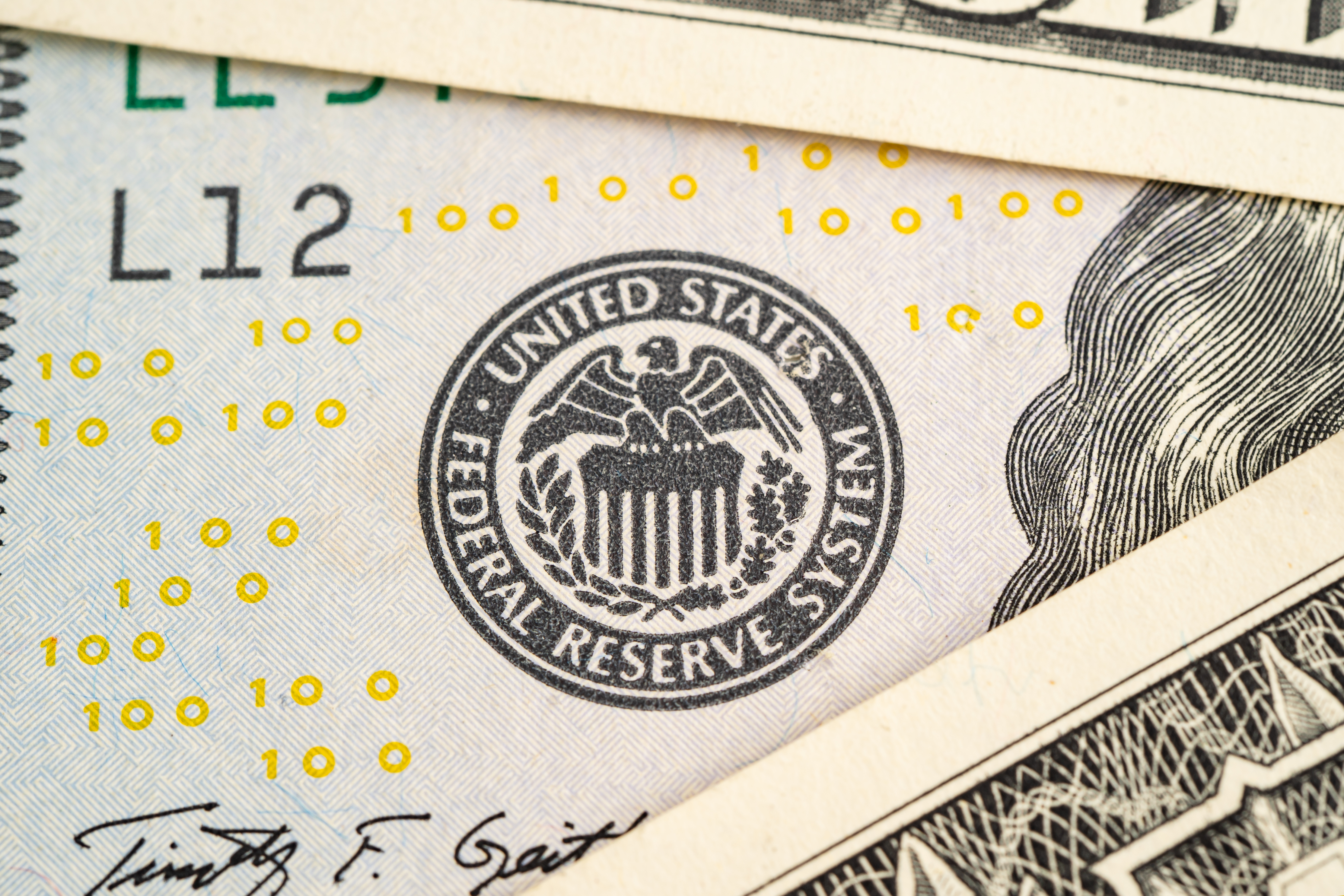
It was, merely a lunar cycle ago, a matter of simple calculation. The markets, those intricate mechanisms of hope and despair, anticipated a lessening of the burden – two incremental reductions in the rate, a palliative administered by the Federal Reserve by the close of 2026. There was even, a fleeting possibility, whispered among the traders, of a third. A generous allowance, perhaps, but one factored into the projections. Now, however, the calculation has dissolved, leaving a residue of uncertainty, a void where certainty once resided.
Today, the probability of any such relief has diminished to a statistical ghost. The markets now assign a nearly eighty percent chance – a chillingly precise 78.2% – that the rate will remain unchanged, suspended in its current state. A month prior, the notion of complete stagnation was relegated to a mere 5.3% possibility, a negligible rounding error in the grand accounting. The shift is not merely a correction, but a fundamental reassessment of the very premises upon which the forecasts were built.
Bloomberg reports a corresponding silence in the bond markets. The yields on two-year Treasuries, those sensitive barometers of expectation, have ascended, surpassing the effective Federal Funds rate. This is not a signal, but an absence of one. The market is no longer anticipating a gesture, a signal from the authorities, but rather bracing for a continuation of the existing condition, an indefinite suspension of relief. The implications are not immediately apparent, but they are undoubtedly there, lurking beneath the surface of the data.
The War and the Opaque Future
The cause, ostensibly, is a conflict in a distant land, a disturbance in the flow of crude oil. The price, inflated by circumstance, now hovers at a level fifty percent higher than it was before the outbreak. The central banks, those arbiters of economic fate, require clarity, a discernible path forward. They have, instead, been presented with a labyrinth, a network of interconnected variables that defy prediction. The more they attempt to chart a course, the more the landscape shifts and distorts.
When questioned regarding the impact of this disturbance, Mr. Powell, the presiding officer, offered a confession of helplessness. “Nobody knows,” he stated, a phrase that resonated with a peculiar finality. The economic effects, he conceded, could be negligible, or they could be catastrophic. The range of possibilities is so vast, so indeterminate, that any attempt at forecasting is rendered futile. We are, it seems, adrift in a sea of uncertainty, guided by nothing but the whims of fate.
If the markets are correct – and their pronouncements, however cryptic, deserve consideration – the Federal Reserve will remain inactive, a silent observer of the unfolding events. This inaction, while perhaps prudent, will undoubtedly disappoint those who anticipated a more proactive response. The expectation of a tailwind, a favorable current to propel the markets forward, has been extinguished.
There is an adage, often repeated in these circles, “Don’t fight the Fed.” It is a recognition of the institution’s power, its ability to influence the course of events. When the Fed lowers rates, the assumption is that the markets will rise accordingly. But what happens when the Fed does nothing? What happens when it simply stands still, a monolith of inertia? The answer, it seems, is that the markets are left to fend for themselves, exposed to the unpredictable forces of the global economy.
Just a month ago, it appeared that the stock market would benefit from a period of favorable conditions, a gentle breeze to fill its sails. Unfortunately, the outbreak of hostilities has eliminated that expectation, leaving the markets to navigate a treacherous sea, devoid of any discernible landmarks.
Read More
- Gold Rate Forecast
- Games That Faced Bans in Countries Over Political Themes
- Silver Rate Forecast
- 22 Films Where the White Protagonist Is Canonically the Sidekick to a Black Lead
- Unveiling the Schwab U.S. Dividend Equity ETF: A Portent of Financial Growth
- How to Do Sculptor Without a Future in KCD2 – Get 3 Sculptor’s Things
- Celebs Who Narrowly Escaped The 9/11 Attacks
- 14 Movies Where the Black Character Refuses to Save the White Protagonist
- 20 Movies Where the Black Villain Was Secretly the Most Popular Character
- The Best Directors of 2025
2026-03-23 00:42