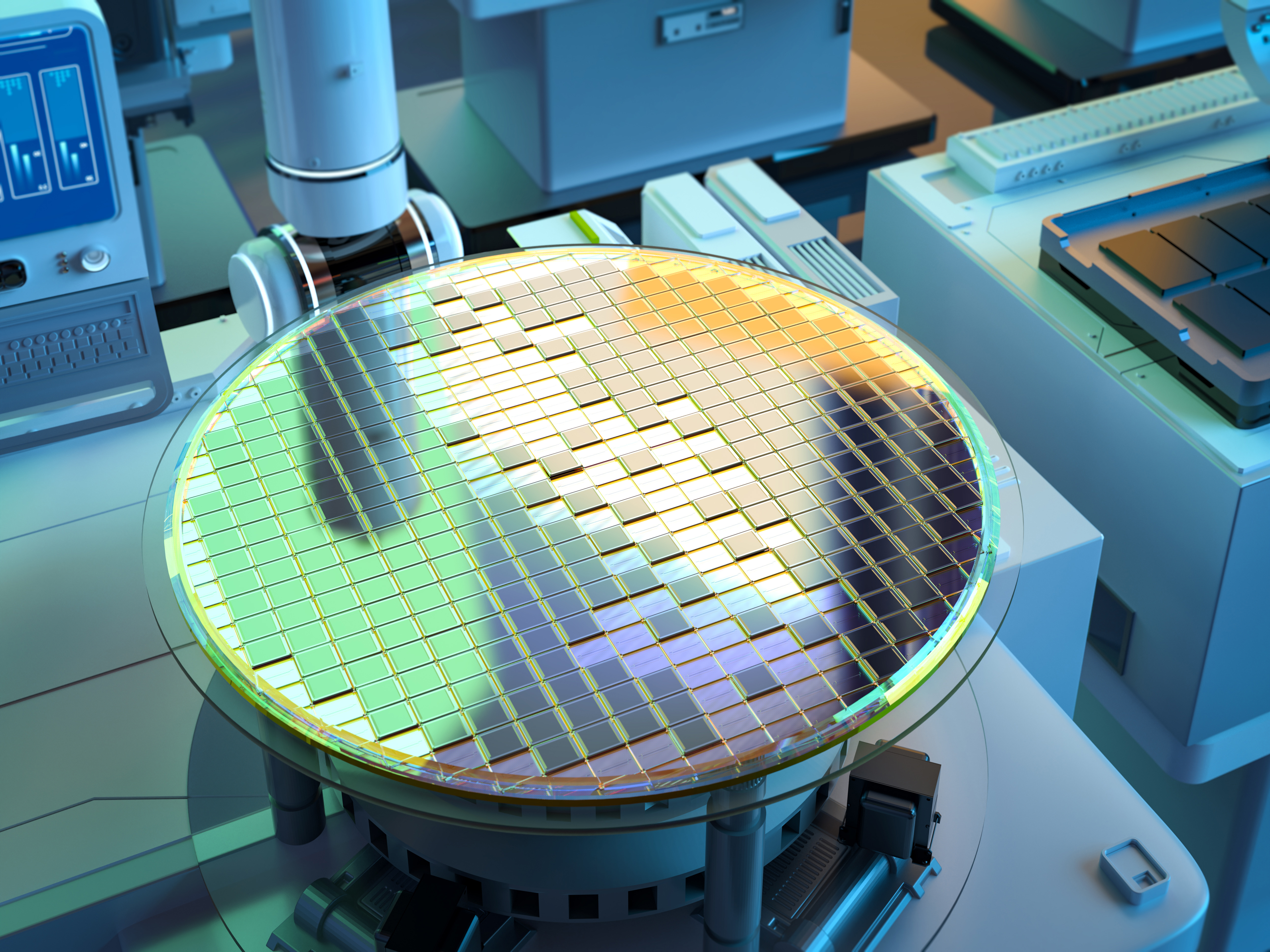
The shares of Tower Semiconductor, a fabricator of those humble, yet increasingly vital, components of modern existence – the specialized chip – experienced a notable ascent today. A rise of eleven percent, to be precise. Such movements in the marketplace, though often attributed to rational calculation, are more frequently the product of collective delusion, a fleeting agreement upon a narrative that bears little resemblance to the underlying reality.
Tower, as it is known, does not concern itself with the leading edge of semiconductor technology. It dwells, instead, in the realm of the practical, the reliable, crafting chips for radio frequencies, power management, and the myriad of discrete functions that underpin our connected world. A sensible business, perhaps, though rarely celebrated in the breathless accounts of technological advancement. It is a company that builds not dreams, but the foundations upon which others may dream.
The company maintains its formal domicile in Israel, a nation perpetually poised between hope and conflict. It is listed upon both the Nasdaq exchange, a temple to American capital, and the Tel Aviv Stock Exchange, a reflection of a nation’s striving. Today, the latter experienced a surge, a consequence of events unfolding in the Middle East, and Tower Semiconductor was carried along with it. A curious phenomenon, this tendency of markets to react to geopolitical upheaval as though it were a mere fluctuation in the price of wheat.
The Price of Tranquility
The recent disturbances, the removal of certain figures of authority within the Iranian regime, have prompted a peculiar reaction amongst investors. They perceive, it seems, a lessening of risk, a potential for greater stability. It is a comforting narrative, to believe that the forceful resolution of conflict will bring peace. But history teaches us that such resolutions are rarely final, and that the seeds of future conflict are often sown in the aftermath of violence. The market, however, is not concerned with history. It is concerned only with the immediate illusion of security.
It is worth noting that the majority of Tower’s fabrication facilities are not located within Israel itself. One resides in Italy, two in the United States, and two in Japan. The company’s headquarters, however, remains in Migdal Haemek, a town in the north of Israel. This geographical concentration, while not absolute, serves as a constant reminder of the inherent risks associated with operating in a volatile region. Yet, investors appear willing to overlook this risk, seduced by the promise of a more tranquil future.
A Year of Exaggerated Fortune
The past year has been kind to Tower Semiconductor, its stock price having ascended to a remarkable height. This surge is attributable, in large part, to the growing demand for silicon photonics transceivers, essential components in the data centers that power the artificial intelligence revolution. A fortunate coincidence, to be sure, but one that has obscured the underlying fundamentals of the business. The market, as always, is prone to exaggeration.
At the current valuation, the stock appears… ambitious. Seventy-one times earnings is a price rarely justified by mere potential. Yet, the company’s proponents argue that a significant expansion of capacity will unlock substantial future earnings. If Tower can fully utilize its existing facilities, and bring its planned expansions to fruition, earnings could, theoretically, triple. This would bring the valuation down to a more reasonable level. But such projections are contingent upon a multitude of factors, many of which are beyond the company’s control. It is a gamble, dressed up as a calculation. And in the world of finance, such distinctions are often blurred.
Read More
- 20 Movies Where the Black Villain Was Secretly the Most Popular Character
- Top 20 Dinosaur Movies, Ranked
- 25 “Woke” Films That Used Black Trauma to Humanize White Leads
- Gold Rate Forecast
- Silver Rate Forecast
- 22 Films Where the White Protagonist Is Canonically the Sidekick to a Black Lead
- Can AI Lie with a Picture? Detecting Deception in Multimodal Models
- Top 10 Coolest Things About Invincible (Mark Grayson)
- When AI Teams Cheat: Lessons from Human Collusion
- From Bids to Best Policies: Smarter Auto-Bidding with Generative AI
2026-03-03 00:45