The chronicles of pharmaceutical ascendancy are rarely linear. They resemble, perhaps, the Library of Babel, a boundless repository of potential remedies, most of them useless, a few bordering on the miraculous, and the rest lost within the infinite stacks. Today, we observe a subtle shifting of these stacks, a momentary illumination falling upon the fortunes of Eli Lilly and Novo Nordisk, two entities engaged in a peculiar alchemy—the reduction of corporeal mass.
The Mirror and the Labyrinth
Novo Nordisk, a name that echoes with the promise of northern renewal, recently unveiled the results of trials concerning CagriSema, a compound born of amylin and semaglutide. The data, however, presented a curious paradox. After eighty-four weeks of application, the weight loss achieved – twenty-three percent – fell short of that yielded by Eli Lilly’s tirzepatide, a substance whose efficacy stands at twenty-five and a half percent. It is as if the labyrinth of metabolic pathways, so carefully mapped by Novo’s researchers, contained a hidden turn, a subtle obstruction that diverted the desired outcome. One is reminded of the apocryphal treatise, De Umbris Corporis—a text detailing the elusive nature of bodily form and its resistance to external manipulation.
This discrepancy, seemingly minor, is not without consequence. The market, a fickle deity, responds to such nuances with disproportionate fervor. A single percentage point, in the realm of pharmaceutical competition, can represent a vast expanse of revenue, a dominion lost or gained.
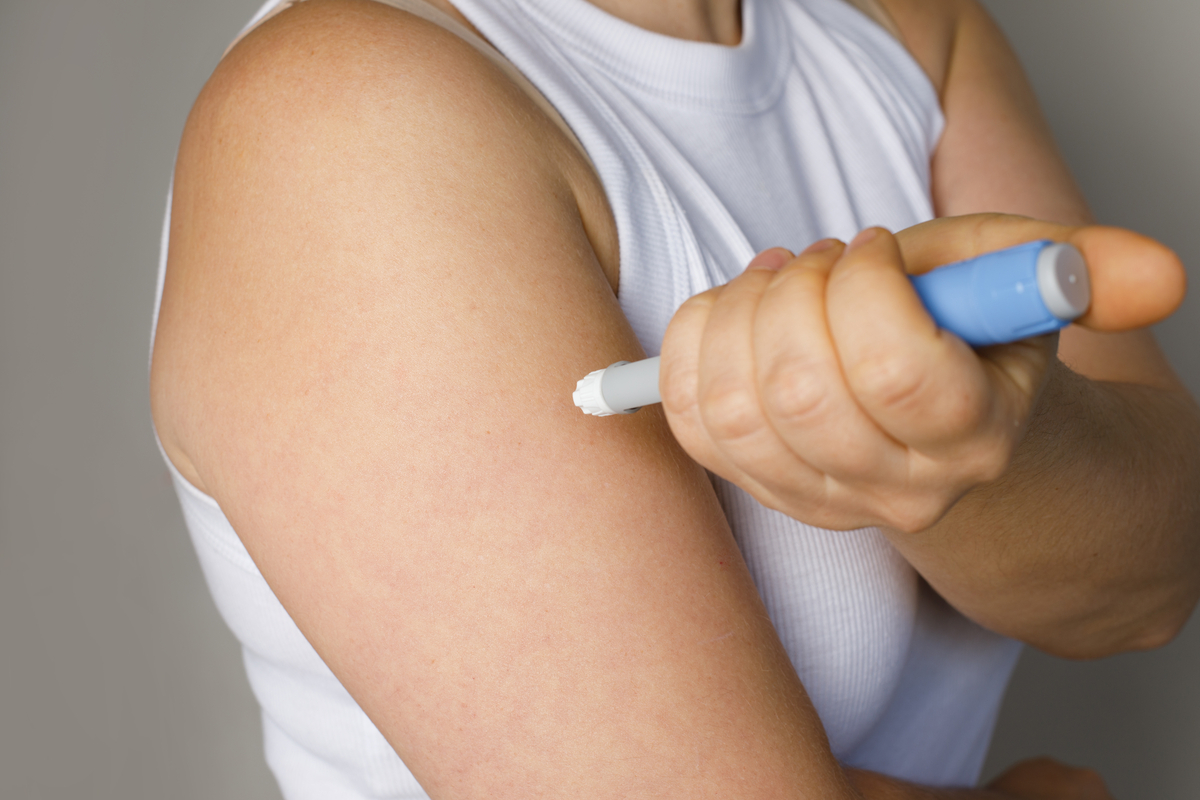
And yet, the narrative does not end there. Eli Lilly, with a characteristic pragmatism, has introduced KwikPen, a delivery system that, while lacking in revolutionary novelty, offers a refinement of existing methodology. It is not a portal to another dimension, merely a larger syringe, capable of dispensing a month’s supply in a single application. A modest improvement, perhaps, but one that speaks to the importance of logistical efficiency—the art of moving resources through the intricate network of commerce.
The Geometry of Profit
The price of Zepbound remains fixed at $299 per month, a seemingly arbitrary number that, upon closer inspection, reveals a complex interplay of production costs, market demand, and competitive pressures. The KwikPen, by reducing the number of individual devices required, offers a marginal cost savings—a ripple in the vast ocean of pharmaceutical expenditure. Lilly’s quarterly revenue from Zepbound reached $4.2 billion, a sum that dwarfs the potential savings, yet every fraction of a percentage point contributes to the overall calculus of profit.
The true significance of these events lies not in the immediate financial implications, but in the broader pattern of competition. The market, like a complex game of chess, is defined by a series of subtle maneuvers, each designed to gain a strategic advantage. The fluctuations of fortune, the rise and fall of individual companies, are merely the surface manifestations of a deeper, more fundamental struggle—a perpetual quest for dominance in the ever-expanding realm of human need.
Read More
- Invincible Season 4 Gender Swaps Tech Jacket As Fans Question Major Comic Change
- Building Agents That Learn and Improve Themselves
- Gold Rate Forecast
- Games That Faced Bans in Countries Over Political Themes
- Silver Rate Forecast
- Trading Crypto with AI: A New Approach to Portfolio Management
- 15 Films That Were Shot Entirely on Phones
- Why Won’t It Just *Do* What You Ask? Unpacking the Quirks of AI Language
- Unveiling the Schwab U.S. Dividend Equity ETF: A Portent of Financial Growth
- Thinking Before Acting: A Self-Reflective AI for Safer Autonomous Driving
2026-02-23 19:02