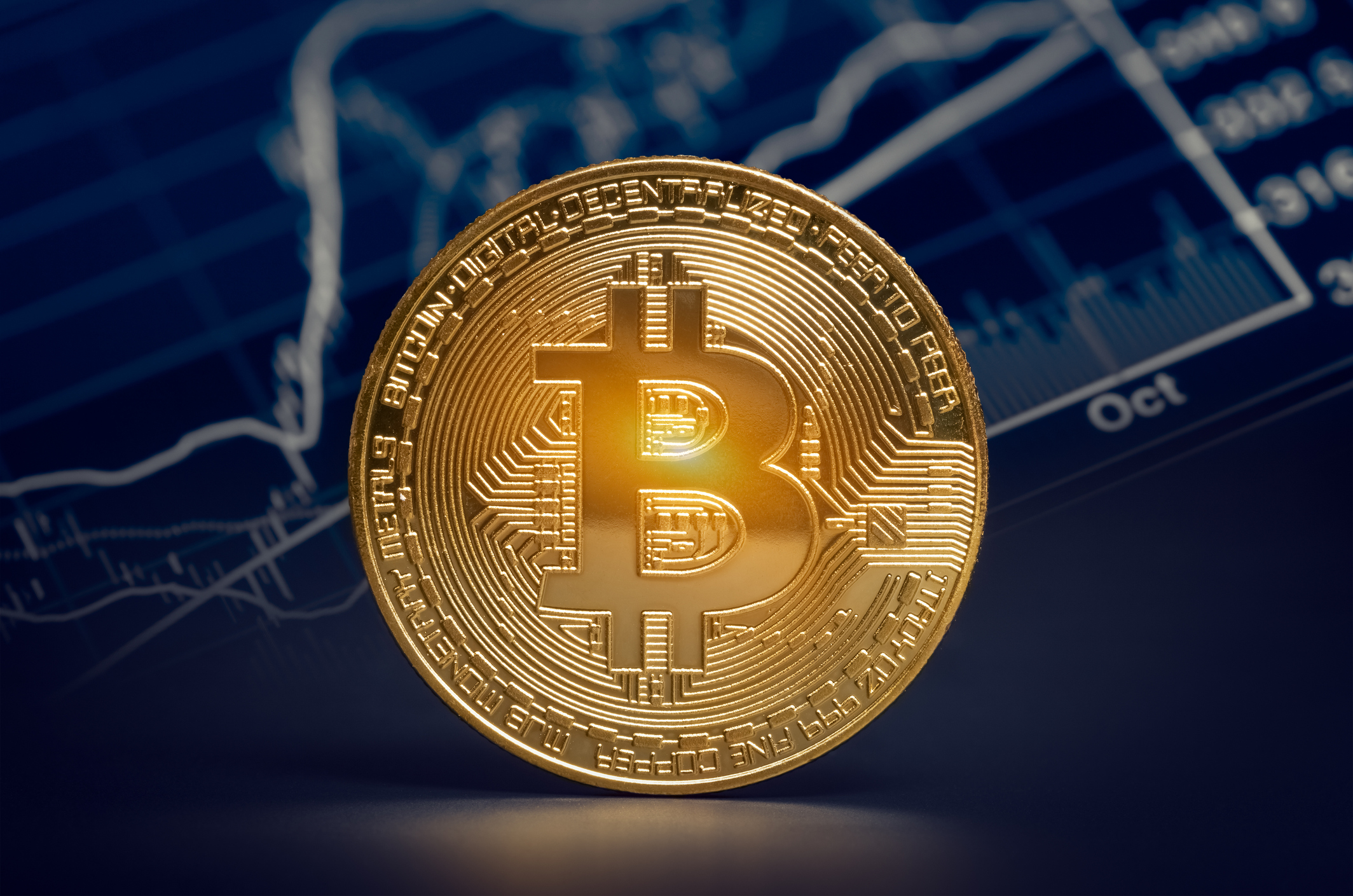
Hark, gentle investors, and lend an ear to a tale most curious! For a century and more, the market, that grand theatre of fortunes won and lost, has consistently yielded returns that humble all other ventures. The S&P 500, a venerable institution, has proven itself a reliable player, consistently outperforming the fleeting fancies of commodities, estates, and bonds. Yet, lo, a new spectacle has entered the arena – cryptocurrencies, and at their head, the most boisterous of all, Bitcoin.
This digital marvel, born but a decade ago, has, in truth, eclipsed the venerable S&P 500 in the swiftness of its ascent. From a pittance of a dollar to a staggering sixty-eight thousand and five hundred – a transformation worthy of the most audacious alchemist! One might be forgiven for believing a philosopher’s stone had, at last, been discovered, but I assure you, the transmutation is of a far more… ethereal nature.
There exists, you see, a perplexing confusion amongst those who dabble in these digital tokens. They speak of ‘value’ and ‘utility’ as though they were interchangeable terms, a blunder akin to mistaking a painted backdrop for the palace it represents. Allow me, a humble observer of the market’s ebb and flow, to illuminate the distinction. For value, dear friends, is but the price a fool is willing to pay, while utility is the true measure of a thing’s worth.
Of Perceptions and Prices
Value, in its simplest form, is determined by the whims of the multitude. If a gentleman offers sixty-eight thousand and five hundred for a Bitcoin, then, by that very act, a value is established. It is a curious sort of alchemy, to create worth from mere belief. But in the realm of cryptocurrencies, perception is reality, for these tokens lack the solid foundations of operating fundamentals. There are no balance sheets to pore over, no earnings reports to dissect; only the shifting sands of sentiment.
Bitcoin’s dizzying rise can be traced to a handful of prevailing notions. Firstly, its scarcity. Like a rare jewel, only twenty-one million Bitcoins will ever be mined. This artificial scarcity, much like a merchant inflating the price of a dwindling stock, creates the illusion of worth. It is a clever ruse, to be sure, but one built on the shifting sands of digital code.
This scarcity, in turn, fuels the belief that Bitcoin is a hedge against inflation, a bulwark against the erosion of fortunes. As governments print money with abandon, the fixed supply of Bitcoin appears, to some, a safe haven. Yet, it is a curious paradox: to escape the whims of fiat currency, one embraces a currency even more susceptible to the vagaries of public opinion.

Furthermore, there is the expectation that Bitcoin’s network will become a peer-to-peer payment platform, bypassing the established financial institutions. The number of transactions has indeed increased, but this is akin to polishing a bauble and declaring it a treasure.
Thus, Bitcoin possesses value, yes, but whether that value is justified is another matter entirely.
The Illusion of Utility
For value, I repeat, does not necessitate utility. Many a company, puffed up by speculation, commands a substantial market capitalization despite offering nothing of tangible worth. Clinical-stage drug developers, for instance, can amass fortunes based on the promise of future therapies, yet remain barren of actual results. Should those therapies fail, the shareholders, alas, will pay the price.
Bitcoin, too, suffers from this lack of utility. It is perceived as scarce, yet its supply is governed by lines of code that, however unlikely, can be altered. Precious metals, on the other hand, are finite, drawn from the very bowels of the earth. There is a permanence to gold and silver that Bitcoin, a creature of the digital realm, can never hope to match.
Its payment network, too, is wanting. While it enjoys a first-mover advantage, it is sluggish and costly compared to newer, more efficient platforms like XRP and Stellar. These rivals can process transactions in seconds for a fraction of a penny, while Bitcoin dawdles for minutes and demands a hefty fee. It is as if one were to champion a horse-drawn carriage in the age of the automobile.
The experiment in El Salvador, where Bitcoin was adopted as legal tender, serves as a cautionary tale. Despite the government’s efforts, the vast majority of citizens shunned the token. It is a reminder that even the most ardent enthusiasm cannot force a square peg into a round hole.
Therefore, I submit that Bitcoin’s limited utility will, in time, weigh upon its value. When, precisely, this will occur is impossible to say, but history suggests that bubbles, however grand, eventually burst.
Does Bitcoin have value? Yes, thanks to the boundless optimism of investors. But does the world need Bitcoin? Based on the evidence before us, I fear not.
Read More
- 20 Movies Where the Black Villain Was Secretly the Most Popular Character
- Celebs Who Narrowly Escaped The 9/11 Attacks
- Transformers Under the Microscope: What Graph Neural Networks Reveal
- Top 20 Dinosaur Movies, Ranked
- Trading on Thin Air: AI Agents Conquer Crypto Volatility
- Silver Rate Forecast
- Gold Rate Forecast
- Every Notable ‘Star Trek: The Original Series’ Actor Who Died
- 22 Films Where the White Protagonist Is Canonically the Sidekick to a Black Lead
- Invincible Season 4 Gender Swaps Tech Jacket As Fans Question Major Comic Change
2026-02-20 13:13