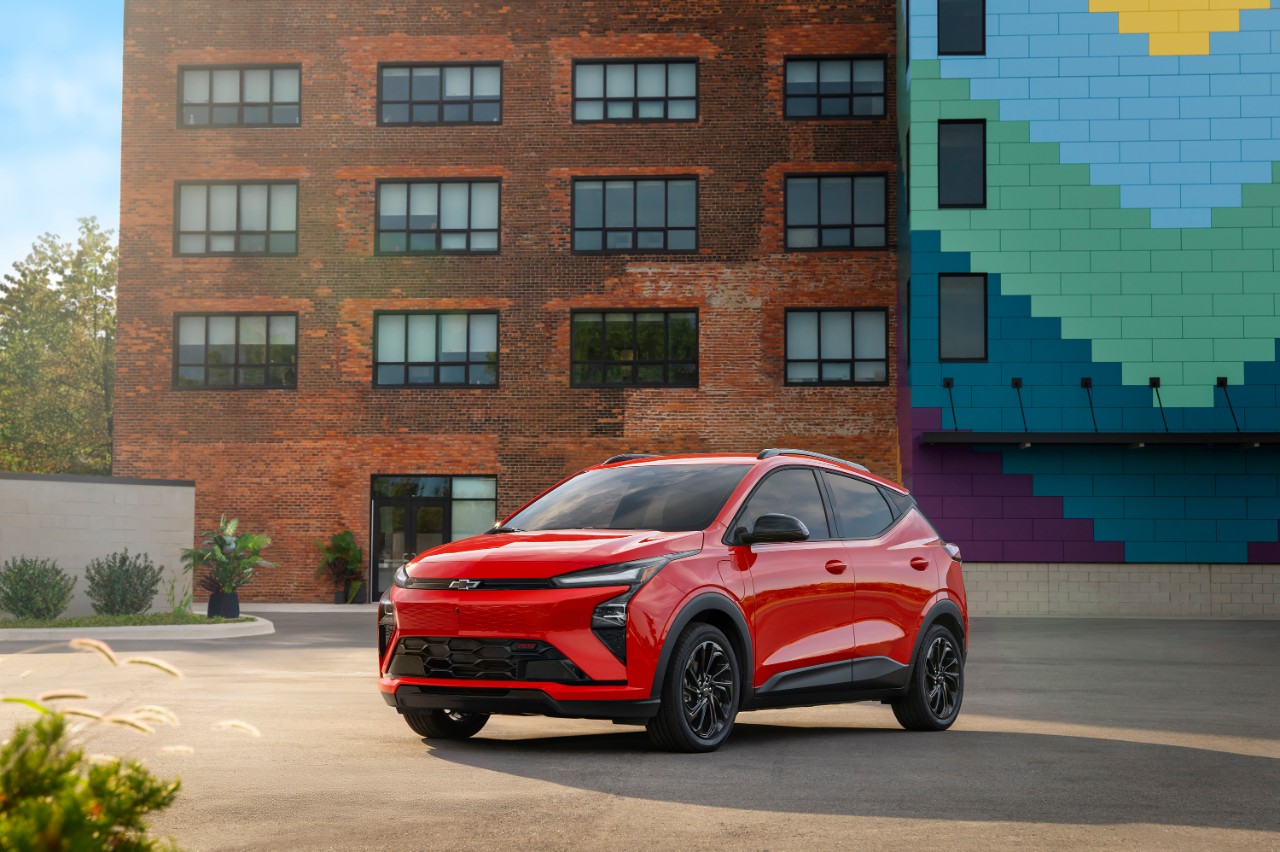
One does rather wish the Americans would make up their minds. A bit of consistency, you see, is so dreadfully helpful when one is attempting to assess long-term investment prospects. The recent saga of the Chevrolet Bolt – a perfectly serviceable little electric vehicle, if I may say so – is a case in point. It appears President Trump, in his characteristic fashion, rather muddled the waters with a flurry of automotive policy adjustments. Freedom for manufacturers, tariffs to protect the domestic market… terribly complicated. And, naturally, the $7,500 EV tax credit vanished as if it had never been. One expects a certain amount of governmental whimsy, of course, but this was pushing the boundaries of good taste.
The Bolt, you see, had a rather curious history. GM, in a moment of uncharacteristic optimism, once declared it a “game changer.” A bit strong, perhaps, but it was a reasonably priced electric vehicle, which, as any sensible investor knows, is a rare and valuable thing. It had a bumpy start, a few unfortunate incidents involving fires, but, rather remarkably, sales surged in 2022 and 2023. A record 62,000 units! Then, just when one thought it might actually succeed, it was discontinued. The Americans are terribly fond of dramatic reversals, aren’t they?
But, being GM, they couldn’t quite bring themselves to abandon it entirely. The Bolt, you see, had a knack for attracting new customers – “conquesting,” they call it, rather aggressively. Seventy-five percent of Bolt owners were previously driving vehicles from other manufacturers. An expensive trick, but a worthwhile one. And, even more impressively, seventy-two percent of those new customers stayed with GM for their next vehicle, and a substantial fifty-six percent remained loyal to Chevrolet specifically. A bit of brand loyalty is always reassuring, don’t you think?
So, GM decided to revive the Bolt, launching production at their Kansas City plant last November. A brave move, one might think. But, alas, the resurrection was to be short-lived. Apparently, without the federal incentives, the Bolt simply wasn’t worth GM’s time or money. As Sam Fiorani of AutoForecast Solutions rather pointedly observed, the car was “developed to take advantage of the federal incentives.” One suspects a degree of foresight might have been helpful here. It’s all rather tiresome, really.
The new Bolt was positioned to build on the success of the original, and, crucially, to be profitable. With a price tag still under $30,000, it had a chance to continue attracting new customers and cementing their loyalty. Chevrolet even managed to briefly overtake Ford as the No. 2 EV seller in the US, from 2021 to 2024. A fleeting moment of triumph, perhaps, but a triumph nonetheless.
Now, GM finds itself in the rather awkward position of needing a new model to carry on the Bolt’s legacy. One hopes they’ll choose wisely. A consistent, well-priced electric vehicle is, after all, a rather sensible investment. One wouldn’t want to see another perfectly good car extinguished before its time. It’s all rather… American, don’t you agree?
Read More
- Gold Rate Forecast
- Games That Faced Bans in Countries Over Political Themes
- Silver Rate Forecast
- Unveiling the Schwab U.S. Dividend Equity ETF: A Portent of Financial Growth
- 22 Films Where the White Protagonist Is Canonically the Sidekick to a Black Lead
- 20 Movies Where the Black Villain Was Secretly the Most Popular Character
- Superman Flops Financially: $350M Budget, Still No Profit (Scoop Confirmed)
- How to Do Sculptor Without a Future in KCD2 – Get 3 Sculptor’s Things
- Celebs Who Narrowly Escaped The 9/11 Attacks
- 14 Movies Where the Black Character Refuses to Save the White Protagonist
2026-03-23 13:12