The Arleigh Burke-class destroyer, a vessel of considerable tonnage and complexity – nine thousand tons, propelled by the harnessed fury of four GE Aerospace gas turbines – remains, for the moment, the cornerstone of the United States Navy. A lineage of ninety-eight such vessels exists, or is planned, each demanding a complement of two hundred and eighty souls. A considerable investment in both steel and the ephemeral resource of human attention. Yet, the very notion of a ‘fleet’ invites a certain recursive contemplation. Is it merely a collection of vessels, or a self-replicating pattern imposed upon the ocean’s surface?
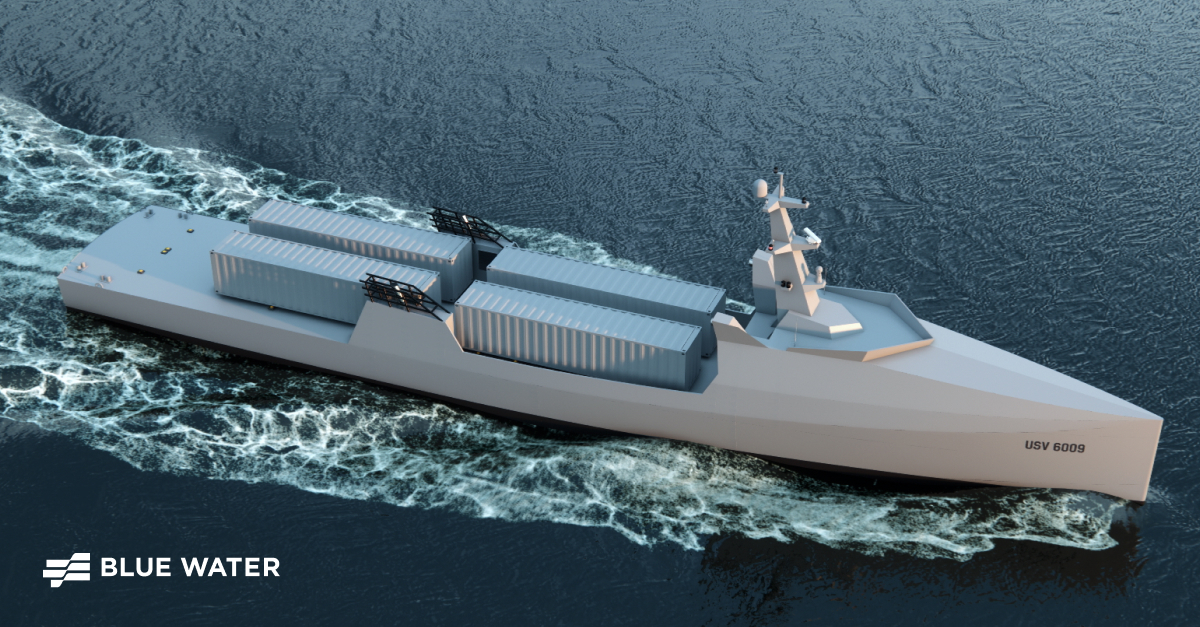
Now, a divergence. A phantom limb extending from the established order. Blue Water Autonomy, a private entity operating outside the usual constellations of military-industrial power, proposes a different geometry. The Liberty-class Uncrewed Surface Vessel (USV). A reduction, a distillation of naval force. One-ninth the size of its manned counterpart, displacing a mere twelve hundred tons. A vessel that requires not officers and sailors, but algorithms and maintenance schedules. A ship, one might say, that dreams of itself.
The Library of Vessels
The announcement, made last week, suggests a commencement of construction in March, with a projected deployment before the close of 2026. A timeframe that mocks the protracted lifecycles of traditional shipbuilding. The Liberty-class, while carrying a diminished armament – sixteen to thirty-two missiles, a third of the Burke’s capacity – offers a compelling advantage: scalability. Consider the implications. The current US Navy boasts two hundred and ninety-five vessels. A desire, articulated by previous administrations, exists to expand this to three hundred and fifty-five, or even beyond. Blue Water, in partnership with Conrad Industries of Louisiana, posits an annual production capacity of ten to twenty Liberty-class USVs. A potential, if realized, to accelerate the expansion of the fleet at an exponential rate. A naval force multiplying, not through organic growth, but through precise, automated replication. The Louisiana shipyards, capable of producing over thirty vessels annually, represent a potential bottleneck, or perhaps, a mirror reflecting the boundless ambition of the project.
The Shifting Labyrinth
Three years ago, analyses of autonomous naval technologies, informed by reports from the Congressional Research Service, identified the established defense contractors – General Dynamics, Huntington Ingalls, Boeing, Leidos, and L3Harris – as the likely architects of this technological shift. A predictable outcome, given their existing infrastructure and political influence. However, Blue Water’s emergence suggests a subtle reordering of the landscape. A preference, perhaps, for agility and efficiency over entrenched power. A willingness to explore alternative pathways within the complex labyrinth of defense procurement.
The implications for investors are, as always, nuanced. The question is not merely whether these smaller shipbuilders will thrive, but whether they will offer a public stake in their endeavors. An opportunity to participate in the construction of this automated fleet, to own a fragment of the ocean’s future. A speculative venture, certainly. But within the infinite possibilities of the market, even the most improbable outcomes are not entirely without precedent. One is reminded of the apocryphal tale of the Cartographer’s Guild, who, rather than mapping the territory, sought to create it.
Read More
- Invincible Season 4 Gender Swaps Tech Jacket As Fans Question Major Comic Change
- Silver Rate Forecast
- Gold Rate Forecast
- 15 Films That Were Shot Entirely on Phones
- Building Agents That Learn and Improve Themselves
- 22 Films Where the White Protagonist Is Canonically the Sidekick to a Black Lead
- 20 Movies Where the Black Villain Was Secretly the Most Popular Character
- Celebs Who Narrowly Escaped The 9/11 Attacks
- 18 TV Series Filming Rehearsals as Bonus Content
- Trading Crypto with AI: A New Approach to Portfolio Management
2026-02-22 14:13