The age of Artificial Intelligence, they proclaim! A veritable golden age of productivity! One is reminded of the alchemists of old, promising to transmute base metals into gold – a charming delusion, no doubt, and one that seems to have captivated the financial world. PwC, those diligent accountants of the possible, foresee a trifling increase of 15 percentage points to global GDP by 2035. A pittance, really, when weighed against the boundless optimism currently on display. And should one be inclined to believe the more exuberant projections, the AI market shall swell to a staggering $5.3 trillion by 2035, having begun, modestly, at a mere $274 billion in 2023. Such numbers! They inspire a certain… skepticism.
Let us, therefore, examine the two leading players in this grand spectacle, these purveyors of digital dreams: Taiwan Semiconductor Manufacturing and Palantir Technologies. Not because they are necessarily the most deserving of our attention, but because, alas, they are the ones most aggressively seeking it.
Act I: The Chipmaker’s Vanity
It appears, dear reader, that the foundation of all this supposed intelligence lies, quite prosaically, in silicon. All these wondrous algorithms, these self-learning machines, require, it seems, a rather mundane substance to function. Every data center, every smartphone, every self-driving carriage – all depend upon semiconductors. A truth so obvious, one wonders why it is presented with such fanfare. It is as if the builders of the pyramids suddenly announced the importance of…stones.
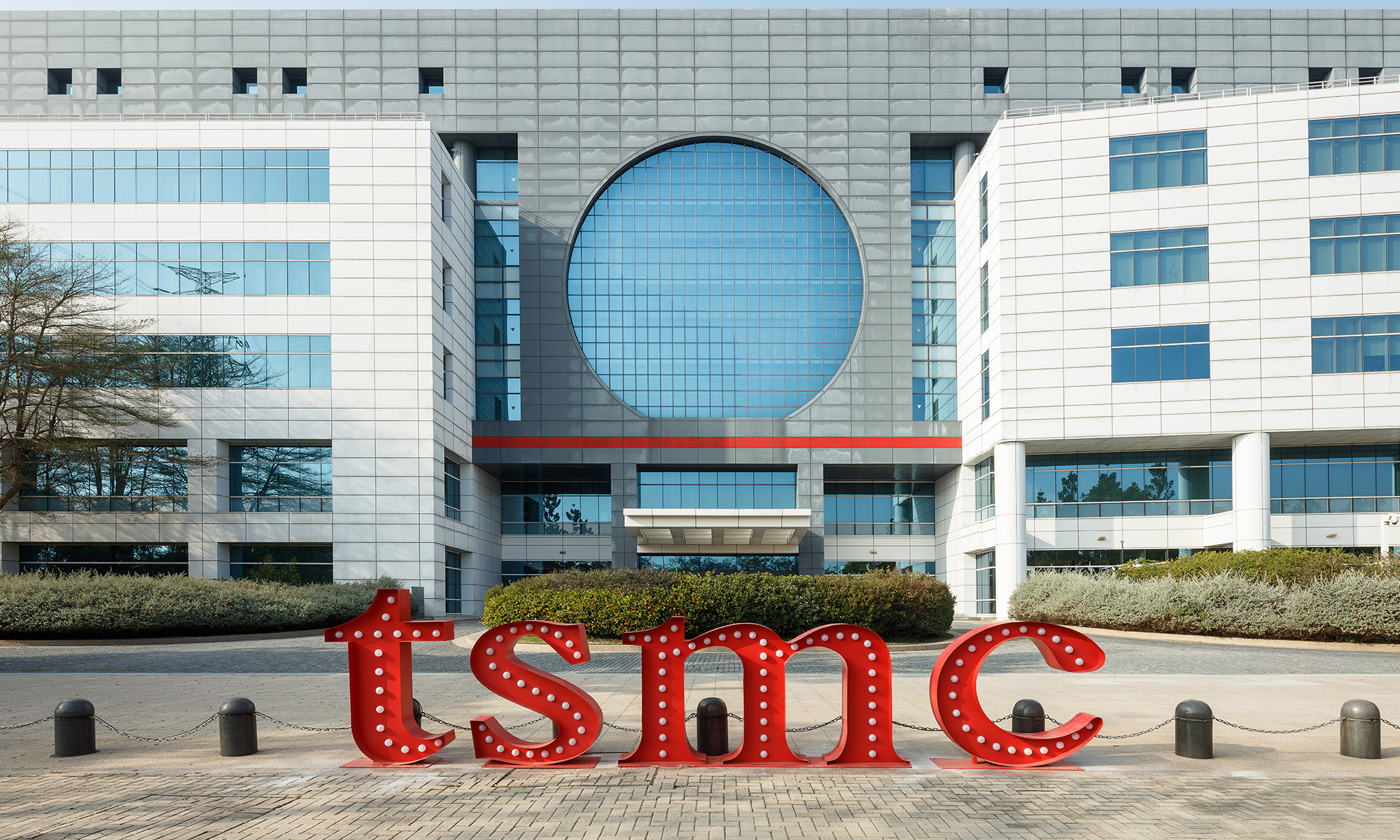
TSMC, then, finds itself in the enviable position of supplying these essential building blocks. They manufacture chips for Nvidia, Broadcom, AMD, Intel, Apple, Qualcomm, and a staggering 534 other customers. A truly impressive feat of industrial organization, and a testament to their ability to satisfy an insatiable demand. They anticipate revenue from AI accelerators to grow at a compound annual rate of 50-55% through 2029, and overall revenue at 25%. A handsome return, to be sure, but one built upon the shifting sands of technological hype. Analysts, predictably, are bullish. They raise their earnings expectations, and the cycle continues. It is a self-fulfilling prophecy, dressed up as informed analysis.
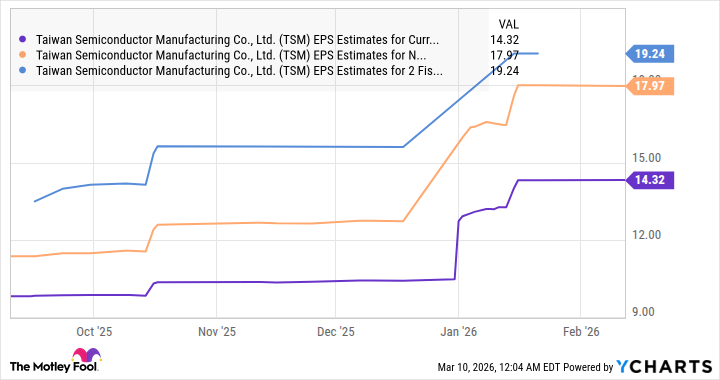
TSMC trades at 26 times forward earnings – a price that suggests either extraordinary promise or extraordinary gullibility. One is left to ponder which applies more readily.
Act II: The Data Sorcerer’s Deception
But what good is a magnificent engine without a driver? Enter Palantir Technologies, purveyors of software solutions designed to unlock the power of AI. They have introduced an “Artificial Intelligence Platform” (AIP) – a name that, one suspects, was chosen for its sheer lack of imagination. This platform, they claim, allows customers to integrate their data with large language models, automate processes, and improve decision-making. A noble ambition, certainly, but one that relies heavily on the assumption that more data automatically equals better insights. A fallacy as old as time itself.
Since the introduction of AIP, Palantir’s customer base has swelled, and their deal sizes have grown. They now boast 954 customers, an increase of 34% year-over-year. The number of deals worth $1 million or more has skyrocketed, and the number of $10 million-plus deals has increased twelvefold. A truly remarkable performance, one might say. Or, perhaps, a testament to the effectiveness of their marketing department.
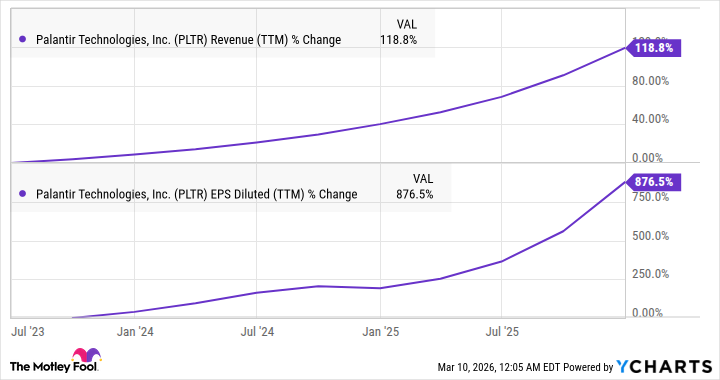
The AI software platforms market is projected to grow at a rate of 29% through 2034, reaching a revenue of $237 billion. Palantir, they claim, is well-positioned to capitalize on this growth. One suspects they are merely positioned to receive a generous share of the inevitable bubble.
Thus, we have our two players. A chipmaker and a data sorcerer, both promising to usher in a new era of intelligence. Whether they will deliver on that promise remains to be seen. But one thing is certain: the spectacle will be most diverting. And, no doubt, quite profitable… for some.
Read More
- Invincible Season 4 Gender Swaps Tech Jacket As Fans Question Major Comic Change
- Silver Rate Forecast
- Gold Rate Forecast
- 15 Films That Were Shot Entirely on Phones
- 22 Films Where the White Protagonist Is Canonically the Sidekick to a Black Lead
- Building Agents That Learn and Improve Themselves
- 20 Movies Where the Black Villain Was Secretly the Most Popular Character
- Celebs Who Narrowly Escaped The 9/11 Attacks
- Trading Crypto with AI: A New Approach to Portfolio Management
- 18 TV Series Filming Rehearsals as Bonus Content
2026-03-15 03:12