As a football fan, I’m so excited for the Seahawks and Patriots to face off in Super Bowl LX! It’s crazy to think this will only be the third time the Super Bowl has been played in the Bay Area. Considering how many times the 49ers and Raiders (including when they were in Oakland) have been to the Super Bowl – a combined twelve appearances! – it’s surprising it’s only happened here twice before. I remember reading that Super Bowl XIX was actually played way back in 1985, at Stanford Stadium.
Before the new Levi’s Stadium was built in 2014, the NFL wasn’t very enthusiastic about holding its championship game at either Candlestick Park or the Oakland Coliseum.
Bay Area music lovers have always had plenty of great places to see top artists perform, going all the way back to the beginning of the Super Bowl.
San Francisco has long been a hub for music, from intimate venues like Club Fugazi to larger spaces such as the Warfield and the legendary Fillmore. The city was especially electric during the late 1960s and 70s, boasting an incredibly lively and influential music scene.
The Bay Area’s greatest 1960 and 1970s rock bands
During the peak of the counterculture movement, San Francisco became a major draw for artists, much like New York and Nashville. This influx of creative people brought a lot of diversity to the city. Unlike those other places, though, the Bay Area was remarkably open to letting artists develop and reshape the local culture, rather than forcing them to fit a specific “San Francisco” style.
While San Francisco did develop a unique sound – a blend of psychedelic and folk-rock often associated with the era’s experimentation – the music scene was much broader than just extended, drug-influenced improvisations.
Here’s a look at twelve amazing bands that started gaining popularity in the Bay Area during the 1960s and 70s – a time when the Super Bowl was also becoming America’s biggest sporting event.
We’ll go alphabetically
Credence Clearwater Revival
Let’s stop labeling Creedence Clearwater Revival as psychedelic. They were really a swamp rock band. If you just listened to their music, you’d think they were raised in the Louisiana bayous, especially after hearing their hit song “Born on the Bayou.”
John and Tom Fogerty, originally from El Cerrito near Berkeley, brought a raw, energetic rockabilly sound to the San Francisco Bay Area. Between 1969 and 1970, they released five consecutive albums that all reached the top ten, before disbanding in 1972.
Creedence Clearwater Revival had their last top ten hit with “Sweet Hitch-Hiker” in 1972, after which John Fogerty began a thriving career as a solo artist.
Now let’s fast forward to the end of the 1970s and a completely different kind of music. While punk rock was gaining popularity in cities like New York, San Francisco produced a band that became one of the most passionate and politically outspoken groups in American music.
The Dead Kennedys, fronted by Jello Biafra and guitarist East Bay Ray, quickly gained attention in 1980 with their groundbreaking debut album, Fresh Fruit for Rotting Vegetables.
Songs like “California Uber Alles” and “Kill the Poor” signaled a shift from the Bay Area’s earlier image of peace, love, and carefree experimentation.
The Flamin’ Groovies
The band split up in the early 1980s, but the remaining members reunited in 2012 and released new music.
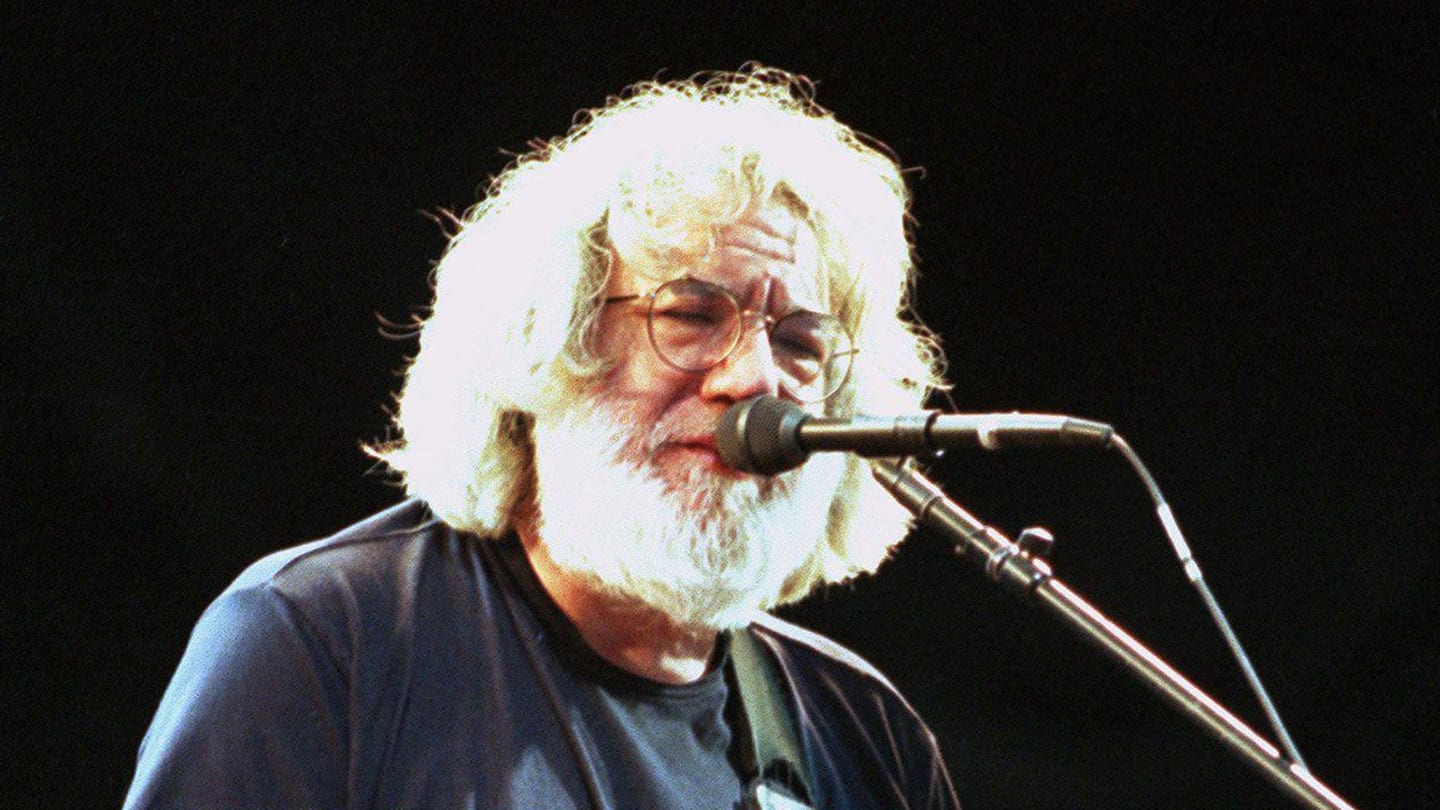
The Grateful Dead
It’s probably no surprise that this band is strongly linked to the music scene of the Bay Area. They were incredibly diverse, mixing bluegrass, blues, and classical music with a willingness to try new things.
After experimenting with recording for several years, the band really hit their stride with the live album Live/Dead in the late 1960s. They then quickly mastered studio recording, releasing the acclaimed albums Workingman’s Dead and American Beauty in 1970.
By the late 1970s, the band’s concerts had become famous, and they’d built a dedicated fanbase. They kept pushing their musical boundaries with albums like Terrapin Station and Shakedown Street.
Jefferson Airplane
This band was a major force in the psychedelic music scene of the late 1960s and early 1970s. They were known for the beautiful guitar work of Jorma Kaukonen and the distinctive vocals of both Marty Balin and Grace Slick. Slick continued a strong tradition of influential female singers who helped define the sound of the San Francisco Bay Area.
By 1970, bands like The Stone Poneys and Big Brother and the Holding Company had disbanded, but their vocalists, Linda Ronstadt and Janis Joplin, continued to be hugely influential. Grace Slick didn’t achieve the same level of solo success as Ronstadt or Joplin, but her work with Jefferson Airplane – whether leading songs like “White Rabbit” or sharing vocals on “Volunteers” with Marty Balin – was central to the era’s cultural shift.
I remember when the Airplane transformed into Starship back in ’74 – a lot of the original members stayed on, which was cool. They kept having hits, but honestly, it just didn’t feel quite the same as the Airplane – some of that raw energy seemed to be missing.
Journey
Journey started in 1973 as a rock band with jazz influences. In 1977, they found Steve Perry, a singer who had been performing around the San Francisco Bay Area for years without much recognition. Bringing Perry into the band was a magical combination.
Journey quickly became incredibly popular in the San Francisco Bay Area. Their 1978 album, Infinity, featuring the hit song “Wheel in the Sky,” was a perfect example of the arena rock sound that dominated the late 1970s.
Journey quickly became one of the world’s biggest bands, consistently releasing popular albums and hit songs throughout the 1980s.
Steve Miller Band
Steve Miller grew up surrounded by music – his father was a recording engineer and his godfather was legendary guitarist Les Paul. He learned to play the blues while coming of age in Texas and Chicago. Before forming his famous band and moving to San Francisco, Miller had experience in almost every type of American music.
He explored a variety of musical styles across several albums in the late 1960s, and then found widespread popularity in the early 1970s with hits like “The Joker,” followed by “Take the Money and Run” and “Jet Airliner.”
The word “pompatus” has an unknown meaning, but it definitely sounds like something from the vibrant Summer of Love era in San Francisco.
Moby Grape
In the San Francisco music scene of the 1960s, Moby Grape stood out as one of the best bands. Their incredible guitar work came from Jerry Miller, Peter Lewis, and Skip Spence, and they had a rhythm section that seamlessly blended psychedelic and blues sounds. Every member could sing, adding to their dynamic performances. Though the unpredictable Skip Spence left the band relatively early, he returned to contribute koto to their last album, 20 Granite Creek, released in 1971.
Though Moby Grape attempted comebacks over the following decades, their story serves as a warning about how bad management can ruin a band’s potential.
New Riders of the Purple Sage
In the beginning, the New Riders of the Purple Sage included Jerry Garcia on pedal steel guitar, along with Phil Lesh on bass and Mickey Hart on drums. Once these musicians focused solely on the Grateful Dead, the New Riders continued successfully, releasing well-regarded albums that helped define the emerging genre of country rock.
Although New Riders were known as a country rock band, they weren’t afraid to experiment with other styles. Songs like “I Don’t Need No Doctor,” which blended R&B and gospel, and “Death and Destruction,” reminiscent of Crazy Horse, showed their versatility.
Santana
For many years, Carlos Santana and his band were the most well-known names in Latin rock in the United States. They first gained popularity in the San Francisco Bay Area in the mid-1960s, then became nationally famous after performing at Woodstock in 1969. Their first three albums – Santana, Abraxas, and Santana III – truly established them as leaders in blending Latin rhythms with rock music.
At 78, Carlos is still considered one of the most legendary guitar players of the past 50 years.
Sly and the Family Stone
Sly Stone, also known as Sylvester Stewart, was a truly innovative musician. He excelled as a producer, bandleader, composer, and instrumentalist, and the albums he created with his band in the late 1960s and early 1970s are remarkably impressive – it’s hard to find a better run of albums from that era.
Sly Stone dramatically reshaped American popular music, starting with his 1968 hit, “Dance to the Music,” and continuing with the influential funk album “There’s a Riot Going On” in 1971, which was inspired by Marvin Gaye’s “What’s Going On.” His last major success, 1973’s “Fresh,” is particularly moving when you consider that Stone, a man who valued family both by blood and by choice, ended up working almost entirely on his own.
Questlove’s documentary Sly Lives! (2025) offers a superb look into the life and mind of a genius.
The Tubes
Though often overlooked today, the Tubes were a significant band from the San Francisco Bay Area, continuing to perform live into the 2000s. They were pioneers of punk music, or perhaps even early punk itself, and it’s a matter of debate. Regardless, their 1975 debut single, “White Punks on Dope,” and their energetic, satirical album Young and Rich are still considered classics of 1970s San Francisco music.
The music that started in the Bay Area years ago continues to thrive today, with artists ranging from Green Day and Train to Counting Crows and H.E.R. The region remains a hotbed for incredible music.
Read More
- Invincible Season 4 Gender Swaps Tech Jacket As Fans Question Major Comic Change
- Gold Rate Forecast
- 22 Films Where the White Protagonist Is Canonically the Sidekick to a Black Lead
- Unveiling the Schwab U.S. Dividend Equity ETF: A Portent of Financial Growth
- Why Won’t It Just *Do* What You Ask? Unpacking the Quirks of AI Language
- Superman Flops Financially: $350M Budget, Still No Profit (Scoop Confirmed)
- The Best Former NFL Players Turned Actors, Ranked
- Silver Rate Forecast
- 14 Movies Where the Black Character Refuses to Save the White Protagonist
- New HELLRAISER Video Game Brings Back Clive Barker and Original Pinhead, Doug Bradley
2026-02-04 14:01