Author: Denis Avetisyan
A new approach combines automated text analysis with human expertise to make sense of complex stories hidden within large collections of text.
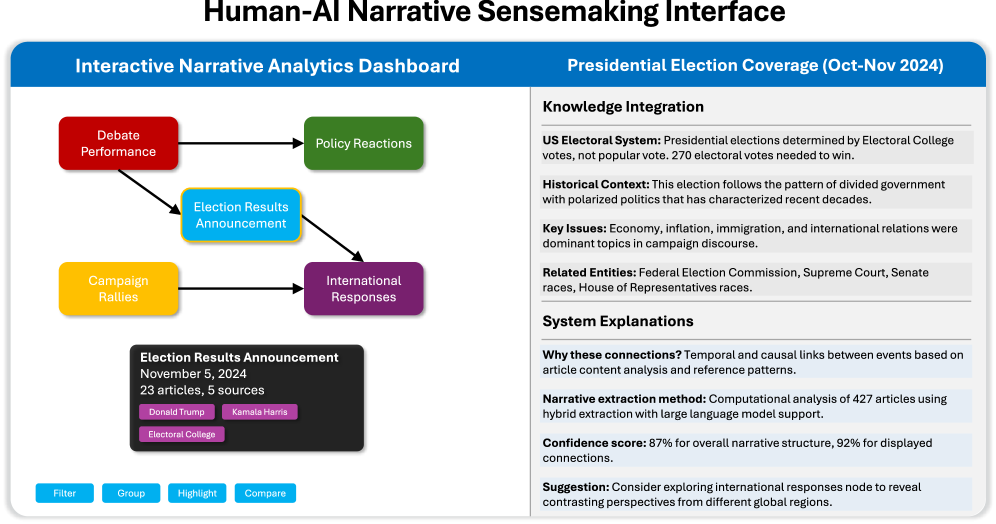
This review introduces Interactive Narrative Analytics, a field bridging computational narrative extraction, visual analytics, and human-centered sensemaking.
Despite increasing data volumes, extracting meaningful insights from complex narratives remains a significant challenge. This paper introduces the field of Interactive Narrative Analytics: Bridging Computational Narrative Extraction and Human Sensemaking, proposing a novel approach that integrates automated narrative identification with interactive visual exploration. By uniting computational power and human sensemaking, we demonstrate a pathway towards scalable and insightful analysis of large text collections. Will this interdisciplinary synergy unlock new understandings across domains like news analysis, scientific discovery, and social intelligence?
Navigating Complexity: The Limits of Conventional Narrative Analysis
Conventional techniques for analyzing large volumes of text often fall short when faced with the nuances of complex narratives. These methods, frequently relying on keyword searches or basic statistical analysis, struggle to identify relationships between entities, track evolving storylines, or infer underlying motivations within a text. Consequently, critical insights can be obscured, leading to incomplete or inaccurate sensemaking. The limitations become particularly pronounced when dealing with lengthy documents – such as scientific publications or intelligence reports – where information is dispersed and interconnected, requiring a more sophisticated approach to extract meaningful patterns and construct a coherent understanding of the presented narrative.
The relentless expansion of both scientific knowledge and global intelligence gathering has created a critical need for advanced narrative processing techniques. Researchers now face a deluge of data – research papers, reports, and analyses – that far exceeds the capacity for traditional, manual review. This exponential growth isn’t merely a quantitative problem; the complexity of the information, often presented with nuanced arguments and interwoven contexts, demands methods capable of identifying key events, understanding character relationships, and discerning underlying themes. Consequently, fields like computational linguistics and artificial intelligence are actively developing systems designed to automatically extract, synthesize, and interpret narratives from vast textual datasets, moving beyond simple keyword searches toward genuine comprehension and insightful knowledge discovery.
Deconstructing Narrative: A Computational Approach
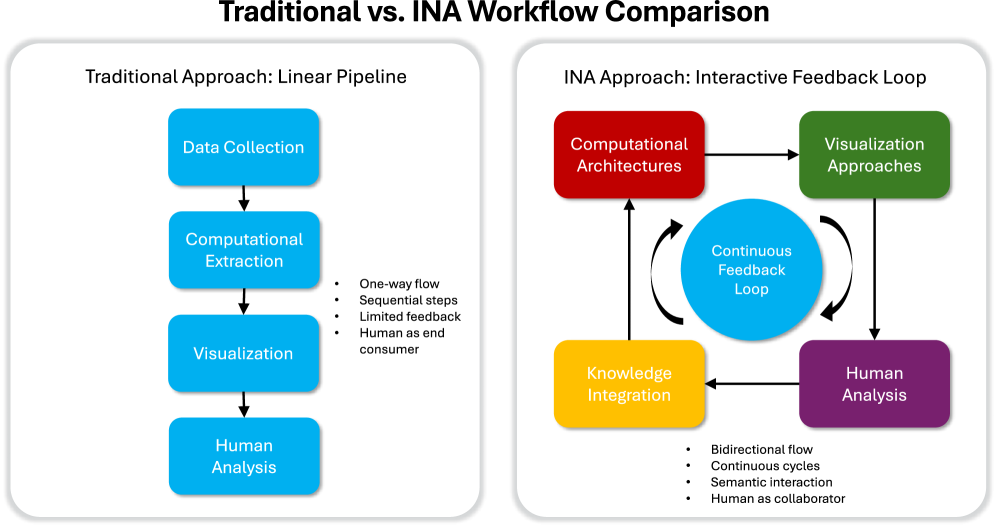
Computational Narrative Extraction (CNE) provides a means of automated identification of core narrative components within unstructured textual data. This process moves beyond simple keyword spotting to discern elements such as agents, actions, and settings, effectively deconstructing a text into its constituent narrative parts. CNE systems utilize algorithms to locate and categorize these elements, creating a structured representation of the narrative from the raw text. The identified elements can then be used for tasks including story summarization, character analysis, and comparative literature studies, offering an objective approach to narrative understanding and analysis.
Computational Narrative Extraction (CNE) utilizes Natural Language Processing (NLP) techniques, including dependency parsing and named entity recognition, to identify potential event triggers and participants within text. These extracted elements are then formalized using Knowledge Representation methods, such as knowledge graphs or frame-based systems, to model the relationships between events – including temporal order, causality, and participant roles. This allows CNE systems to move beyond simple event detection and construct a structured representation of the narrative, capturing how events connect and contribute to the overall story. The resulting knowledge representation facilitates automated narrative understanding and reasoning.
Recent implementations of Computational Narrative Extraction (CNE) systems have integrated Large Language Models (LLMs) to enhance event detection capabilities. Evaluations on standardized benchmark datasets demonstrate accuracy rates currently reaching up to 85%. This performance improvement is attributed to the LLMs’ ability to contextualize event mentions, disambiguate coreference, and infer relationships between events without explicit training for specific narrative schemas. While performance varies depending on dataset complexity and event type granularity, these results represent a significant advancement over previous rule-based and machine learning approaches to automated narrative analysis.
Visualizing the Narrative Landscape: Interactive Exploration
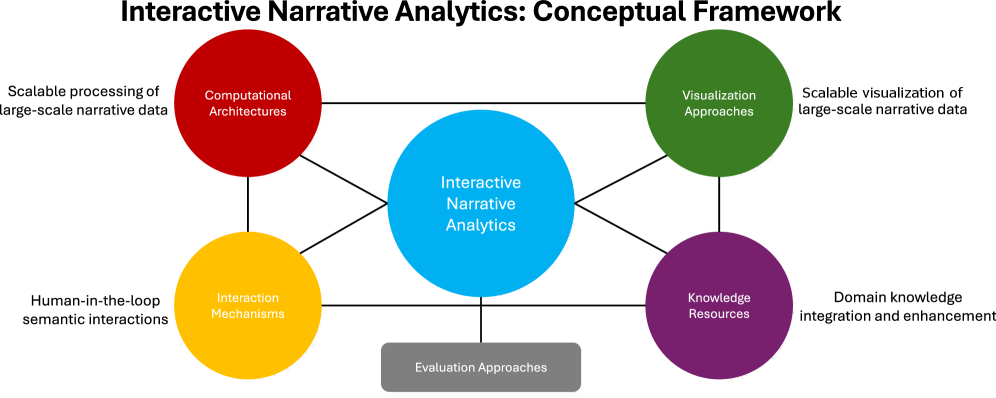
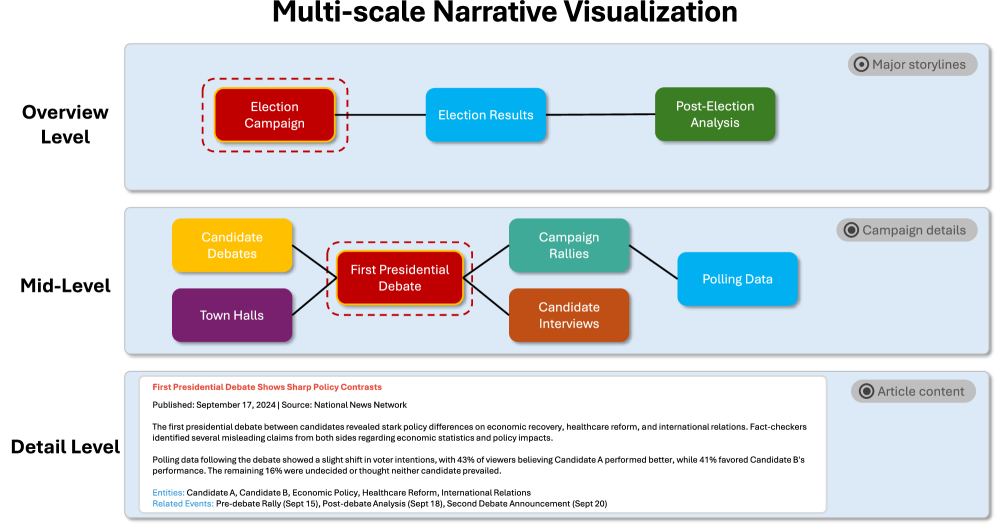
Interactive Visual Analytics (IVA) facilitates narrative exploration by transforming extracted textual data into visually accessible formats. These techniques move beyond static reports, allowing users to dynamically query, filter, and re-represent information to uncover underlying structures and trends. IVA systems typically incorporate features such as zooming, panning, and drill-down capabilities, enabling analysts to investigate narratives at varying levels of detail. By providing an intuitive interface for data manipulation, IVA supports iterative analysis and hypothesis testing, ultimately enhancing the user’s ability to derive actionable insights from complex narrative datasets.
Timeline visualization presents narrative events sequentially, facilitating the identification of temporal patterns and causal relationships. This method displays events along a chronological axis, allowing analysts to quickly assess the order of occurrences and pinpoint key moments. Graph visualization, conversely, focuses on representing entities and their relationships as nodes and edges. This reveals connections and dependencies that might not be apparent in purely temporal representations, enabling the discovery of networks and influential actors within the data. Both techniques are particularly effective with complex datasets, where manual analysis would be impractical, and allow for the identification of anomalies or previously unknown associations by visually highlighting patterns in the extracted narrative information.
Semantic Interaction in visual analytics provides analysts with the capability to directly modify the visual representation of data to explore hypotheses and refine their understanding of underlying narratives. This functionality extends beyond simple filtering or zooming; it encompasses actions such as merging nodes in a graph visualization to represent entity consolidation, altering the weighting of edges to emphasize relationship strength, or dynamically adjusting time scales in a timeline to focus on specific event sequences. These manipulations are immediately reflected in the visualization, enabling iterative exploration and allowing analysts to test assumptions and uncover previously hidden patterns within the data. The system responds to these interactions by updating the displayed information and potentially triggering recalculations of related metrics, facilitating a closed-loop analytical process.
Pilot studies demonstrate that the implementation of interactive visual analytics techniques for narrative understanding results in an average 20% increase in analyst efficiency. This improvement is attributed to the ability of these visualizations to facilitate both deeper sensemaking – the process of constructing coherent interpretations from data – and narrative validation. Specifically, analysts can more readily identify inconsistencies, confirm hypotheses, and extract key insights through direct visual exploration, reducing the time required for manual review and analysis of extracted narratives. Efficiency gains were measured by comparing task completion times and the number of identified critical events between analysts using traditional methods and those utilizing the interactive visualizations.
Beyond Analysis: Impact and Future Directions
Cognitive Narrative Elements, when coupled with interactive visual analytics, present a powerful approach to rapidly evaluating the trustworthiness of information. By deconstructing narratives into their fundamental components – such as characters, events, and causal links – and visually representing these relationships, analysts can quickly identify inconsistencies, biases, or fabricated details indicative of misinformation. This methodology moves beyond simple fact-checking to assess the internal coherence of a story, revealing whether the narrative ‘makes sense’ based on established patterns of human cognition and storytelling. The ability to visually explore these elements allows for a more nuanced understanding of narrative credibility, facilitating quicker and more informed judgments about the veracity of claims and potentially mitigating the spread of false information.
The capacity to systematically deconstruct and evaluate complex information is paramount in intelligence analysis, and this framework offers a significant advancement in that regard. By providing a structured methodology – encompassing narrative element identification, coherence measurement, and interactive visualization – analysts can move beyond subjective assessments towards data-driven conclusions. This approach facilitates the rapid identification of inconsistencies, biases, or manipulative techniques within a given narrative, allowing for more accurate threat assessments and informed decision-making. The resulting clarity not only improves the efficiency of the analytical process but also enhances the reliability of intelligence products, ultimately bolstering national security efforts by providing a more robust defense against disinformation and strategic deception.
Future investigations are poised to enhance the precision of narrative coherence metrics, moving beyond simple keyword analysis to incorporate semantic relationships and contextual understanding. This involves exploring computational linguistics techniques – including natural language inference and discourse analysis – to better gauge how well story elements align and support a central claim. Simultaneously, development efforts are concentrating on more intuitive interactive tools; researchers aim to create interfaces that allow analysts to visually explore narratives, highlight inconsistencies, and rapidly assess credibility – potentially through dynamic network graphs and customizable dashboards. Such advancements promise to not only automate portions of the analytical process, but also to empower human analysts with the means to more effectively navigate and interpret complex information landscapes.
This research formally establishes Interactive Narrative Analytics (INA) as a novel field, bridging computational narrative analysis with interactive visualization techniques. The work defines INA not merely as a collection of methods, but as an interdisciplinary approach to understanding and interpreting complex information embedded within narratives. By emphasizing human-computer interaction, INA aims to empower analysts and researchers to explore narratives with greater nuance and efficiency. This foundational study, supported by funding from ANID FONDECYT 11250039 Project and Project 202311010033-VRIDT-UCN, lays the groundwork for future investigations into narrative coherence, credibility assessment, and ultimately, a more informed understanding of the stories that shape our world.
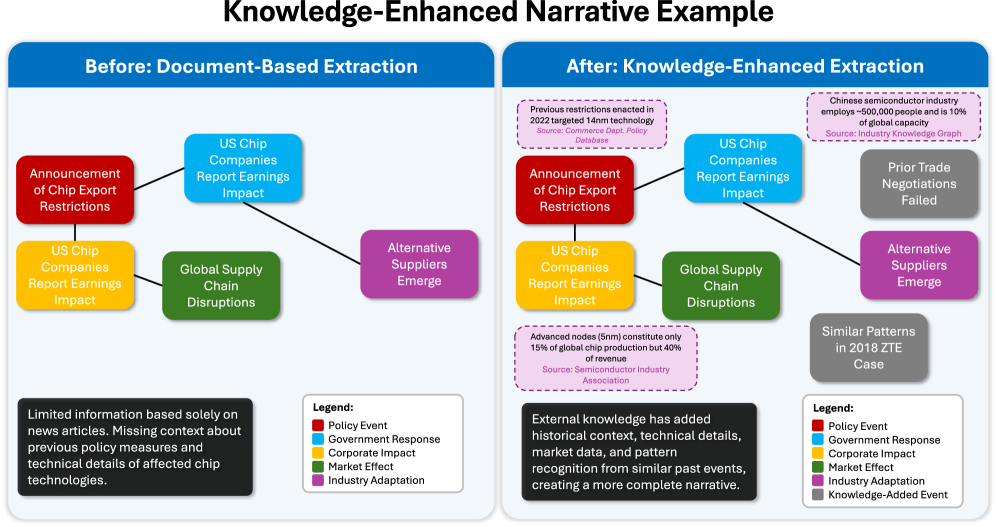
The pursuit of Interactive Narrative Analytics, as detailed in the research, echoes a fundamental principle of systemic design. The work highlights how effectively understanding complex narratives requires bridging computational extraction with human sensemaking-a holistic approach mirroring the interconnectedness of any well-designed system. As Vinton Cerf once stated, “What scales are clear ideas, not server power.” This sentiment aptly captures the essence of INA; the true scalability isn’t merely in processing vast text collections, but in the clarity with which extracted narratives can be represented and understood, fostering a cohesive and meaningful knowledge representation for human interpretation. The field acknowledges that isolated analytical components are insufficient; rather, the entire ecosystem of extraction, visualization, and sensemaking must function synergistically.
What Lies Ahead?
The pursuit of Interactive Narrative Analytics, as presented, reveals less a destination than a confluence of currents. Extracting narrative from large corpora is, predictably, not the core difficulty; the challenge resides in representing that narrative in a manner susceptible to meaningful human interrogation. Simplification, naturally, is inevitable, but each reduction risks obscuring the very nuances that prompted analysis in the first place. The system’s architecture will be crucial; a poorly conceived interface, however visually appealing, will merely rearrange the noise, not illuminate the signal.
Future work must address the inherent subjectivity of “narrative” itself. While computational methods can identify patterns, assigning meaning remains firmly within the human domain. A truly interactive system acknowledges this asymmetry, providing not answers, but rather, curated perspectives. The field will likely move beyond visual representations, exploring modalities that leverage human cognitive strengths – spatial reasoning, analogical thinking, and, perhaps surprisingly, even intuition.
Ultimately, the success of Interactive Narrative Analytics will not be measured by the quantity of data processed, but by the quality of insight generated. The temptation to build ever-more-complex algorithms should be resisted. A system that elegantly reveals the underlying structure of a narrative, even at the cost of exhaustive detail, will prove far more valuable than one that drowns the user in a sea of information. The focus must remain steadfastly on the whole – for it is in the relationships between parts, not the parts themselves, that true understanding resides.
Original article: https://arxiv.org/pdf/2601.11459.pdf
Contact the author: https://www.linkedin.com/in/avetisyan/
See also:
- Gold Rate Forecast
- 22 Films Where the White Protagonist Is Canonically the Sidekick to a Black Lead
- Games That Faced Bans in Countries Over Political Themes
- Silver Rate Forecast
- Celebs Who Narrowly Escaped The 9/11 Attacks
- Brent Oil Forecast
- Unveiling the Schwab U.S. Dividend Equity ETF: A Portent of Financial Growth
- How to Do Sculptor Without a Future in KCD2 – Get 3 Sculptor’s Things
- Superman Flops Financially: $350M Budget, Still No Profit (Scoop Confirmed)
- 14 Movies Where the Black Character Refuses to Save the White Protagonist
2026-01-19 10:27