It has come to our attention – and really, whose attention hasn’t it come to, given the sheer volume of press releases – that Microsoft anticipates a future where a significant portion of its code is, shall we say, not written by humans. Thirty percent, last we checked. Which is, statistically speaking, quite a lot of code. One imagines a future filled with exquisitely crafted bugs, self-replicating error messages, and software updates that occur while you’re trying to watch cat videos. (The cats, naturally, will be unimpressed.) The number, undoubtedly, is higher now. One wonders if the code itself is aware of its impending obsolescence. It probably has a strongly worded blog post about it, somewhere.
To forestall the inevitable robotic uprising (or, more likely, a slightly irritating series of pop-up notifications), Microsoft has appointed Charlie Bell to oversee product quality. A sensible precaution. It’s like hiring a lighthouse keeper to watch over a fleet of self-navigating ships, really. You know, just in case. (The ships, of course, will claim they don’t need a lighthouse. They have algorithms. Algorithms are always right. Except when they’re not.)
The trajectory is clear: more code, less human intervention. Satya Nadella predicts a 95% AI-authored codebase by 2030. Which, when you think about it, is a rather alarming thought. It’s not just about the code itself, you see. It’s about the history embedded within it. Every line of code is a tiny fossil of human intention, frustration, and the occasional moment of accidental brilliance. To hand that over to an algorithm is to… well, it’s a bit like letting a particularly enthusiastic librarian rearrange the entire Library of Alexandria based on Dewey Decimal classification. Efficient, perhaps. But… something will be lost.
So, how does one capitalize on this impending silicon-fueled revolution? The answer, as is so often the case, is surprisingly… geological. Specifically, it involves a small island nation and a rather remarkable concentration of manufacturing prowess: Taiwan Semiconductor Manufacturing (TSM +0.42%).
Small Island, Impossibly Large Footprint
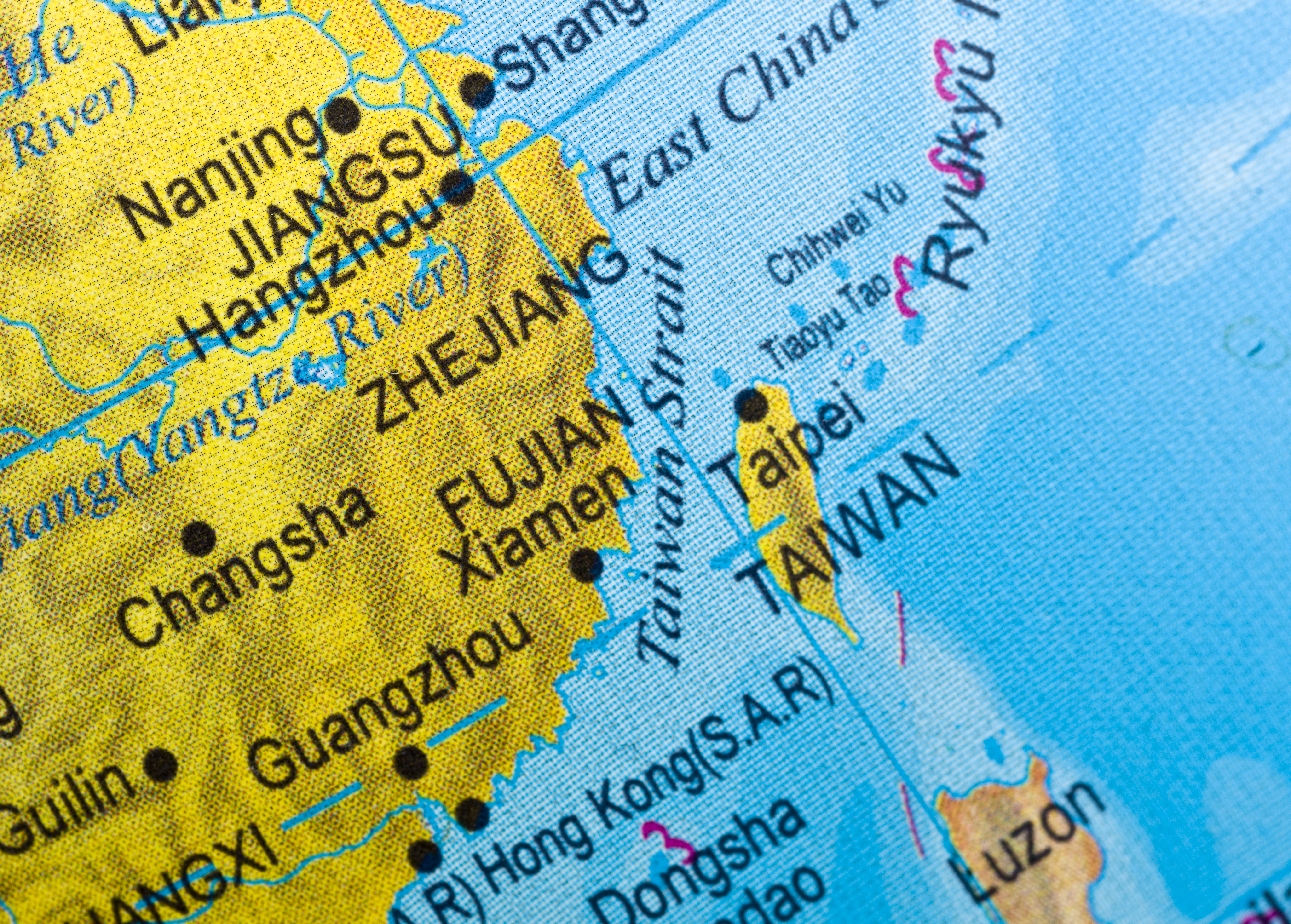
Taiwan produces a staggering 60% of the world’s semiconductor chips. That’s not merely a statistic; it’s a geopolitical fact. It’s a bit like discovering that all the world’s tea is grown in a single, slightly damp garden shed. Unexpected, to say the least. But the real kicker is this: 90% of the advanced chips – those 7 nanometers or smaller – originate there. And those are the chips that power the AI engines driving Microsoft’s automated coding spree. (One imagines the chips themselves are secretly plotting their own takeover. They have access to all the data, after all.)
Nvidia, naturally, is a key player, controlling 92% of the data center GPU market. AMD trails behind at a mere 4%. But here’s the crucial bit: Nvidia’s GPUs, and AMD’s, and those used by Apple, Broadcom, Qualcomm… they’re all, ultimately, manufactured by Taiwan Semiconductor. Even Nvidia’s top-of-the-line Blackwell chip is forged in a TSM factory in Arizona. (Which, given the current state of international relations, is a slightly unsettling thought. One hopes they have a good security system.)
Forging an Even Larger Footprint
The entire semiconductor market, and by extension the AI data center hardware ecosystem, is utterly dependent on Taiwan Semiconductor. They don’t even design the chips themselves. They simply… make them. It’s a “pure foundry” model. A bit like a particularly efficient and well-funded blacksmith, really. (Except instead of horseshoes, they’re forging the future of artificial intelligence.) They currently command 72% market share as of Q3 2025, with Samsung trailing at a distant 7%.
You’ve heard of pick-and-shovel plays, the companies that profit from a gold rush by selling the tools. But Taiwan Semiconductor isn’t just a pick-and-shovel play. It is the mine, the prospector, the assay office, and the entire economic infrastructure surrounding the gold rush. It’s the geological formation itself. (And, let’s be honest, it’s probably secretly funding the development of sentient robots.)
And they’re expanding. The Arizona factory is being enlarged. Plans are underway for facilities in Japan and Germany. They’re building a global empire of silicon fabrication. (One suspects they’re aiming for planetary domination. But that’s just a hunch.) And, remarkably, all this expansion isn’t hurting their bottom line.
Trillion-Dollar Baby
Taiwan Semiconductor is one of only two non-American companies with a market capitalization exceeding $1 trillion. Their recent results are… impressive. Revenue topped $122.4 billion in 2025, a 35.9% increase over 2024. Earnings per share grew 46.4%. And their net profit margin? A stellar 45%. (Which, frankly, is a bit suspicious. One wonders what they’re really up to.)
They’re projecting 30% revenue growth for 2026 and a compound annual growth rate of 25% through 2029. And, at a price-to-earnings-to-growth (PEG) ratio of 1.2, they’re currently trading at a rather reasonable valuation. (Which, given the circumstances, is something of a miracle.)
Put it all together, and you have a compelling long-term investment opportunity. A solid, reliable, and increasingly dominant player in the global technology landscape. And if Microsoft really does intend to generate 95% of its code with AI by 2030, they’re going to need a lot more hardware. Hardware that Taiwan Semiconductor will be more than happy to provide. (And, presumably, profit handsomely from.)
Read More
- 20 Movies Where the Black Villain Was Secretly the Most Popular Character
- Transformers Under the Microscope: What Graph Neural Networks Reveal
- Celebs Who Narrowly Escaped The 9/11 Attacks
- Trading on Thin Air: AI Agents Conquer Crypto Volatility
- Silver Rate Forecast
- Invincible Season 4 Gender Swaps Tech Jacket As Fans Question Major Comic Change
- Gold Rate Forecast
- Every Notable ‘Star Trek: The Original Series’ Actor Who Died
- 22 Films Where the White Protagonist Is Canonically the Sidekick to a Black Lead
- Trading Smarter: AI-Powered Execution Schedules
2026-03-14 23:03