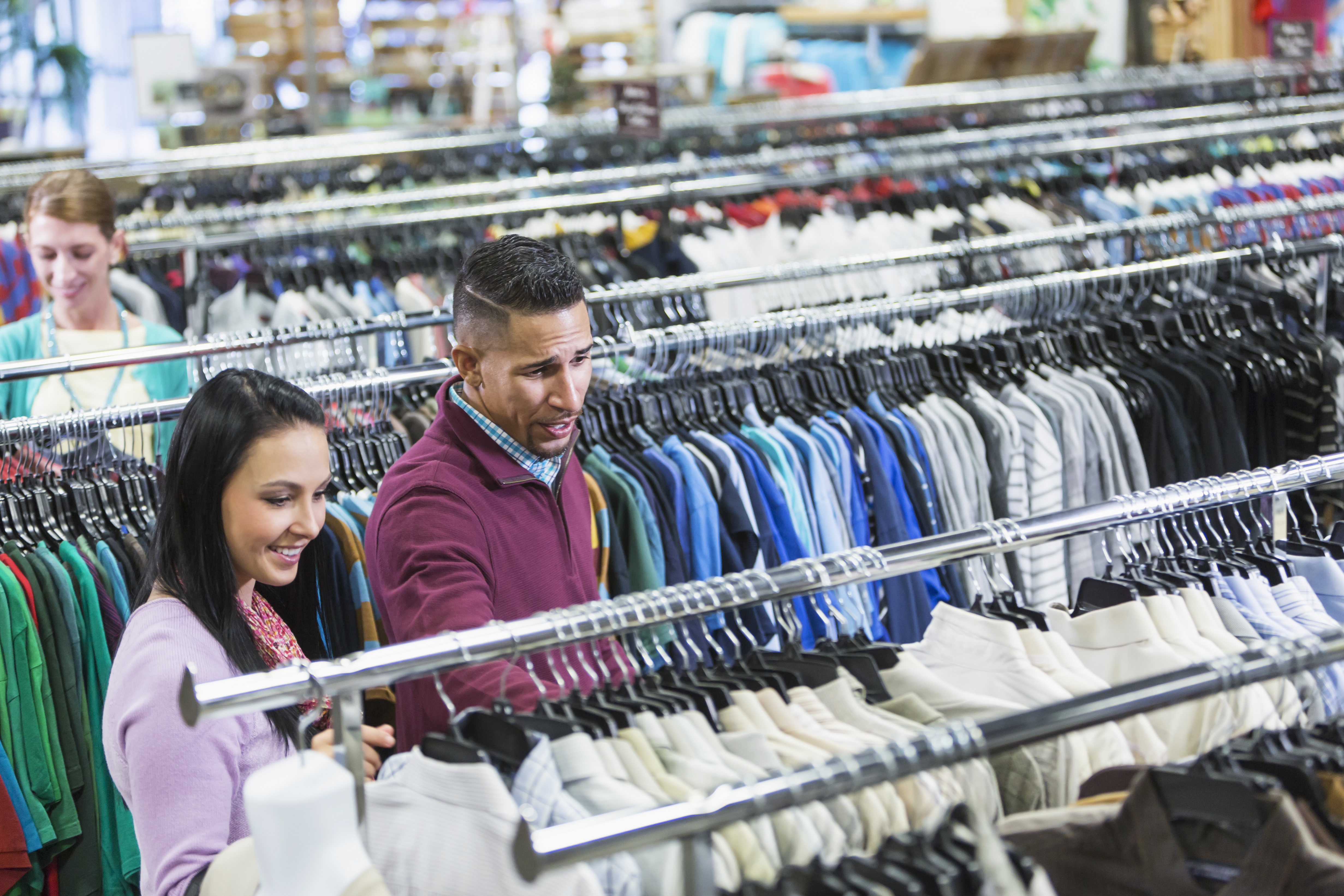
I’ve always found the persistence of brick-and-mortar stores faintly unsettling, like a relative who refuses to get the memo. Everyone’s ordering everything online now, building little cardboard fortresses in their living rooms, and yet, these places… they endure. My aunt Mildred, for example, still believes a purchase isn’t real until she’s handed over cash and received a paper receipt. She’s a tough customer, and I suspect the stores that are still standing are surviving because of people like her—and a surprising amount of logistical competence.
Money’s tight, naturally. Everyone’s calculating the cost of almond milk versus existential dread. But it’s not just about price. There’s something almost… comforting about wandering an aisle, even if you end up buying nothing. It’s a tactile experience, a break from the endless scrolling. I suspect that’s why these three companies, at least, seem to be doing alright.
1. TJX Companies
TJX—Marshalls, HomeGoods, the places where you find a designer handbag next to a chipped ceramic frog—is a fascinating study in controlled chaos. They’re opening stores like they’re trying to win a race against the inevitable heat death of the universe. Over 5,300 locations already, and they’re planning even more. My friend, Carol, a professional organizer, is convinced they have a secret warehouse filled with everything ever lost or abandoned. It’s probably just good supply chain management, but Carol’s theory is more fun.
They’re diversifying, too. New stores in Canada, Europe, even Australia. I tried to explain to my mother that they were expanding internationally, and she just asked if that meant she’d have to learn a new currency. She’s not a fan of change. But it’s smart. Spreading the risk, tapping into new markets. And the Sierra stores—outdoor gear—that’s a good move. Everyone’s pretending to be outdoorsy these days. Even me, mostly I’m just looking at trees through a window.
The tariffs thing is interesting. I’ve heard analysts say it’s a threat, but I suspect TJX will thrive on it. Brands with excess inventory will be practically begging them to take it off their hands. It’s like a clearance sale for the entire global economy. And Ernie Herrman, the CEO, mentioned younger shoppers? That’s key. My generation is obsessed with vintage and secondhand. We’re just trying to avoid looking like everyone else. Or maybe we just can’t afford new stuff.
2. Walmart
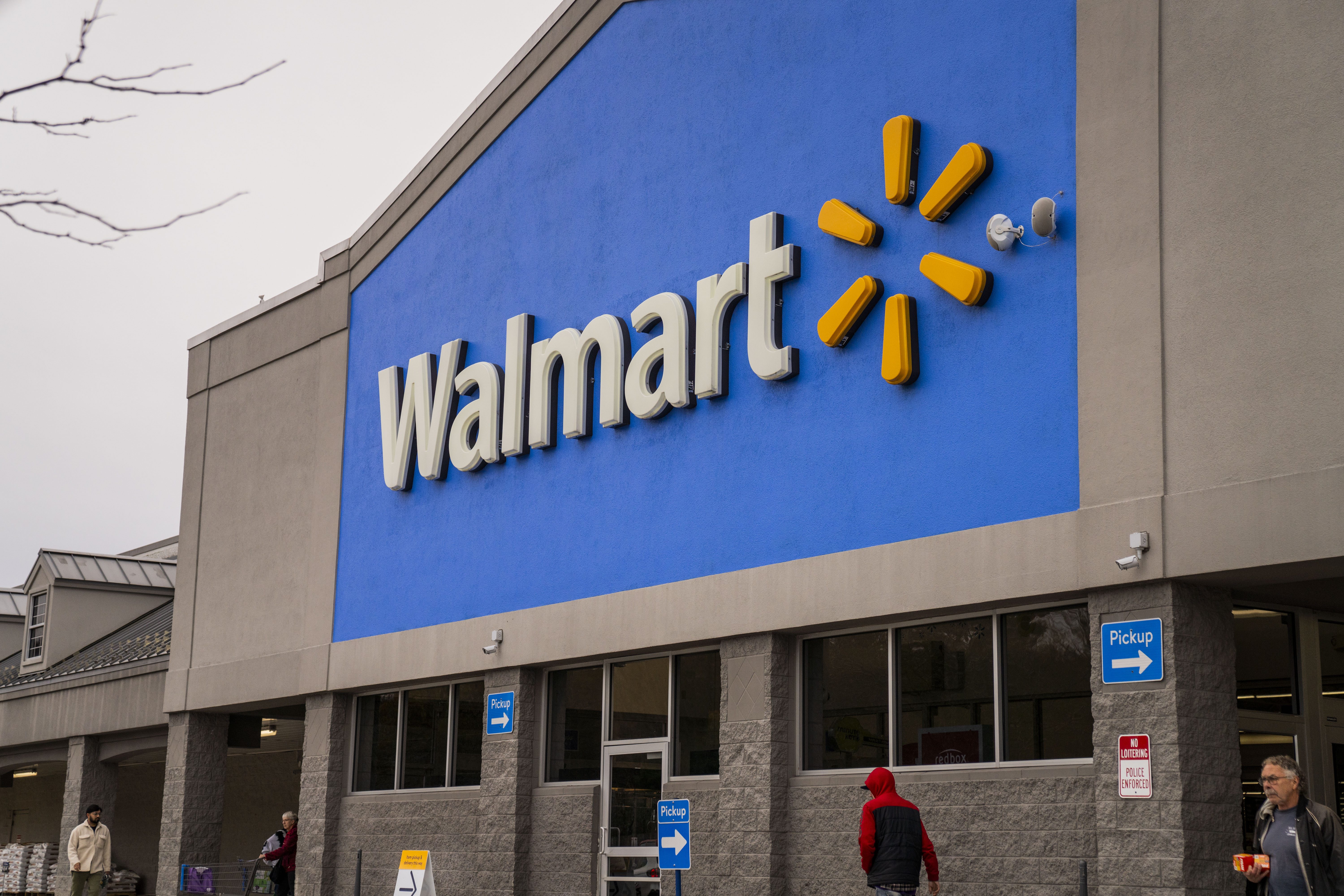
Ah, Walmart. The behemoth. I remember my grandfather, a farmer, being genuinely impressed by the sheer scale of it. He said it was like a city under one roof. He wasn’t wrong. They’ve crossed the trillion-dollar market cap threshold, which feels… excessive. Like they’re actively trying to become a sovereign nation.
John Furner, the CEO, talks about “Adaptive Retail.” It sounds like something out of a science fiction novel. Turning stores into fulfillment centers, delivering products within three hours. It’s efficient, I suppose. But it also feels a little… dystopian. Like we’re all just cogs in a giant, automated machine. They’re building new stores, too. “Stores of the Future,” with QR codes and energy-efficient buildings. My mother would be lost. She still calls the help desk to ask how to turn on the television.
An AI shopping assistant called Sparky? Honestly, I’m starting to suspect they’re just trying to replace us all with robots. Tracking pallets with sensor technology? It’s a little creepy. But I have to admit, it’s impressive. They’re building a technological advantage. It’s just… unsettling.
3. Five Below
Five Below. I’ll admit, I was skeptical. It’s basically a glorified dollar store. But the more I looked at it, the more I realized it’s actually quite clever. They’re targeting a specific niche: cheap stuff for teenagers and young adults. And they’re doing it well. Over 1,800 stores already, with plans to double that. It’s like a swarm of brightly colored locusts, descending upon shopping centers across the country.
Winnie Park, the new CEO, is talking about expansion into the Pacific Northwest. I grew up in the Pacific Northwest. It’s a notoriously difficult market. Everyone’s too cynical and independent. But Five Below might just crack it. They’re moving into former Jo-Ann Fabrics spaces, taking advantage of empty storefronts. It’s a smart move. They’re piggybacking on existing foot traffic. And they’re competing with Dollar Tree, Dollar General, and Walmart. It’s a battle royale of bargain retailers.
I still think the whole thing is a little strange. But I have to admit, Five Below is surprisingly resilient. It’s a testament to the enduring appeal of cheap stuff. And in this economy, who can argue with that?
Read More
- 20 Movies Where the Black Villain Was Secretly the Most Popular Character
- Celebs Who Narrowly Escaped The 9/11 Attacks
- Top 20 Dinosaur Movies, Ranked
- 25 “Woke” Films That Used Black Trauma to Humanize White Leads
- Transformers Under the Microscope: What Graph Neural Networks Reveal
- The 10 Most Underrated Jim Carrey Movies, Ranked (From Least to Most Underrated)
- 22 Films Where the White Protagonist Is Canonically the Sidekick to a Black Lead
- Trading on Thin Air: AI Agents Conquer Crypto Volatility
- The Best Directors of 2025
- Silver Rate Forecast
2026-03-11 17:52