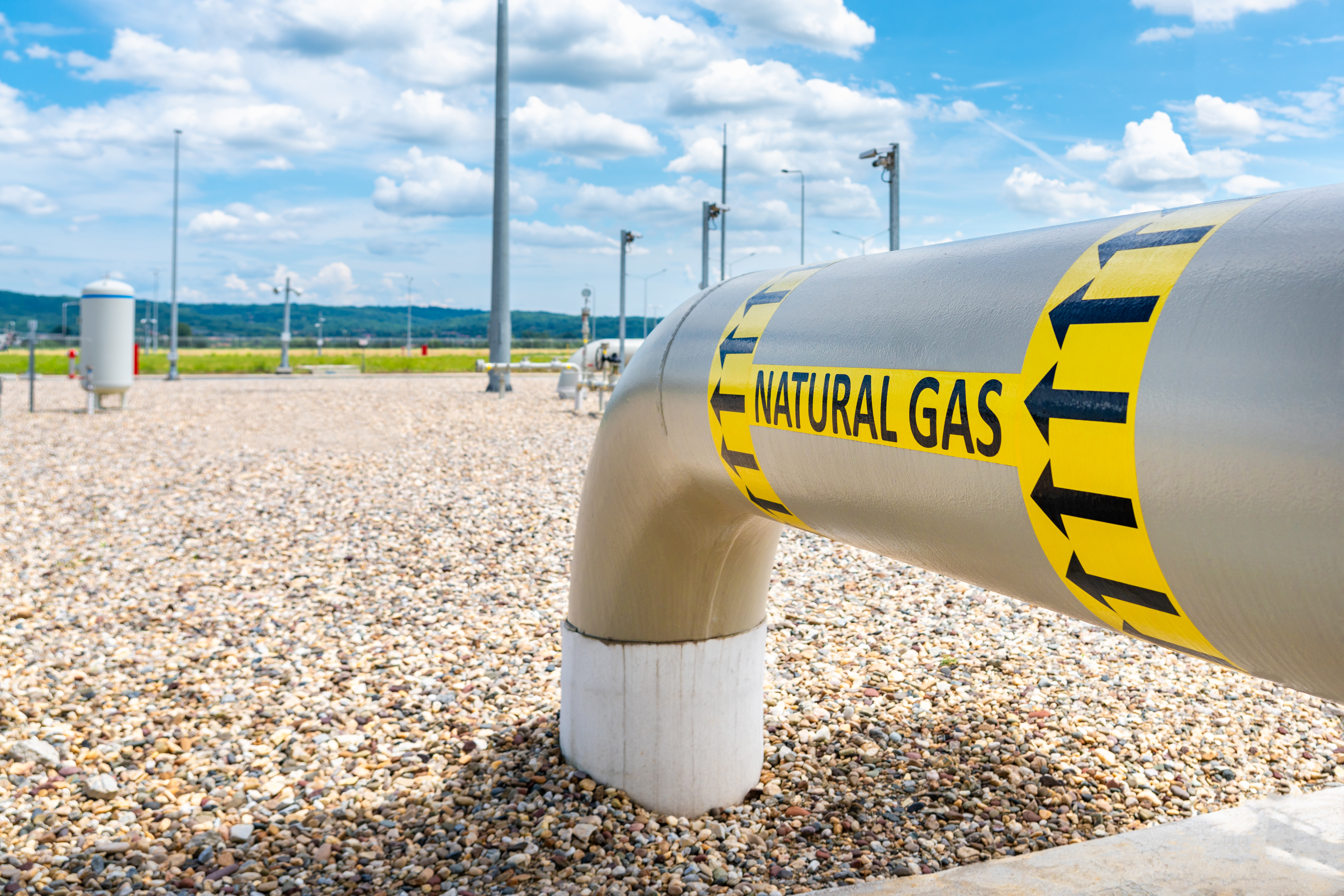
The situation, as anyone with even a passing awareness of the planet will tell you, is this: we are consuming natural gas at a rate that suggests a distinct lack of forward planning. Approximately 91.4 billion cubic feet per day in 2025, if you’re keeping score (which, frankly, seems a little obsessive, but who are we to judge?). Experts, those reliably optimistic souls, predict a further increase of around 25 billion cubic feet per day by 2030. This is largely driven by the insatiable appetite of data centers – those digital warehouses where our cat videos and existential anxieties reside – and a rather enthusiastic export of liquefied natural gas (LNG). It’s all quite… energetic.
This, naturally, creates an opportunity. Not for us to solve the energy crisis, mind you (that would require actual effort), but for those of us interested in a potentially fruitful investment. Specifically, an investment in the companies that operate the extensive network of pipelines – the metallic arteries of the modern world – that transport this gas. They function, in essence, as very large, geographically fixed toll collectors. They don’t ask probing questions about where the gas is going, or why it needs to go there. They simply collect a fee. It’s a beautifully uncomplicated business model. (One might even say, disturbingly so.)
Two companies, in particular, seem particularly well-positioned to benefit from this ongoing gaseous expansion. They are, to put it mildly, rather good at moving things from point A to point B, and then taking a small percentage of the value for themselves. Let’s examine them, shall we?
1. Energy Transfer
With a pipeline network stretching over 140,000 miles – roughly equivalent to circumnavigating the Earth five and a half times, assuming you can lay a pipeline across oceans, which, admittedly, is a logistical challenge – Energy Transfer (ET +1.25%) is a rather significant player in the North American energy landscape. It’s structured as a Master Limited Partnership (MLP), a somewhat arcane legal construct that allows it to distribute a substantial portion of its income to shareholders. This currently translates to a dividend yield exceeding 7%. However, be warned: dealing with MLPs requires filing a Schedule K-1 tax form, a document so complex it’s rumored to be guarded by a particularly grumpy accountant. (The accountant, it is said, has mastered the art of passive-aggressive tax advice.)
Beyond the K-1 complexities, there’s a lot to commend. The business is reasonably diversified across both natural gas and oil, and they have several projects in the works to capitalize on the anticipated gas growth. They distribute roughly 50% to 60% of their cash flow to partners (shareholders), and aim to grow the dividend by 3% to 5% annually. For those seeking predictable, rising income, it’s a reasonably dependable high yield. It’s not quite the same as discovering a perpetually self-filling teapot, but it’s a start.
2. Kinder Morgan
If you’re averse to the complexities of the MLP structure – perhaps you prefer a simpler life, free from the tyranny of Schedule K-1s – or simply wish to own an even larger slice of the U.S. pipeline industry, Kinder Morgan (KMI +0.87%) might be for you. It was once an MLP itself, but has since undergone a transformation into a more conventional corporation. They operate approximately 79,000 miles of pipelines, transporting a staggering 40% of the total natural gas produced in the U.S. (Which raises the question: what happens if all those pipelines simultaneously decide to take a vacation?)
Like Energy Transfer, Kinder Morgan is based in Texas, conveniently located near key gas export sites. This positions them well to benefit from the expected surge in export volumes.
The dividend yield isn’t quite as impressive as Energy Transfer’s, currently around 3.6%, but it’s still a solid return. Kinder Morgan has raised its dividend for nine consecutive years, and, crucially, it’s a dividend they can comfortably afford. Only about 20% of their cash flow is required to cover the dividend payment. (The remaining 80% is presumably used for more important things, like commissioning studies on the migratory patterns of pipeline-dwelling squirrels.) Furthermore, only around 4% of their cash flow is exposed to commodity price fluctuations, making it a remarkably steady business. It’s the kind of investment that allows you to sleep soundly at night, secure in the knowledge that your financial future is, at least for the moment, reasonably stable.
Read More
- 20 Movies Where the Black Villain Was Secretly the Most Popular Character
- Celebs Who Narrowly Escaped The 9/11 Attacks
- Top 20 Dinosaur Movies, Ranked
- 25 “Woke” Films That Used Black Trauma to Humanize White Leads
- The 10 Most Underrated Jim Carrey Movies, Ranked (From Least to Most Underrated)
- Transformers Under the Microscope: What Graph Neural Networks Reveal
- 22 Films Where the White Protagonist Is Canonically the Sidekick to a Black Lead
- Silver Rate Forecast
- Gold Rate Forecast
- The Best Directors of 2025
2026-02-19 22:22