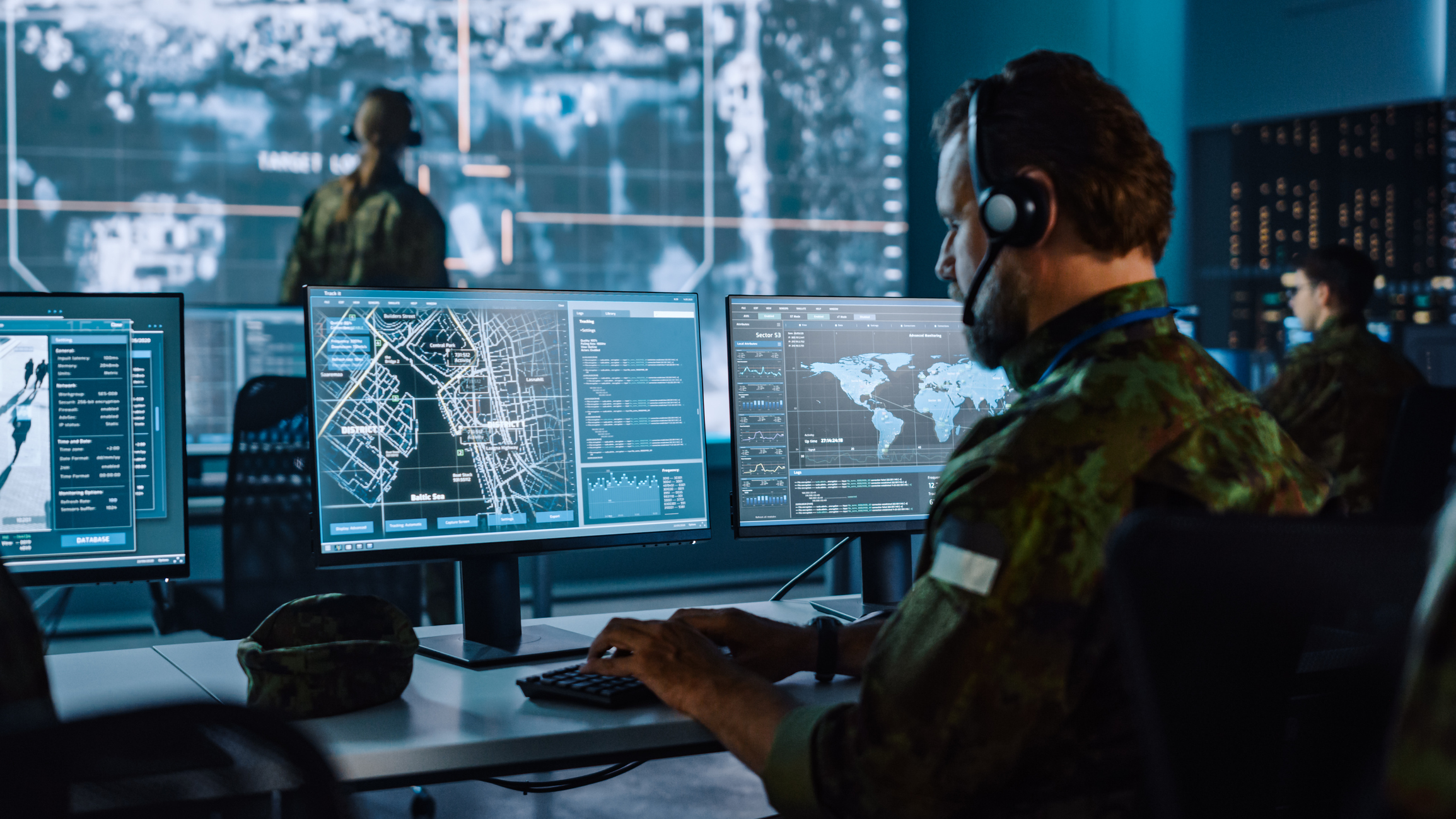
The age of artificial intelligence descends upon us, a tide lifting some vessels, leaving others stranded upon the shoals of obsolescence. Among those navigating these currents, Palantir Technologies – a name that once evoked whispers of controversy – now stands as a curious, if somewhat enigmatic, figure. Born from the desire to sift through the vast, opaque data streams of intelligence agencies, the company, with its initial offering, Gotham, has gradually extended its reach. It is a tale of adaptation, of recognizing that the same tools capable of discerning patterns in shadows can, with a shift in focus, illuminate opportunities within the commercial sphere. Foundry, and the more recent Apollo, represent this broadening of horizons – a pragmatic embrace of the market’s demands.
There was a narrative, readily embraced by those inclined towards skepticism, that Palantir’s future lay solely in its government contracts. That to truly flourish, it must cultivate a robust commercial enterprise. The introduction of the Artificial Intelligence Platform (AIP) has, undeniably, altered this calculus. It is a potent instrument, capable of harnessing the generative powers of AI, and demand has been, shall we say, spirited. Yet, it is a return to the source, a strengthening of ties with its governmental origins, that may prove to be the more enduring development.
A recent affirmation from the Defense Information Systems Agency (DISA) – a body whose very name suggests a certain bureaucratic weight – has the potential to reshape the landscape for Palantir. DISA, tasked with safeguarding the Department of Defense’s digital infrastructure, operates under a system of “Impact Levels,” each representing a higher threshold of security. To reach Impact Level 6 – the apex of this hierarchy – is to earn the implicit trust of those who dwell in the corridors of power. It is a validation, a stamp of approval that transcends mere compliance; it speaks to a fundamental alignment of purpose.
The recent authorization extends Palantir’s Forward cloud service to encompass on-premises and edge deployments, a subtle but significant detail. It allows for a flexibility previously unavailable, a deployment of resources unburdened by the usual layers of administrative constraint. The company’s claim that its entire technology stack – Apollo, Gotham, Foundry, and the aforementioned AIP – can be adapted to any environment, on hardware of the client’s choosing, is not merely a technical boast; it is a promise of liberation. The “Authorize Once, Use Many” procurement process – a phrase that lacks a certain poetic grace, yet conveys a clear benefit – streamlines adoption, removing obstacles that once seemed insurmountable. It suggests a responsiveness, an agility that is often lacking in organizations of such scale.
In essence, this authorization grants Palantir the ability to deploy its software wherever it is needed, even in the most sensitive of settings. It extends beyond the confines of traditional data centers, accelerating the integration of AI onto the battlefield, or wherever else it may be required. This is not simply about technological prowess; it is about the power to act decisively, to respond to evolving circumstances with speed and efficiency.
A Question of Prospects
Palantir has exhibited a remarkable capacity for growth. In the most recent quarter, total revenue surged by 70% year over year, and 19% quarter over quarter, reaching $1.4 billion. However, it is the divergence between its commercial and governmental segments that warrants closer examination. The U.S. commercial revenue has increased by a startling 137% year over year, reaching $507 million, while the U.S. government business grew by a more modest, yet still impressive, 66% to $570 million. This expansion of DISA authorization will not merely accelerate the adoption of Palantir’s tools; it will expand the very definition of its addressable market.
One cannot, of course, ignore the matter of valuation. Even after a recent correction, the stock trades at a premium – 73 times next year’s expected earnings. Such a multiple demands a degree of optimism, a belief in the company’s long-term potential. Yet, the combination of triple-digit commercial growth and an expanding governmental pedigree suggests that the road ahead, while not without its obstacles, is indeed promising. It is a company that seems to be finding its place in the shifting landscape, a company that, despite its complexities, may yet prove to be a force to be reckoned with.
Read More
- Top 20 Dinosaur Movies, Ranked
- 20 Movies Where the Black Villain Was Secretly the Most Popular Character
- Celebs Who Narrowly Escaped The 9/11 Attacks
- 25 “Woke” Films That Used Black Trauma to Humanize White Leads
- The 10 Most Underrated Jim Carrey Movies, Ranked (From Least to Most Underrated)
- Every Notable ‘Star Trek: The Original Series’ Actor Who Died
- The Best Directors of 2025
- Transformers Under the Microscope: What Graph Neural Networks Reveal
- 22 Films Where the White Protagonist Is Canonically the Sidekick to a Black Lead
- Silver Rate Forecast
2026-02-19 11:02