Berkshire Hathaway: Diary of a Growth Investor in Waiting
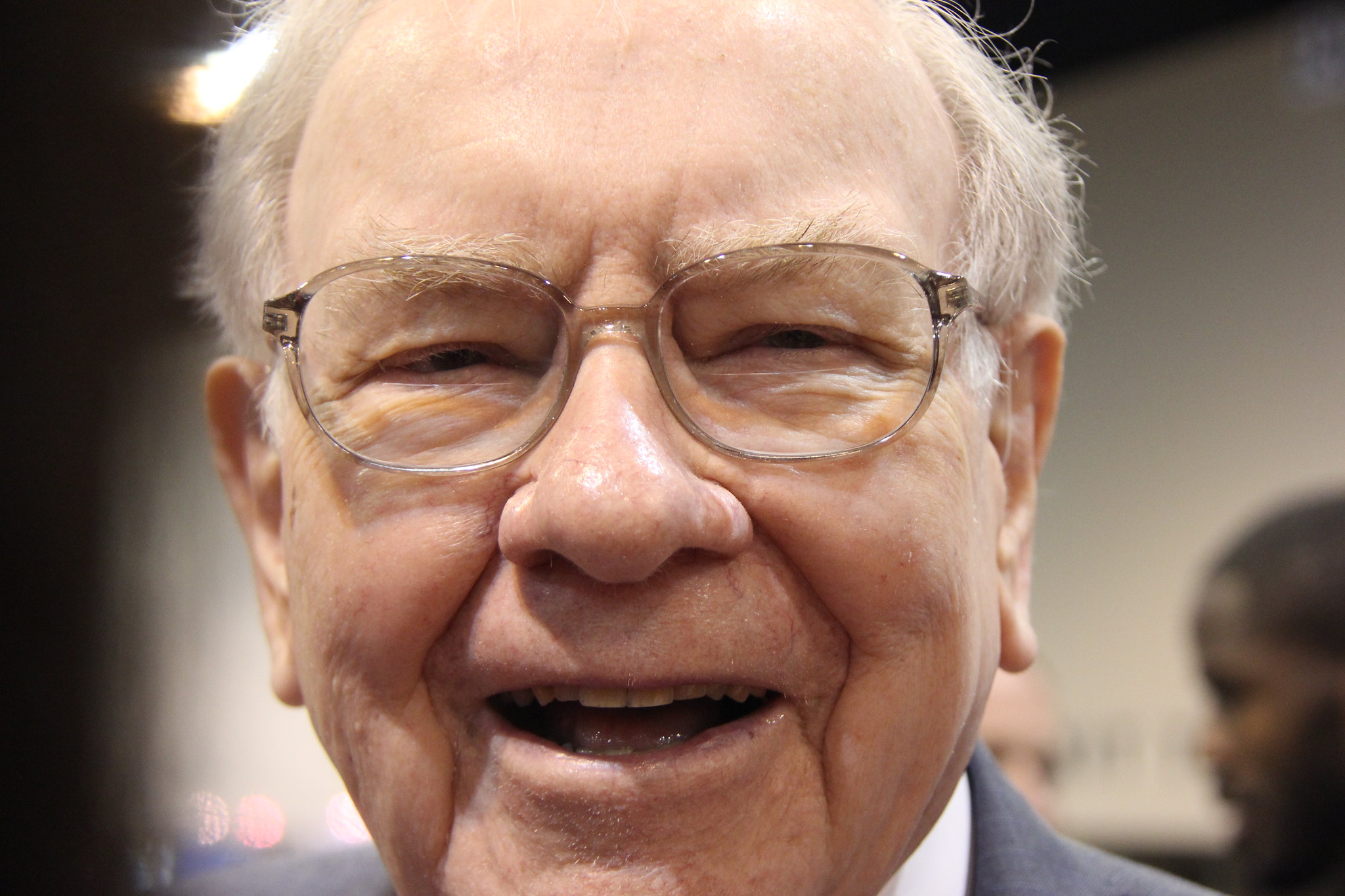
Buffett has always seemed immortal, in the way that, say, the Queen was immortal or the geese in Hyde Park are immortal (i.e., not actually immortal). My entire investing adolescence has been spent comforted by the idea that buying Berkshire Hathaway was like bunking onto Buffett’s lifeboat: safe, if alarmingly full of insurance documents.

But now, there’s an expiration date on this cozy arrangement. By the end of 2025, Buffett steps down as CEO. The new protagonist? Greg Abel—loyal, steady, big on utility companies, perhaps not so into Cherry Coke. Buffett himself remains as chairman, which is reassuring in a “parental controls still on the telly” sort of way. But, as a growth investor, I must acknowledge the awkward breakfast-table truth: Abel is not Buffett. No one is Buffett, except, of course, Buffett.

Current status: Monitoring Greg Abel for signs of endearing quirks, spontaneous stock jokes, or an ability to resist meme stocks. Watch this space.

Bitcoin’s Paradox: Billionaire Buys, Price Stagnates

Such a paradox prompts the astute observer—and the business historian, in particular—to inquire: How can colossal accumulations of wealth, orchestrated by figures of unmatched influence, fail to set the market ablaze? The answer lies partly in the shadowy mechanisms that underpin modern finance. Many of these transactions occur not on the open exchanges where prices are publicly discovered but in the discreet corridors of over‐the‐counter (OTC) markets. When Strategy secures its vast reserves or when Bitcoin exchange‐traded funds (ETFs) amass billions in net inflows (as was the case by mid‐July, with one fund drawing $1.3 billion in just two trading days), the bulk of these movements occur away from the watchful eyes of the mainstream. Thus, the visible price—a mere echo of hidden currents—remains largely unswayed by the colossal transactions that take place behind the scenes.

Rivian: A Perfectly Good Company, Mostly

Rivian builds motorized boxes for hauling things and people. Electric ones, naturally. They’ve decided, quite sensibly I think, that big vehicles – the sort Americans adore, even if they only use them to pootle to the shops – are a good place to start. They’re aiming, you see, to be the Tesla of…well, things bigger than Teslas. A perfectly reasonable ambition, as long as you don’t mind being compared to a rather overhyped electric carriage maker.

Crypto Hacks So Bad Even Your Wallet’s Laughing

First up, Indian exchange CoinDCX—sounds like a fancy sandwich, right?—lost $44.2 million. How? With some smooth social engineering. A hacker convinces an employee to install malware (because who needs a hacker to break in when you’ve got a free fake freelance gig?). The employee’s now on police hold, probably trying to figure out where it all went wrong. Nice job.

The Labyrinthine Returns and the Obstinate Forecasts of the Market’s Endless Corridor

Among these countless bastions of commerce, the S&P 500 stands as a perplexing monument—an index, a benchmark, a mirror held up by a committee of faceless arbiters, each element chosen not by rational necessity but by labyrinthine criteria: profitability according to GAAP, liquidity that borders on the spectral, and a minimum market value that teeters at an arbitrary threshold of $22.7 billion. A list curated in a process that seems to loop endlessly, an exercise in selection that resembles a Kafkaesque trial where the rules shift and the reasons dissolve into confusion, yet the index persists, reborn quarterly, as if to remind us of our helplessness in the face of its immutable cycles.

When Dollars Fall and Bulls Charge: A Goldman Sachs Prophesy 🤔💰🚀

Yet, amidst this forecast of woe for the greenback, Varadhan sees a silver lining—or perhaps a golden one, and a digital one, for those inclined towards the more modern forms of wealth. He posits that gold and Bitcoin (BTC) might serve as sturdy lifeboats in the stormy seas of currency devaluation, particularly as the national budget deficit swells like a balloon ready to burst.

XRP’s 2025 Aspirations: An Illusion in the Shadow of Market Realities

While the throne of digital currencies still bears the crown of Bitcoin—its first-mover advantage, its mythic scarcity—other tokens have begun to stir the collective imagination. Among these, XRP emerges as a curious contender: created by Ripple to serve as the bridge in the world’s cross-border labyrinth of payments. Over three years, XRP has surged by nearly 740%, elevating it to the third most-valuable cryptocurrency—an ascension that feels both miraculous and fragile, like a child’s paper boat caught in a rising tide. Wall Street’s sharp-eyed analyst, Geoff Kendrick of Standard Chartered, has set his sights on a future where XRP reaches $5.50 per token by 2025—a lofty and seemingly inevitable destiny born of hopes for broader adoption, legal clearance, and the emergence of spot XRP ETFs. But such optimism deserves the skepticism of a seasoned observer.

August’s Dividend Duet: A Nabokovian Reflection on Enduring Stocks

Here, in this taxonomic treasury, lie companies with decades—nay, generations—of sales and profits, each dividend increase a subtle signature of resilience. It is not merely cash flow but a literary narrative of enduring stability, waiting only to be read by the discerning eye. These aren’t stocks—they are enduring odes to capitalism’s most lyrical craftsmanship.