The 25th of February, 2026, is marked on many calendars, a date designated for the pronouncement of Nvidia’s fiscal results. A ritualistic unveiling, really. The numbers will arrive, undoubtedly impressive, a testament to the ceaseless churn of silicon and demand. And yet, a peculiar disquiet settles upon me. Not of expectation unmet, but of a preordained decline. A drop in the share price, not as punishment for failure, but as the inevitable consequence of… well, of everything.
The Weight of Anticipation
The consensus, as meticulously documented by S&P Global, projects a revenue of $65.6 billion. A substantial figure, certainly. The anticipated earnings per share, $1.52. These numbers, of course, are not mere calculations, but pronouncements from an oracle, demanding to be fulfilled. Nvidia, predictably, will likely exceed these projections. It has become adept at navigating the labyrinth of expectations, delivering results that merely confirm what was already known. A flawless execution of a predetermined script.
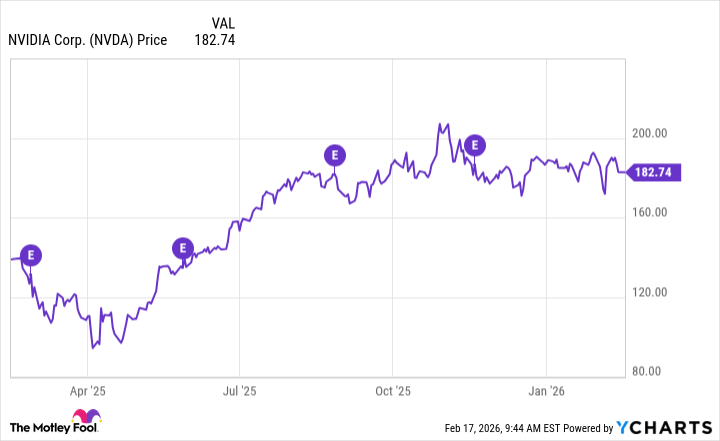
However, the market is not governed by logic, but by whispers. By anxieties that lurk beneath the surface of official estimates. The chart, a pale testament to past performance, reveals a disturbing pattern. Each earnings report, a moment of supposed triumph, is often followed by a decline. A curious phenomenon, as if the market, having anticipated perfection, is then subtly disappointed by its mere attainment. A strange, bureaucratic logic at play.
The “whisper numbers,” as they are called, are a phantom menace. Unofficial, unquantifiable, yet possessing a strange power over the collective psyche. And then there is the matter of memory. The fundamental building block of this entire endeavor. A shortage, a delay, a subtle disruption in the supply chain… it is enough to unravel the entire carefully constructed illusion. The slightest imperfection, magnified and projected onto the stock price. A chillingly efficient system of self-sabotage.
The ROI Question
The current fervor surrounding Artificial Intelligence is… unsettling. A boundless enthusiasm for a technology whose true return on investment remains elusive. Microsoft, Alphabet, Amazon… these titans of industry are pouring capital into AI infrastructure, and yet… a sense of unease persists. The earnings reports are positive, superficially. But the underlying anxiety is palpable. A growing suspicion that the promised benefits of AI may be… overstated.
These companies, of course, are Nvidia’s customers. Their skepticism, therefore, is not merely academic. It is a premonition. A subtle warning that the AI bubble may be… less buoyant than it appears. The capital expenditures are immense, the potential rewards uncertain. A precarious balance, threatening to tip at any moment. And Nvidia, caught in the middle, will inevitably bear the brunt of the fallout.
A Temporary Descent
It is, of course, possible that Nvidia will defy all expectations. That it will once again deliver a flawless performance, silencing the doubters and rewarding its shareholders. But such optimism feels… naive. A dangerous delusion in a world governed by entropy and uncertainty.
A decline in the share price, therefore, is not a prediction of failure, but an acknowledgement of reality. A temporary correction, perhaps, presenting an opportunity for long-term investors. The Rubin ramp, the next generation of GPUs… these are promising developments, certainly. But they are not immune to the forces of gravity. A dip in the price would be a gift, a chance to acquire this stock at a more reasonable valuation. A fleeting moment of clarity in an increasingly opaque world.
Read More
- 20 Movies Where the Black Villain Was Secretly the Most Popular Character
- Celebs Who Narrowly Escaped The 9/11 Attacks
- 25 “Woke” Films That Used Black Trauma to Humanize White Leads
- Top 20 Dinosaur Movies, Ranked
- The 10 Most Underrated Jim Carrey Movies, Ranked (From Least to Most Underrated)
- Transformers Under the Microscope: What Graph Neural Networks Reveal
- 22 Films Where the White Protagonist Is Canonically the Sidekick to a Black Lead
- Trading on Thin Air: AI Agents Conquer Crypto Volatility
- The Best Directors of 2025
- Silver Rate Forecast
2026-02-18 11:53