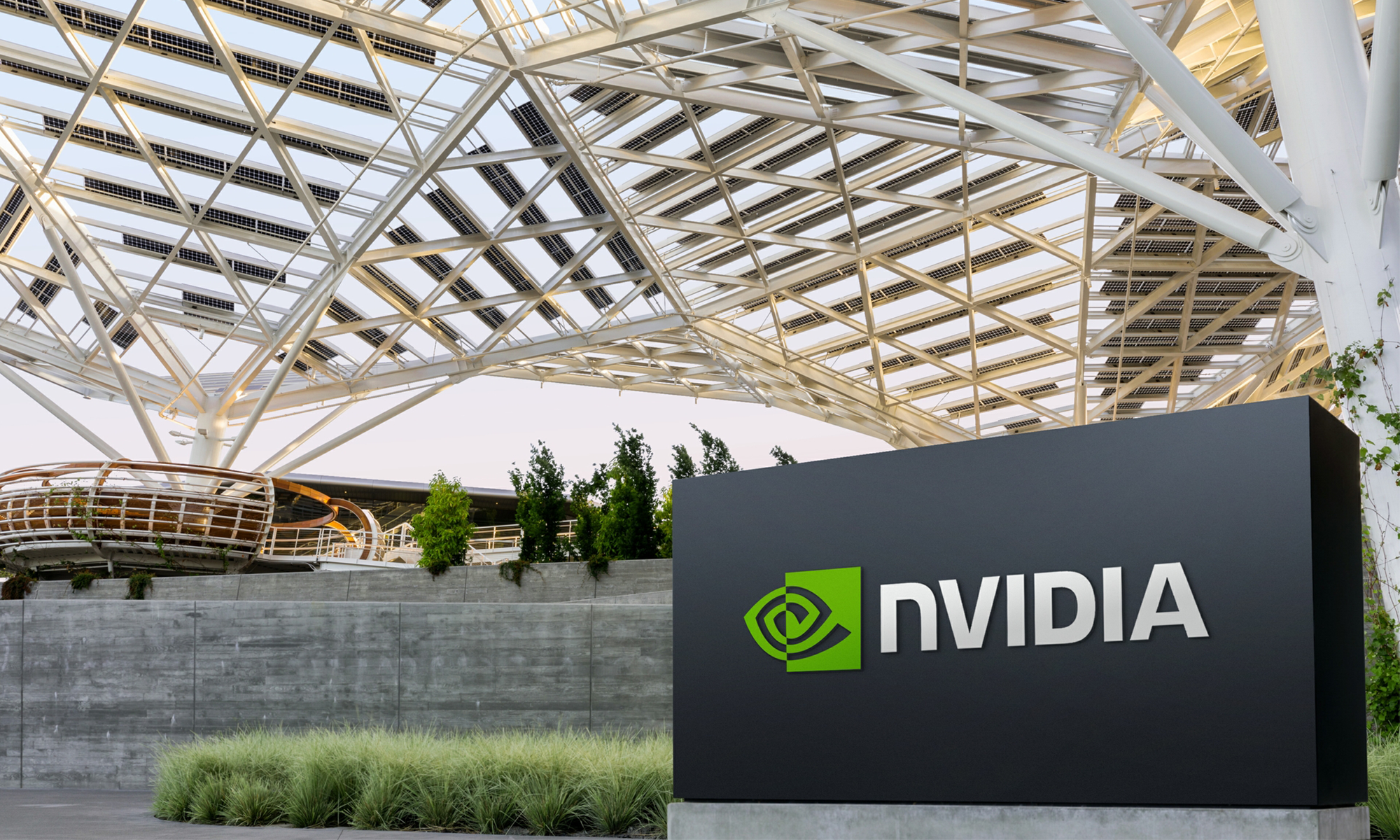
Nvidia, a designation formerly associated with the rendering of images, now finds itself, as do we all, increasingly defined by the demands of an unseen architecture. The company manufactures, or rather, provides, specialized circuits. These circuits, once facilitating leisure, are now integral to a process whose ultimate purpose remains, for most, obscured. It is a curious transposition.
For some time, the market has viewed Nvidia as a beneficiary of the so-called ‘artificial intelligence’ – a term that carries a weight of expectation entirely disproportionate to any demonstrable result. But this assessment, like so many, proved incomplete. It is no longer a matter of benefit; it is a matter of complete dependence. The company’s future, a future we are all compelled to observe, is now almost entirely contingent on the expansion of a particular infrastructure, an infrastructure that seems to grow not from need, but from an internal, inexorable logic.
The Algorithm Demands
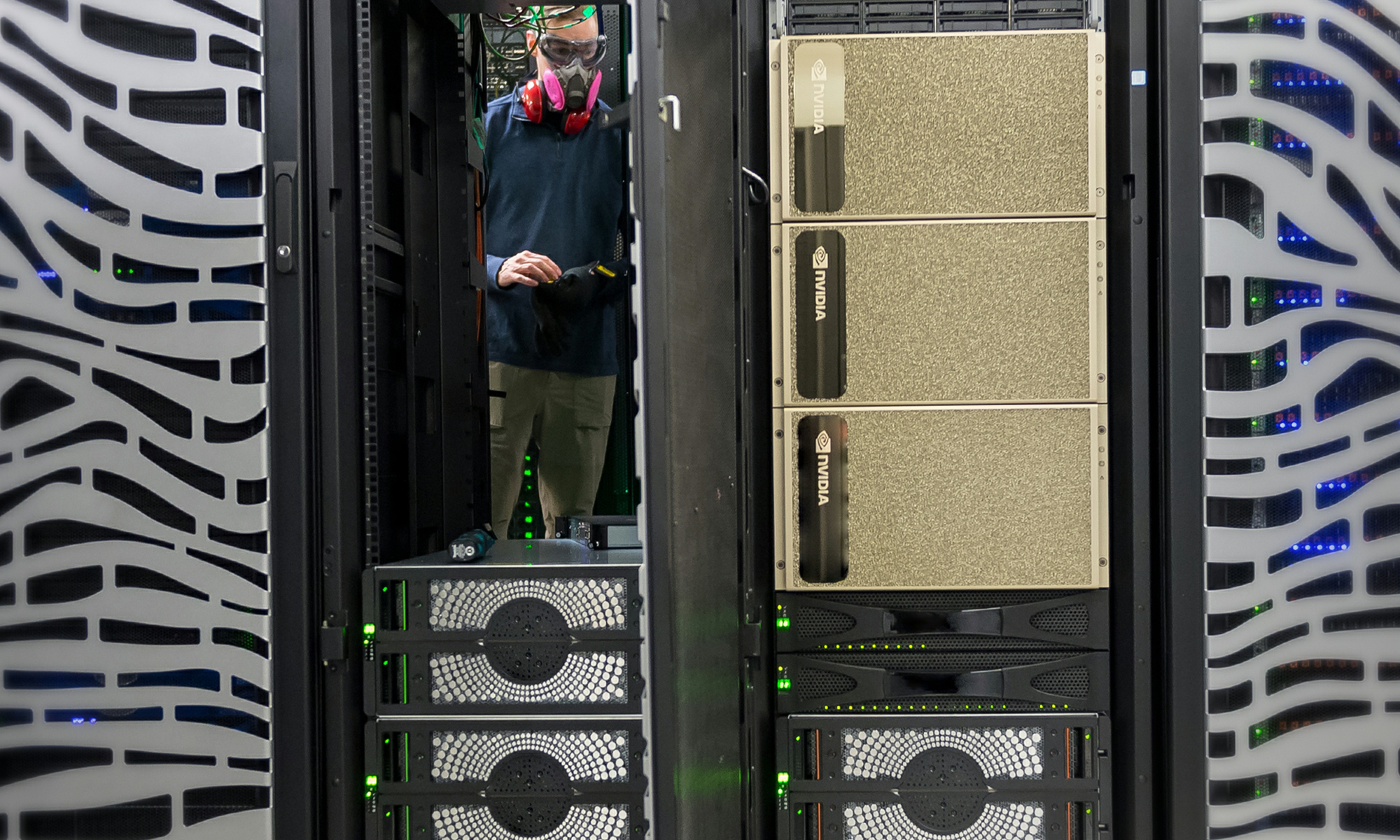
The world is currently experiencing a proliferation of data centers – vast, windowless structures that consume energy with an almost pathological efficiency. One might inquire as to the nature of the data being processed, the purpose of these calculations. But such inquiries are rarely answered, or are met with explanations that only serve to deepen the mystery. These centers require power, of course, but they require something more: the circuits Nvidia provides. The demand is not merely high; it is absolute, as if dictated by an unseen authority. Operators scramble, not to acquire these chips, but to fulfill a requirement they do not entirely understand.
Historically, Nvidia’s revenue stemmed from various sources. A diversification, one might call it. But last quarter, sixty-two point three billion of its sixty-eight point one billion in total revenue originated from data center customers. A stark simplification. These centers, ostensibly serving diverse end markets, are, in reality, dedicated to a single, overriding purpose: the expansion of the algorithm. The precise nature of this expansion remains opaque, but its consequences are becoming increasingly apparent.
A recent report from Goldman Sachs, an institution that thrives on the quantification of uncertainty, concludes that data centers have become “some of the most important infrastructure in the world.” A rather understated assessment, given the implications. They forecast “substantial demand growth,” but fail to acknowledge the inherent instability of a system so reliant on a single, unpredictable variable. The growth will occur, undoubtedly, but on whose terms, and at what cost?
Thus, the investment thesis surrounding Nvidia has undergone a transformation. It is no longer a matter of benefitting from AI; it is a matter of being consumed by it. Almost all of Nvidia’s revenue now originates from these data center customers, who are, in turn, compelled to scale up their operations to meet the demands of… what, exactly? The future of the company, and perhaps our own, hinges on the continued buildout of these structures, designed to satisfy the insatiable appetite of an algorithm we do not control.
Experts predict a surge in data center construction. A comforting narrative. But there is no guarantee that this buildout will meet expectations. A recent Goldman Sachs report outlines several scenarios where AI adoption falls short, resulting in an excess supply of these vast, empty structures. Growth will still occur, they concede, but it may be lower than anticipated – a direct blow to those who have already priced in a future that may never arrive. A familiar pattern.
Nvidia remains, on paper, a promising business. But an investment today is predicated on a single, precarious assumption: that the global data center buildout will continue unabated. A gamble, in essence, on a future that is increasingly difficult to discern. And like all gambles, it carries a certain, inescapable risk.
Read More
- Top 20 Dinosaur Movies, Ranked
- 20 Movies Where the Black Villain Was Secretly the Most Popular Character
- 25 “Woke” Films That Used Black Trauma to Humanize White Leads
- Celebs Who Narrowly Escaped The 9/11 Attacks
- Gold Rate Forecast
- Spotting the Loops in Autonomous Systems
- Silver Rate Forecast
- The 10 Most Underrated Jim Carrey Movies, Ranked (From Least to Most Underrated)
- Transformers Under the Microscope: What Graph Neural Networks Reveal
- 22 Films Where the White Protagonist Is Canonically the Sidekick to a Black Lead
2026-03-07 21:12