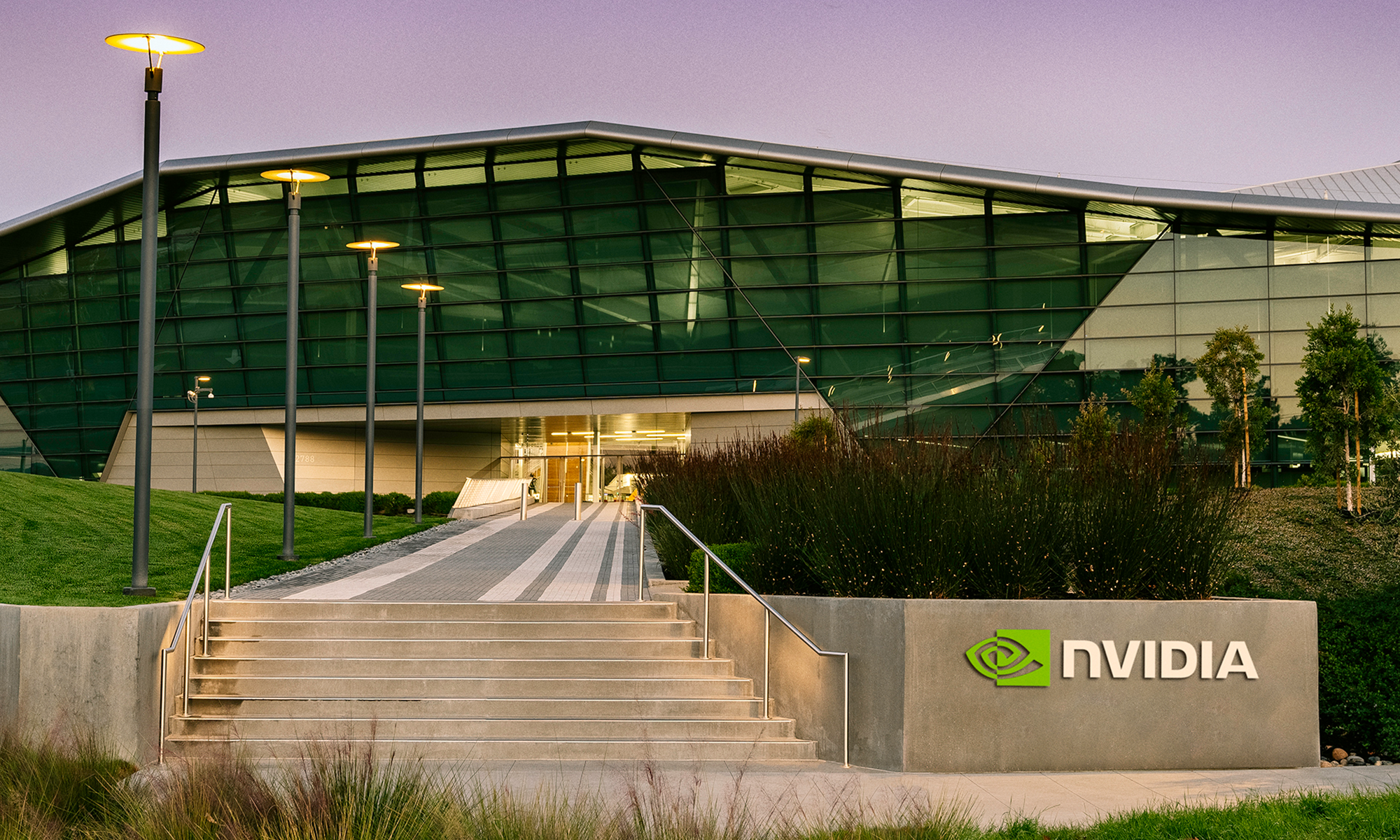
Nvidia’s (NVDA) ascendance has been inextricably linked to the proliferation of artificial intelligence. The company’s graphics processing units, originally conceived for visual rendering, have become the foundational hardware for a rapidly expanding sector. This report assesses the sustainability of current valuations and projects a potential revenue trajectory through 2026, acknowledging inherent risks and competitive dynamics.
Data Center Dominance and Revenue Projections
Nvidia’s strategic pivot towards data center solutions has proven remarkably successful. The inherent parallelism of GPU architecture aligns effectively with the computational demands of AI model training and inference. This has resulted in a commanding market share – currently estimated at 92% according to IoT Analytics – and a corresponding revenue stream that has significantly outpaced industry averages. Recent commentary from CEO Jensen Huang suggests a backlog exceeding $500 billion, with projections of at least $1 trillion in revenue from Blackwell and Vera Rubin chips by the end of 2027. While such figures warrant scrutiny, they underscore the current strength of demand.
To contextualize these projections, a base-case scenario is presented. Nvidia reported $68 billion in revenue for its fiscal Q4 2026 and forecast $78 billion for Q1. Assuming continued sequential growth, maintaining a 13% quarterly expansion over the subsequent seven quarters would yield approximately $379 billion in revenue for fiscal 2027 (calendar year 2026). This projection, while aggressive, is predicated on continued market leadership and the absence of unforeseen disruptions.
Valuation Analysis and Sensitivity
Currently, Nvidia possesses a market capitalization of roughly $4.42 trillion, translating to a price-to-sales (P/S) ratio of approximately 21. Applying this multiple to the projected $379 billion in revenue for 2026 suggests a potential market capitalization of $7.96 trillion. This would represent a substantial increase from current levels, contingent upon sustained revenue growth and the maintenance of current valuation multiples.
However, it is imperative to acknowledge the inherent risks associated with such projections. A sensitivity analysis reveals the fragility of this valuation. Should the P/S ratio contract to 18, for instance, the implied market capitalization would decrease to $6.82 trillion. Furthermore, a deceleration in revenue growth to 8% per quarter would significantly reduce the projected revenue for 2026, further impacting valuation.
Competitive Landscape and Emerging Threats
While Nvidia currently enjoys a dominant position, the competitive landscape is evolving. Several factors warrant close monitoring:
- ASIC Development: Application-Specific Integrated Circuits (ASICs) are gaining traction for specific AI workloads, potentially eroding Nvidia’s market share in niche applications.
- Competitor Innovation: AMD, Intel, and other semiconductor manufacturers are actively developing competing GPU architectures and AI accelerators.
- Cloud Provider Investment: Major cloud providers (Amazon, Microsoft, Google) are increasingly designing their own custom AI hardware, reducing their reliance on third-party vendors.
These competitive pressures could lead to margin compression, increased capital expenditure, and a potential shift in market share dynamics.
Macroeconomic Considerations
The broader macroeconomic environment also poses risks to Nvidia’s growth trajectory. A slowdown in global economic growth, coupled with rising interest rates, could dampen demand for AI infrastructure and consumer electronics. Furthermore, geopolitical tensions and supply chain disruptions could exacerbate existing challenges.
Conclusion
Nvidia’s current valuation reflects a high degree of optimism regarding its future growth prospects. While the company’s technological leadership and strategic positioning are undeniable, several factors could impede its progress. A conservative assessment suggests that maintaining current valuation multiples is contingent upon sustained revenue growth, successful navigation of competitive pressures, and a favorable macroeconomic environment. Investors should carefully consider these risks before making investment decisions. The current price appears, at best, optimistic, and relies heavily on the continuation of current market dynamics.
Read More
- From Bids to Best Policies: Smarter Auto-Bidding with Generative AI
- When AI Teams Cheat: Lessons from Human Collusion
- 25 “Woke” Films That Used Black Trauma to Humanize White Leads
- 20 Movies Where the Black Villain Was Secretly the Most Popular Character
- 22 Films Where the White Protagonist Is Canonically the Sidekick to a Black Lead
- Top 10 Coolest Things About Invincible (Mark Grayson)
- Silver Rate Forecast
- Unmasking falsehoods: A New Approach to AI Truthfulness
- Top 20 Dinosaur Movies, Ranked
- Gold Rate Forecast
2026-03-21 10:02