The stock market, you see, has been doing alright for a while now. Seventeen years, mostly. There were a few hiccups – the COVID thing, a bit of a slump in ’22 – but the Dow, the S&P 500, the Nasdaq… they’ve mostly just kept going up. It’s funny, isn’t it? Like a balloon someone keeps pumping air into, expecting it not to pop.
And under President Trump, well, the numbers were… enthusiastic. Most presidents get gains, sure. But these were… particularly enthusiastic. A little too enthusiastic, perhaps. So it goes.
But enthusiasm comes at a price. There was volatility. The COVID crash, for instance. A quick, sharp reminder that gravity still exists. And then there was the tariff announcement. A little nudge from the universe saying, “Things can change.”
Now, there’s this war in Iran. It’s made things… jumpy. People are nervous. And that’s understandable. Wars are bad. They cost lives, displace families. It’s a simple equation, really. But the stock market doesn’t much care about equations. It cares about… well, it cares about money.
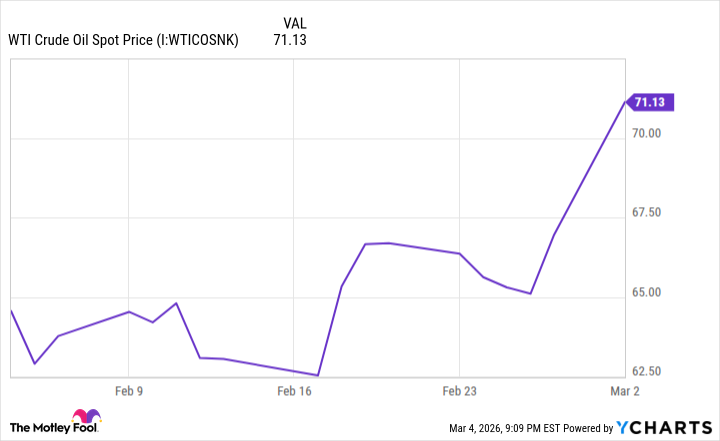
The worry, you see, is oil. The Strait of Hormuz is a narrow place. A lot of oil goes through it. If that flow gets interrupted… prices go up. Simple. And higher oil prices mean higher prices for everything else. And that, in turn, makes the Federal Reserve think twice about lowering interest rates. They’re trying to manage things, these central bankers. Like trying to steer an ocean liner with a canoe paddle.
Uncertainty, of course, is the real enemy. Investors like things predictable. They like to think they understand the rules. But wars… wars are chaos. They don’t follow rules. So it goes.
The Quiet Worry
The war is a distraction, though. A loud, frightening distraction. The real worry is quieter. It’s hiding in plain sight. It’s a number. $7.8 trillion.
That’s how much money is sitting in money market funds. Safe, boring money. Money that’s not being invested in stocks. It’s supposed to be there, of course. People put money in those funds when they’re nervous. When they want to avoid risk. But this is… a lot of money. A truly remarkable amount.
The Fed publishes these numbers every quarter. They’re just data points. But data points can tell stories. And this one is telling a story about fear.
Loading…
—
Normally, when interest rates go down, people move money out of money market funds and into stocks. They chase higher returns. But that hasn’t been happening. The money keeps piling up. It’s like watching a dam fill up, knowing it’s going to break eventually.
You see, people are worried. They’re worried about a correction. A crash. They’re losing faith in the market. And that’s a dangerous thing. Because when people lose faith, they start selling. And when they start selling, things go down. It’s a self-fulfilling prophecy. So it goes.
Loading…
—
The market is also… expensive. The Shiller P/E ratio is hovering around 40. That’s more than double its historical average. It’s like a balloon that’s been inflated too much. It’s going to pop. Eventually.
The war in Iran is a headline. The $7.8 trillion is a symptom. A quiet, insidious symptom of a deeper malaise. It suggests that the party is over. Or at least, that the music is about to stop. And when the music stops, everyone has to find a chair. And there are never enough chairs.
Read More
- Top 20 Dinosaur Movies, Ranked
- 20 Movies Where the Black Villain Was Secretly the Most Popular Character
- 25 “Woke” Films That Used Black Trauma to Humanize White Leads
- Celebs Who Narrowly Escaped The 9/11 Attacks
- Spotting the Loops in Autonomous Systems
- Gold Rate Forecast
- Silver Rate Forecast
- The 10 Most Underrated Jim Carrey Movies, Ranked (From Least to Most Underrated)
- Transformers Under the Microscope: What Graph Neural Networks Reveal
- The Best Directors of 2025
2026-03-08 13:42