Right then. Let’s talk about memories. Not the sort you misplace your keys with, although frankly, that’s a problem for another day, and possibly a very large filing cabinet. No, we’re talking about the silicon kind. The little boxes that hold the thoughts of machines, and increasingly, the profits of those clever enough to provide them. It’s a simple truth, really: in the age of Artificial Intelligences – or, as I prefer to call them, Very Fast Calculators with pretensions – the infrastructure is where the real magic (and the real money) resides. Everyone’s busy building the wizards, but someone has to forge the wands.
Nvidia, of course, gets all the glory. A perfectly respectable company, mind you, but one that’s become rather…distracted by its own success. A bit like a dragon admiring its hoard instead of guarding it.1 The true unsung heroes, the quiet artisans, are those who supply the raw materials. And that, my friends, brings us to Micron Technology.
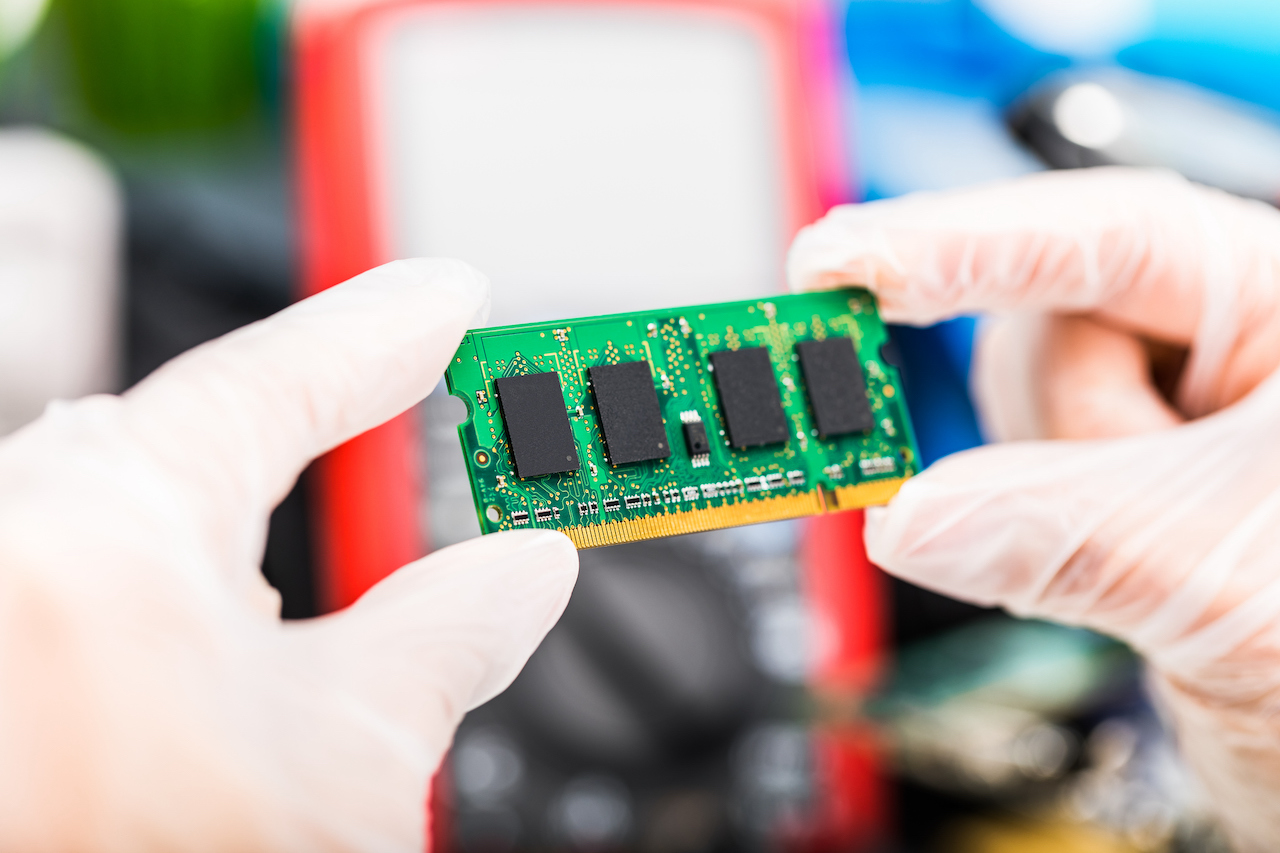
Micron, you see, doesn’t make the Intelligences. It makes the…well, the bits that allow them to remember things. Random Access Memory, or RAM, if you’re feeling terse. More specifically, Dynamic RAM, or DRAM, which is the preferred fuel for these digital brains. It’s a bit like providing the ink for a scribe. The scribe might write poetry, but without the ink…well, you get the idea.
Now, the market for this particular kind of memory is, shall we say, a bit…concentrated. Three players pretty much control the whole shebang: Samsung, SK Hynix, and Micron. It’s a delicate balance, a sort of silicon oligarchy, and when demand spikes – as it has done with this AI business – things get interesting. Shortages appear. Prices…adjust. And those who control the supply wield a considerable amount of power.2
And let’s be clear: the demand has spiked. RAM prices are expected to leap a rather impressive 50% in the next quarter alone. Intel’s Lip-Bu Tan – a man who clearly understands the ebb and flow of these things – suggests this shortage isn’t going to be a fleeting inconvenience. We’re talking years. Years, I tell you! Which means, quite simply, that Micron is sitting on a rather significant opportunity. An opportunity it’s wisely seizing.
They’ve actually had the good sense to exit the consumer PC market. Madness, you say? Not at all. It’s a strategic realignment. They’re doubling down on AI, focusing their resources where the real growth lies. They’re building a colossal semiconductor factory in upstate New York – a $100 billion behemoth that will employ over 9,000 people and, once completed, will be the largest of its kind in the United States. They’re positioning themselves not just as a supplier, but as the supplier to the American market. A rather patriotic move, if you ask me.
Now, let’s talk numbers. Samsung is the larger company, undeniably. But Micron is the one with the growth potential. In their latest quarter, revenue jumped a remarkable 57% year-over-year, hitting $13.6 billion. And a whopping 79% of that came from DRAM. That’s not just growth; that’s a full-throated endorsement from the AI gods themselves.
But it’s not just about revenue. Micron is also remarkably profitable. Gross margins of 56.8%, operating margins of 32.5%, and net margins of 28.15%. These aren’t just numbers; they’re a testament to efficient management and a strong market position. They’re building a fortress of fiscal responsibility in a world obsessed with ephemeral valuations.
And the valuation? Remarkable. A forward P/E ratio of 10.57. Samsung’s is 8.5, admittedly, but when you factor in growth with the PEG ratio, Micron comes out ahead at 1.12 versus Samsung’s 3.31. Even after a 330% bull run in the last 12 months, it’s still an attractive buy. A truly impressive feat in this frothy market.
So, believe the hype. Micron isn’t just emerging as a player in the AI hardware market; it’s becoming a force to be reckoned with. It’s a company with a clear strategy, a strong financial position, and a commitment to long-term growth. Give it a look. Invest in it. Demand better from the companies that power our future. Because in the end, memories matter. Both the silicon kind, and the ones we choose to make.
1
Dragons, as any sensible economist will tell you, are prone to hoarding assets rather than investing them productively. A cautionary tale for us all.
2
The Guild of Alchemists and Venture Capitalists, you see, operates on a similar principle. Control the ingredients, control the magic. It’s a simple equation, really.
Read More
- Top 20 Dinosaur Movies, Ranked
- 20 Movies Where the Black Villain Was Secretly the Most Popular Character
- Celebs Who Narrowly Escaped The 9/11 Attacks
- 25 “Woke” Films That Used Black Trauma to Humanize White Leads
- Spotting the Loops in Autonomous Systems
- Gold Rate Forecast
- The 10 Most Underrated Jim Carrey Movies, Ranked (From Least to Most Underrated)
- Silver Rate Forecast
- The Best Directors of 2025
- Transformers Under the Microscope: What Graph Neural Networks Reveal
2026-02-16 06:42