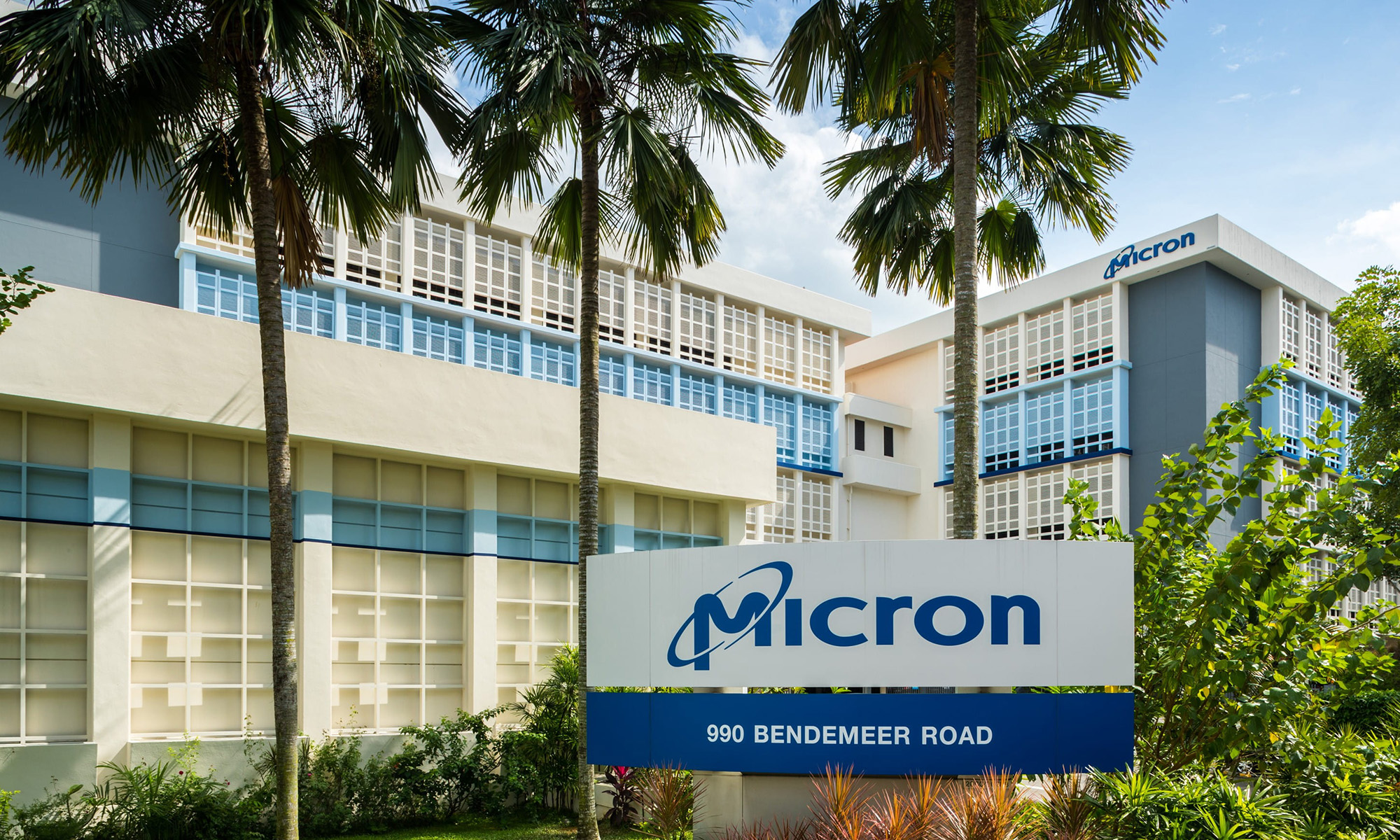
The current frenzy surrounding artificial intelligence, a fever dream of silicon and algorithms, has fixated itself upon a single name: Nvidia. Understandable, perhaps, for they have conjured a digital genie from the smoke of transistors. But to believe Nvidia is the sole beneficiary of this blossoming madness is akin to believing the entire Russian Empire is contained within the Winter Palace. One must look beyond the gilded façade, past the courtiers and the calculating ministers, to discover the true engine of progress… and the quiet fortunes to be made.
Investors, bless their frantic hearts, are perpetually drawn to the obvious. They chase the shimmering mirage of immediate gratification, while a more substantial reward often lies hidden in the shadows. It is with this in mind that I direct your attention to Micron Technology. A name, admittedly, less glamorous than Nvidia, but possessed of a peculiar, almost spectral, importance.
The Memory of Things to Come
Micron, you see, is not concerned with the grand pronouncements of artificial intellect. It deals in the mundane, the essential: memory. High-bandwidth memory, to be precise. HBM. A substance so crucial to the functioning of these new digital brains that without it, the entire edifice would crumble into a heap of useless circuits. Imagine, if you will, a vast library, filled with the accumulated knowledge of ages, but with no means of recalling a single fact. That, my friends, is the fate that awaits AI without HBM.
There are, of course, only three purveyors of this vital substance in the entire world. Samsung, SK Hynix, and Micron. The first two are Korean entities, shrouded in a mystique that even the most seasoned investor would find impenetrable. Micron, however, is American. A fact not merely of national pride, but of practical consequence. For the American investor, burdened by regulations and the whims of foreign exchange, it is the only truly accessible option. A small mercy, perhaps, but a mercy nonetheless.
The semiconductor industry, as any seasoned observer will attest, is a creature of cycles. Periods of exuberant growth are inevitably followed by periods of agonizing decline. In the past, Micron has been particularly vulnerable to these fluctuations, its fortunes rising and falling with the tide. But the demand for HBM, it seems, is altering the landscape. It is as if a benevolent spirit has descended upon the company, shielding it from the worst excesses of the market. Not that the cycles have disappeared entirely, mind you. They merely seem… subdued. Less ferocious. Like a bear awakened from hibernation, still groggy and uncertain.
Over the last five years, the stock has ascended by a most respectable 350%, the bulk of that gain occurring in the last twelve months. A testament, perhaps, to the company’s resilience. Or simply a reflection of the irrational exuberance that grips the market whenever a new technological marvel is unveiled.
Numbers, and the Ghosts Within Them
The financials, naturally, tell a story of their own. In the first quarter of fiscal 2026, revenue reached $13.6 billion, a 56% increase year-over-year. A figure that exceeded even the most optimistic predictions. And what is truly remarkable is that this growth has been achieved without a corresponding increase in costs. Operating expenses have risen at a much slower pace, resulting in a net income of over $5.2 billion. A sum that surpasses the previous year’s earnings by a considerable margin. Though it does not quite match the eleven-fold increase of fiscal 2025, it is still a most satisfactory result.
Analysts predict a revenue growth rate of 109% in fiscal 2026. A figure that borders on the fantastical. Yet, despite this impressive performance, the valuation remains… muted. It is as if investors, haunted by the ghosts of past downturns, are reluctant to award the company a premium valuation. They remember the pain, the losses, and they fear a repeat performance.
The price-to-earnings ratio currently stands at 39. A figure that, considering the company’s rapid growth, seems remarkably reasonable. And with a forward P/E of just 12, it appears increasingly likely that investors will continue to bid the stock higher. Though one must always be wary of the herd. It is a fickle beast, easily swayed by emotion and prone to stampedes.
A Consideration, and a Word of Caution
Given Micron’s crucial role in the advancement of artificial intelligence, and its valuation relative to its revenue and income growth, investors should not expect its stock price growth to slow anytime soon. It is a rare opportunity, a chance to participate in a truly transformative technology. But remember, even the most promising ventures are not without risk.
Micron, as any seasoned observer will attest, has been a victim of past downturns in the chip industry. Its relatively low valuation may reflect those lingering concerns. But the demand for HBM is a game-changer. It gives the company a distinct competitive advantage, a shield against the worst excesses of the market.
That means that, at least for the foreseeable future, a brutal stock sell-off is less likely. But even with the risks of a severe down cycle, the rapid growth and falling valuation arguably make Micron too cheap to ignore. It is a peculiar creature, this company. A ghost in the machine, quietly powering the future. And in the realm of value investing, such creatures are always worth a closer look.
Read More
- Trading on Thin Air: AI Agents Conquer Crypto Volatility
- 20 Movies Where the Black Villain Was Secretly the Most Popular Character
- Invincible Season 4 Gender Swaps Tech Jacket As Fans Question Major Comic Change
- Silver Rate Forecast
- 22 Films Where the White Protagonist Is Canonically the Sidekick to a Black Lead
- Gold Rate Forecast
- Trading Smarter: AI-Powered Execution Schedules
- Celebs Who Narrowly Escaped The 9/11 Attacks
- Smarter Order Execution: How AI is Outperforming Wall Street’s Playbook
- 15 Films That Were Shot Entirely on Phones
2026-03-14 22:43