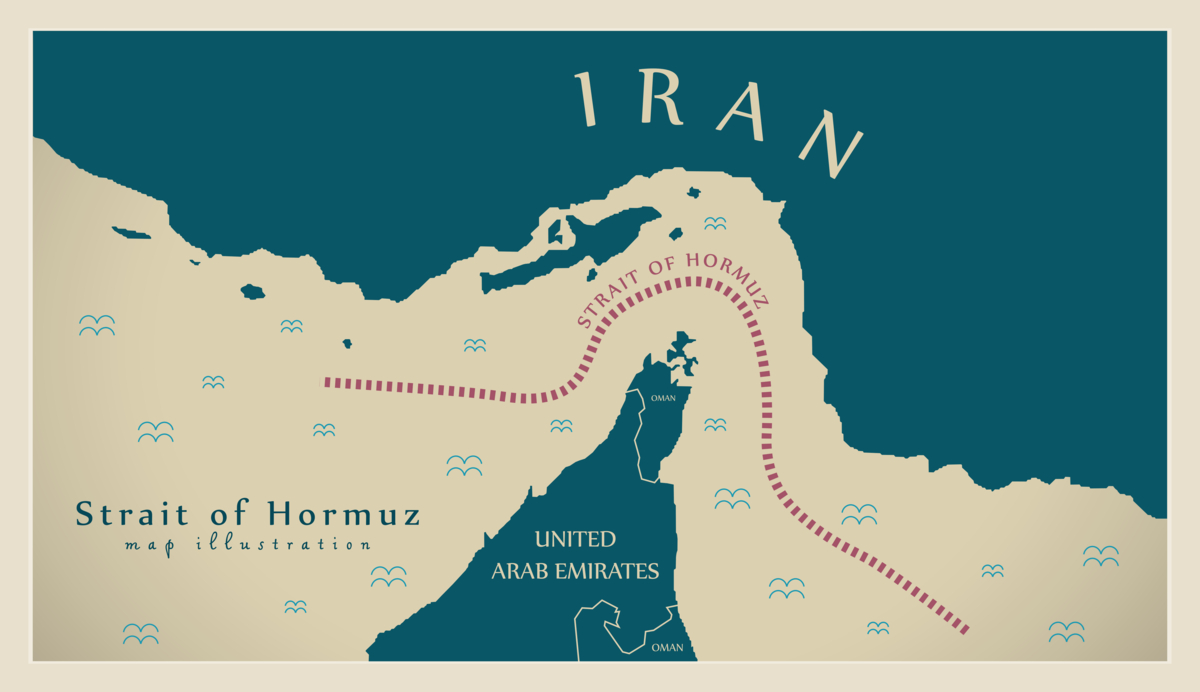
So, Iran. It’s happening. Again. Look, I spend my days staring at spreadsheets, not geopolitical maps, but even I can tell when a situation is less “contained incident” and more “potential portfolio disruptor.” Everyone’s bracing for impact, and the market is doing that little jitterbug it does whenever someone says “Middle East” and “instability” in the same sentence.
The S&P 500 (^GSPC +0.82%) had a Tuesday that felt like a Monday, followed by a Wednesday that tried really hard to pretend nothing happened. Oil‘s up, naturally, because that’s just how things work. And defense stocks? Well, let’s just say the guys who make the stuff that goes boom are probably having a very good week. It’s a predictable script, honestly. It’s like the market is saying, “Oh no, conflict! Quick, buy Lockheed Martin!”
But here’s where it gets interesting. Steve Eisman – you might remember him as one of the guys who saw the 2008 financial crisis coming (basically the Nostradamus of subprime mortgages) – is suggesting… nothing. Do absolutely nothing. He thinks the whole thing might blow over faster than a TikTok trend. And honestly? There’s a certain logic to that. We’re all so conditioned to react, to trade, to “do something,” that sometimes the smartest move is to just… sit there. It’s the investor equivalent of telling yourself you’ll start that diet tomorrow.
Is Doing Nothing Actually a Strategy?
Look, I get it. Our brains are wired to see scary headlines and immediately assume our retirement accounts are about to spontaneously combust. But investing isn’t about predicting the next news cycle; it’s about long-term growth. And let’s be real, the world has been a dumpster fire of geopolitical crises for, like, ever. Wars, pandemics, rogue tweets… stocks have a remarkable ability to shrug it all off. It’s infuriating, but also kind of impressive.
Eisman’s point is that these things tend to be priced in. The market doesn’t like uncertainty, sure, but it’s also really good at discounting future risks. So, unless this escalates into something truly apocalyptic, the impact on the global economy will probably be… manageable. It won’t be pretty, but it won’t necessarily trigger a recession. Though, if it does trigger a recession, I’m blaming the algorithms. They’re always up to no good.
Now, I’m not saying you should ignore everything and binge-watch reality TV. (Although, honestly, that sounds pretty good right now.) But knee-jerk reactions are rarely a good idea. If you’re looking for a place to put your money, consider sectors that might benefit from increased defense spending. The iShares U.S. Aerospace & Defense ETF (ITA +0.43%) is a solid option. Or, if you’re feeling adventurous, take a look at companies like Elbit Systems (ESLT +6.41%). They make drones, which, let’s face it, are the future of everything. From package delivery to… well, you get the idea.
Ultimately, Eisman’s right. The urge to “do something” is strong, but sometimes the best investment strategy is to just breathe. And maybe double-check your emergency fund. Because in this business, you need a plan B. And a plan C. And possibly a bunker. But mostly, just don’t panic. Unless, of course, the robots start taking over. Then, all bets are off.
Read More
- 20 Movies Where the Black Villain Was Secretly the Most Popular Character
- Top 20 Dinosaur Movies, Ranked
- 25 “Woke” Films That Used Black Trauma to Humanize White Leads
- Gold Rate Forecast
- Spotting the Loops in Autonomous Systems
- Silver Rate Forecast
- 22 Films Where the White Protagonist Is Canonically the Sidekick to a Black Lead
- Top 10 Coolest Things About Invincible (Mark Grayson)
- Can AI Lie with a Picture? Detecting Deception in Multimodal Models
- Celebs Who Narrowly Escaped The 9/11 Attacks
2026-03-04 21:23