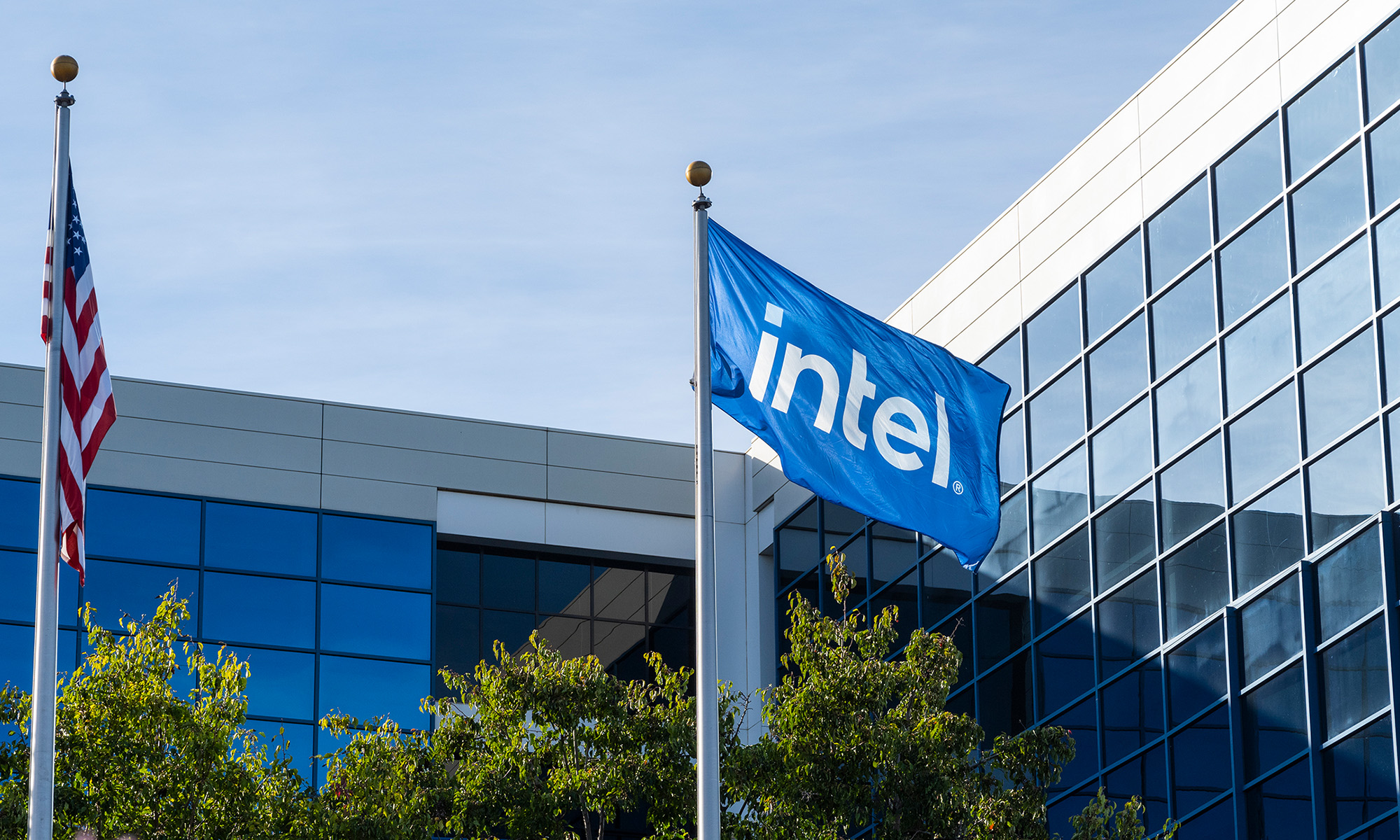
One observes, with a certain detached amusement, Intel’s recent foray into the custom silicon market. It appears the venerable institution, once synonymous with the very architecture of computation, has decided that simply providing the brains of the operation is no longer sufficient. Now, they wish to design them, too, for those clients who deem their own engineers insufficiently inspired – or, perhaps, simply lack the resources to indulge in such a whimsical pursuit. September of 2025 saw the formation of the Central Engineering Group, a rather grand title for what amounts to a bespoke chip atelier, led by a gentleman, Srini Iyengar, poached, naturally, from Cadence Design Systems. A predictable appointment, one might add.
The fourth-quarter results, while falling somewhat short of the breathless pronouncements of the optimists, conceal a more interesting development. The custom chip business, it seems, is not merely a palliative for declining margins, but a potentially lucrative, if somewhat improbable, enterprise. The market, of course, is awash with silicon merchants, but Intel, with its access to capital and manufacturing facilities, possesses a distinct advantage – a sort of industrial inertia that few can match.
A Hundred Billion Dollar Fancy
The management, typically reticent about such ventures, did admit that the custom ASIC business surged by over 50% in 2025, reaching an annualized run rate exceeding a billion dollars. A sum that, while not quite enough to restore the company to its former glory, is certainly enough to keep a few executives in comfortable obscurity. These ASICs – application-specific integrated circuits, for the uninitiated – are, in essence, highly specialized tools, designed for a single purpose, unlike the general-purpose processors that populate our increasingly cluttered digital landscape. They are, one suspects, the equivalent of commissioning a bespoke suit when an off-the-rack ensemble would suffice.
The current demand, it appears, is largely driven by the insatiable appetite for networking chips, fuelled by the ongoing AI infrastructure build-out. Intel has secured contracts with Ericsson, to manufacture 5G SoCs, and Amazon Web Services, for AI fabric chips and Xeon 6 CPUs. These are, of course, presented as strategic partnerships, but one suspects a simple exchange of services: Intel provides the silicon, and its clients provide the revenue. The total addressable market, Intel claims, is around one hundred billion dollars. A rather ambitious figure, but then again, ambition is rarely constrained by reality.
Competition is fierce, naturally, from the usual suspects – Broadcom and Marvell – but Intel possesses a unique selling point: a one-stop shop for design, manufacturing, and packaging. When speed to market is paramount, this integrated approach can be surprisingly effective. “Our combination of design services, IP building blocks, and manufacturing capabilities positions Intel well to resolve specialized problems at scale,” declared the CEO, Lip-Bu Tan, during the earnings call. A statement that, while technically accurate, lacks a certain… poetry.
A Past Master at the Helm
Tan, it should be noted, spent over a decade leading Cadence Design Systems. A background that, while undeniably relevant, also suggests a certain… preoccupation with the minutiae of chip design. During his tenure, Cadence transformed into a customer-centric organization and doubled its revenue. A commendable achievement, but one wonders if such a transformation is truly possible within the labyrinthine corridors of Intel. He claims this isn’t a new area for them, but requires focused investment, leveraging his Cadence experience. A convenient narrative, to be sure.
With less than 1% of a hundred billion dollar market, Tan’s experience positions the company to grow. A modest ambition, perhaps, but one that, given the company’s current trajectory, is not entirely unrealistic.
Feeding the Foundry Beast
The true benefit of winning custom chip design contracts, however, lies not in the revenue they generate, but in the opportunity they provide to secure long-term manufacturing agreements. The Intel 18A process is currently scaling up, and 14A is expected by 2027. For the foundry business to be sustainable, it requires a steady flow of external customers to justify the astronomical costs of developing leading-edge semiconductor manufacturing processes. The custom chip business, therefore, is not merely a source of revenue, but a means of survival.
Currently facing manufacturing capacity shortages, it will take time for the custom chip business to meaningfully contribute to the foundry. But over the next few years, it is likely to be a key component of the company’s comeback and grow into a multi-billion-dollar business. A rather optimistic assessment, perhaps, but one that, given the alternatives, is not entirely unreasonable. One observes, with a detached amusement, the spectacle of a once-dominant institution reinventing itself. It is, after all, a rather more entertaining prospect than witnessing its inevitable decline.
Read More
- Top 20 Dinosaur Movies, Ranked
- 20 Movies Where the Black Villain Was Secretly the Most Popular Character
- Celebs Who Narrowly Escaped The 9/11 Attacks
- 25 “Woke” Films That Used Black Trauma to Humanize White Leads
- Spotting the Loops in Autonomous Systems
- The 10 Most Underrated Jim Carrey Movies, Ranked (From Least to Most Underrated)
- Gold Rate Forecast
- Transformers Under the Microscope: What Graph Neural Networks Reveal
- The Best Directors of 2025
- Every Notable ‘Star Trek: The Original Series’ Actor Who Died
2026-01-26 22:12