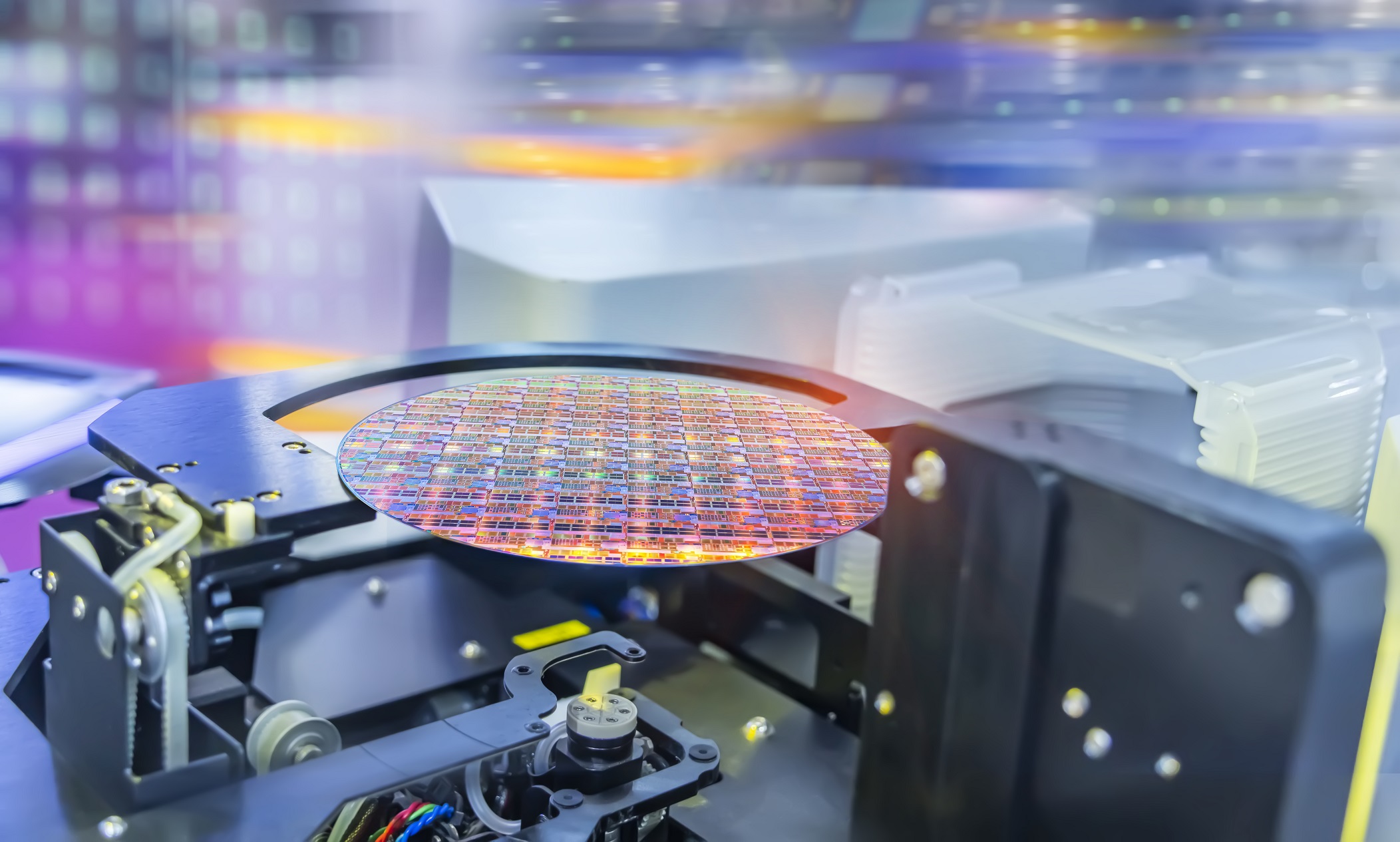
Intel. The name once conjured images of silicon supremacy, of tiny, intricate landscapes etched onto wafers, powering the very dreams of a digital age. Now? It’s become something of a cautionary tale, a reminder that even the most powerful of wizards1 can misplace their spellbooks. They peaked in the Nineties, a time when personal computers were still wondrous contraptions and microprocessors were, well, the point of the whole exercise. A series of unfortunate decisions – let’s call them ‘strategic miscalculations’ to be polite – allowed rivals like Nvidia and AMD to not just catch up, but to gallop past, leaving Intel choking on their dust. It’s a bit like a particularly proud dragon discovering that smaller, faster wyverns have taken all the best caves.
Now, under the stewardship of Lip-Bu Tan, they’re attempting a course correction. It’s a grand ambition, like trying to steer an ocean liner with a teaspoon. Tan’s been at the helm for less than a year, and while there’s been much flurry and pronouncements, it’s far from clear what Intel will be in five years. Will it be a phoenix risen from the ashes, or merely a particularly expensive bonfire? And, crucially, will all this effort translate into actual, tangible profit? That, my friends, is the question that keeps investors awake at night.
Intel’s Three-Headed Approach to Reclaiming Glory
Like most tech companies these days, Intel believes Artificial Intelligence is the philosopher’s stone of the future. It’s the alchemical formula that will turn base metal into gold, or, in this case, struggling silicon into soaring stock prices. Their AI strategy falls into three neat categories. First, they’re hoping to squeeze more value out of their existing x86 architecture, catering to the ‘hyperscalers’ – those vast data centers that consume more power than small countries. Second, they’re attempting to catch up in the graphics processing unit (GPU) arena, a field currently dominated by Nvidia and AMD. It’s a bit like a knight attempting to unseat a champion jouster – admirable, perhaps, but fraught with peril.
The most ambitious, and arguably the riskiest, element is their foray into becoming a foundry – a manufacturer of chips for other companies. Tan has poured a considerable amount of leadership capital into this venture, attracting investment from the U.S. government, Nvidia, and even SoftBank Group. It’s a grand vision, a bit like attempting to build a new Alexandria Library in the middle of a sandstorm. Whether it will succeed remains to be seen.
The Obstacles in the Path
Patience, dear investors, is a virtue. And Intel investors will need it in abundance. Tan himself admits that Intel is struggling to meet current demand. It’s a bit like a baker promising a feast when they’ve only got enough flour for a biscuit. They’re also grappling with the same supply chain woes plaguing the entire tech industry – shortages of memory chips, substrate wafers, and the general air of panicked desperation.
But the real problem lies with the foundry operations. In the fourth quarter of 2025, they generated $4.5 billion in revenue, but posted operating losses of $2.5 billion. That’s a margin of -50%, or, as I like to call it, ‘spectacularly unprofitable.’ The appeal of domestic chip production is undeniable, but it only makes sense if Intel can actually make money doing it. And at the moment, that seems a rather large ‘if.’
Why Intel Won’t Be Joining the Voyager Portfolio (Yet)
Amidst all this uncertainty, Intel’s stock has soared. It’s as if investors have collectively decided to ignore the warning signs and embrace a rather optimistic fantasy. The forward multiple is currently quite rich, at close to 50 times 2027 estimates, despite expectations of a doubling in adjusted earnings next year.
Six months ago, Intel might have been a reasonable addition to the Voyager Portfolio. But at today’s prices, it’s simply too expensive. The stock reflects far too much optimism about Tan’s ability to turn the company around quickly. And, based on what he’s saying, that’s not going to happen. Intel shareholders, it seems, are poised for another round of disappointment. It’s a cautionary tale, a reminder that even the most powerful wizards can sometimes miscast their spells.
1 In this context, ‘wizards’ refers to the engineers and executives responsible for designing and manufacturing microprocessors. It’s a metaphor, of course. Although, given the complexity of modern chip design, a little bit of actual magic wouldn’t go amiss.
Read More
- Top 20 Dinosaur Movies, Ranked
- 20 Movies Where the Black Villain Was Secretly the Most Popular Character
- Celebs Who Narrowly Escaped The 9/11 Attacks
- 25 “Woke” Films That Used Black Trauma to Humanize White Leads
- Spotting the Loops in Autonomous Systems
- Gold Rate Forecast
- The 10 Most Underrated Jim Carrey Movies, Ranked (From Least to Most Underrated)
- The Best Directors of 2025
- Transformers Under the Microscope: What Graph Neural Networks Reveal
- Silver Rate Forecast
2026-02-16 20:13