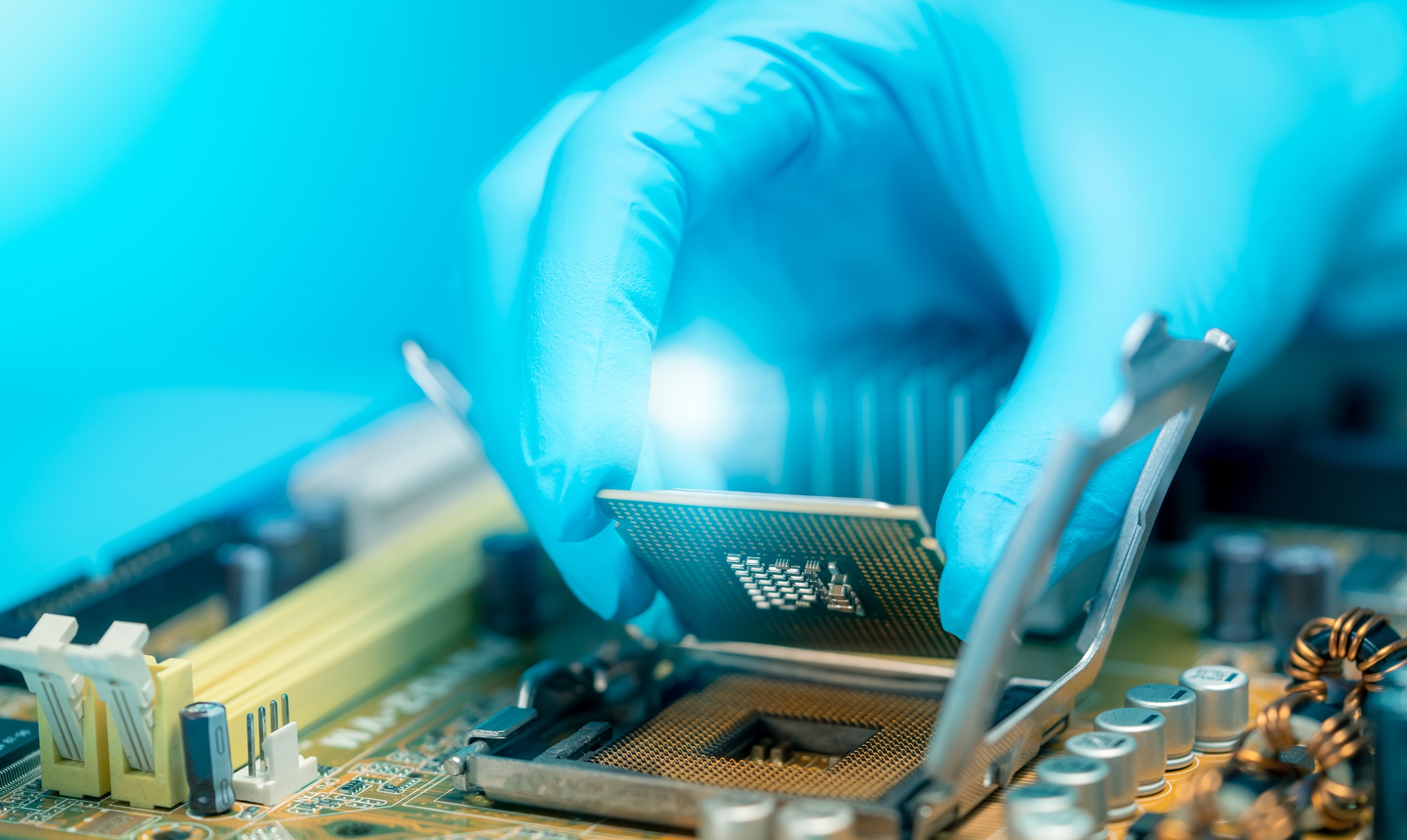
The current enthusiasm for all things artificial intelligence has, predictably, stirred the tech sector. Semiconductors, naturally, are at the heart of it, and one sees the usual flurry of excitement around names like Nvidia. It’s a spectacle, really, this constant search for the next miracle, the next exponential curve. One almost feels sorry for the companies left behind, lingering in the shadows of progress.
My observations, drawn from a portfolio I call Voyager, tend to focus on those very companies—the ones the market has, for the moment, forgotten. It’s a melancholy pursuit, admittedly. One finds, more often than not, that the market is remarkably efficient at discovering opportunities. Even Intel, a name once synonymous with innovation, has enjoyed a brief resurgence. Yet, one wonders if the underlying issues – the quiet compromises, the missed turns – have truly been resolved, or if this is merely a fleeting reprieve.
A Disruptor, Once
It began, as these things often do, with ambition. In 1968, Noyce and Moore, restless souls, departed their employer and ventured forth. They created the first dynamic random access memory chip – a small victory, perhaps, but a departure nonetheless from the cumbersome magnetic cores that preceded it. A clean break, a fresh start.
The real ascent, however, came with the microprocessor. Intel’s chips found their way into the earliest personal computers, becoming the silent engines of a revolution. The 8086, released in 1978, marked the beginning of an era – a period of rapid growth, of boundless optimism. Subsequent generations of semiconductors followed Moore’s Law with admirable precision, and Intel became a household name. A comfortable position, easily taken for granted.
The Slow Drift
The trouble, as often happens, lay in clinging too tightly to past successes. Intel assumed, with a certain inevitability, that its dominance would endure. It failed to recognize the shifting tides, the emerging landscapes. The mobile device market, in particular, proved to be its undoing. Smartphones, those ubiquitous companions, largely relied on rival chips. A missed opportunity, a quiet regret.
And then there were the graphics processing units. Nvidia and AMD, initially dismissed as niche players catering to the video game market, began to pull ahead. They saw a future beyond mere entertainment, a potential for broader applications. Hyperscalers, those vast data centers, now look to them for the power to fuel their AI aspirations. Intel is, shall we say, not at the top of that list. A subtle shift in power, easily overlooked in the daily clamor of the market.
Even when Intel finally recognized the need to invest in AI chip development, it was too late. Acquisitions offered a temporary reprieve, a chance to catch up. But the performance of its products hasn’t matched Nvidia’s. A familiar story, really – the established giant struggling to adapt, the nimble newcomer seizing the moment.
A Flicker of Hope?
As a result, Intel’s stock has never regained the heights it reached in 2000. A long decline, punctuated by brief moments of hope. Yet, investors haven’t entirely abandoned it. Share prices have doubled in the past year. A curious phenomenon, this willingness to believe in a comeback. Perhaps it’s simply human nature – the desire to see a fallen hero rise again.
In the next article, I will delve into the financial details – the peaks and valleys, the triumphs and setbacks. I will explore the reasons why some investors remain optimistic, despite the long odds. But for now, let us simply observe the scene – a faded portrait, a flicker of hope, and the quiet, relentless march of time. The market, after all, is a vast and indifferent stage, and the play goes on.
Read More
- Top 20 Dinosaur Movies, Ranked
- 20 Movies Where the Black Villain Was Secretly the Most Popular Character
- Celebs Who Narrowly Escaped The 9/11 Attacks
- 25 “Woke” Films That Used Black Trauma to Humanize White Leads
- The 10 Most Underrated Jim Carrey Movies, Ranked (From Least to Most Underrated)
- Every Notable ‘Star Trek: The Original Series’ Actor Who Died
- Transformers Under the Microscope: What Graph Neural Networks Reveal
- The Best Directors of 2025
- 22 Films Where the White Protagonist Is Canonically the Sidekick to a Black Lead
- Trading on Thin Air: AI Agents Conquer Crypto Volatility
2026-02-14 20:14