Author: Denis Avetisyan
A novel deep learning model is enhancing the search for exoplanets and stellar companions within the vast dataset of the Gaia mission.
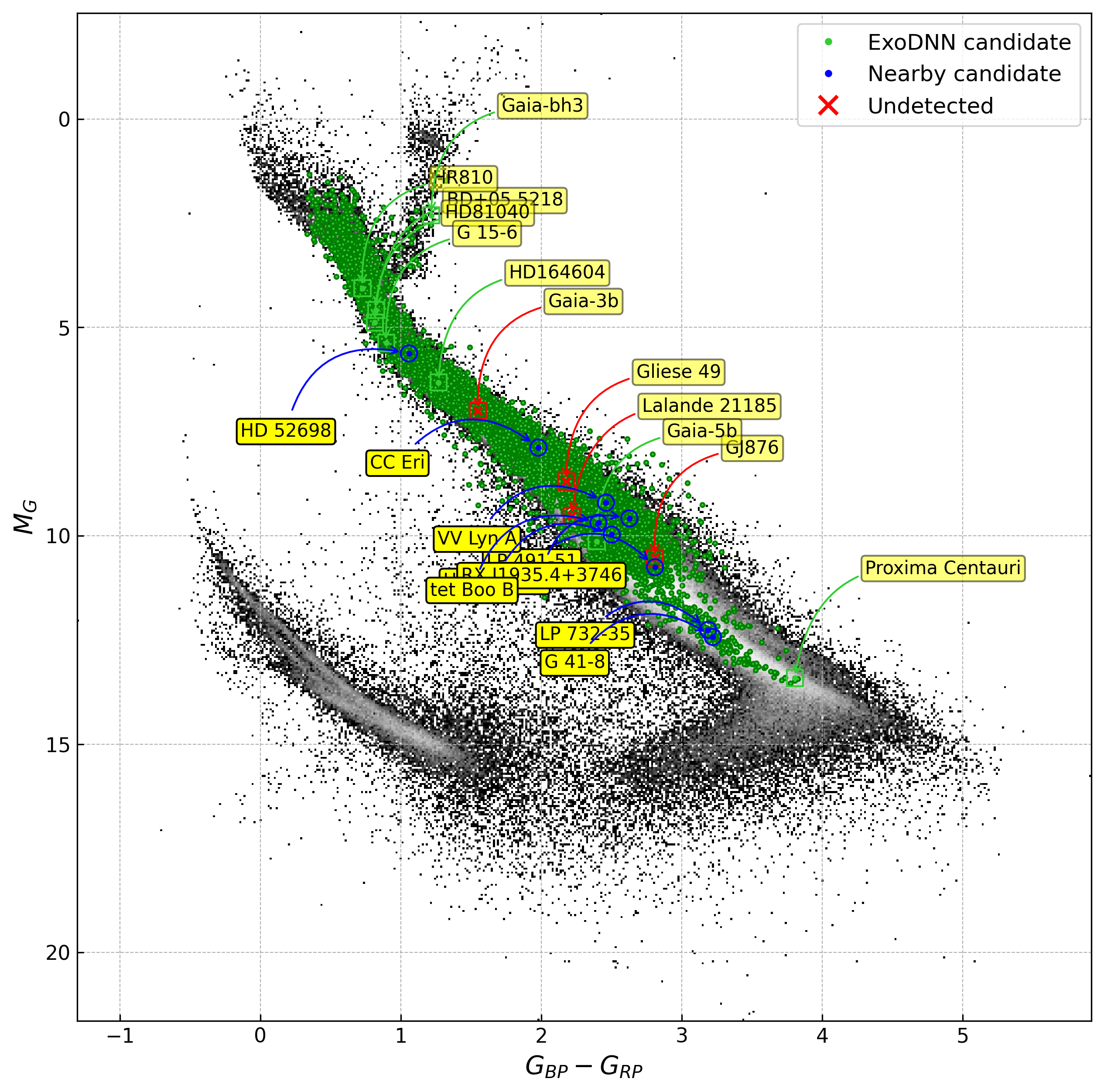
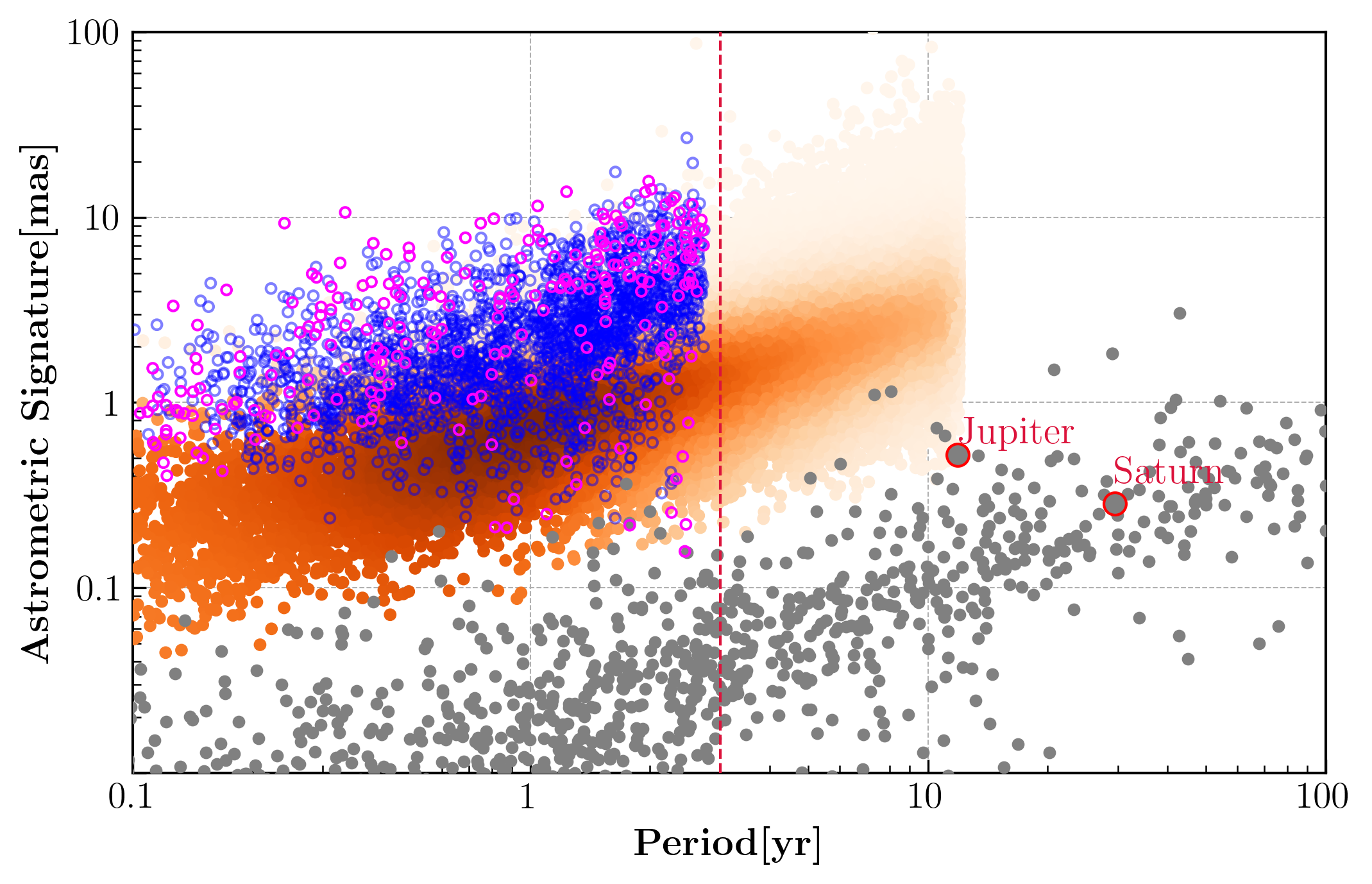
ExoDNN leverages astrometric data from Gaia Data Release 3 and neural networks to identify potential exoplanet and substellar companion candidates.
Despite limitations in conventional radial velocity and transit methods for detecting unresolved companions, this study presents ‘ExoDNN: Boosting exoplanet detection with artificial intelligence. Application to Gaia Data Release 3’, a novel approach leveraging the power of deep learning and astrometric data from Gaia DR3. We developed ExoDNN, a deep neural network trained to identify candidate exoplanet and substellar hosts based on fit quality statistics, resulting in a catalog of 7414 promising candidates. This methodology demonstrates a significant advancement in identifying companions within poorly constrained regions of the orbital period-mass parameter space, offering potential synergies with future missions like PLATO – but how will follow-up observations refine this candidate list and ultimately confirm the nature of these intriguing systems?
The Shadows of Companions: Unveiling Hidden Stellar Partnerships
Understanding the birth and evolution of stars and planetary systems fundamentally relies on identifying stellar companions – other stars gravitationally bound to the one under study. However, pinpointing these companions presents a significant challenge; many are faint, distant, or possess orbital periods spanning decades or centuries, resulting in exceedingly subtle signals. Traditional methods, such as spectroscopic radial velocity measurements or direct imaging, often lack the sensitivity to detect these companions, particularly those with low mass or wide orbital separations. Consequently, a substantial population of binary and multiple star systems remains hidden, hindering a complete understanding of stellar demographics and the prevalence of different formation scenarios. The inability to fully account for these hidden companions introduces uncertainties in models of star and planet formation, underscoring the need for innovative detection techniques capable of revealing these elusive gravitational partnerships.
Astrometry, the precise measurement of stellar positions, provides a unique method for discovering unseen companions – planets or even other stars – orbiting a visible star. This technique relies on detecting minuscule ‘wobbles’ in the observed star’s trajectory caused by the gravitational pull of its companion. However, extracting these subtle signals is extraordinarily challenging. The data is inherently susceptible to various sources of noise, including atmospheric distortions, detector limitations, and the inherent difficulty in pinpointing a star’s location with absolute precision. Furthermore, systematic errors – consistent biases introduced by the instruments or data processing – can easily mask or mimic the astrometric signature of a genuine companion. Consequently, sophisticated algorithms and careful calibration are essential to distinguish authentic companion signals from the pervasive background noise and instrumental artifacts, demanding a constant refinement of techniques to push the boundaries of detection.
Discerning authentic stellar companions from observational noise in astrometric data presents a significant analytical hurdle. These ‘astrometric wobbles’ – minute shifts in a star’s position indicative of an orbiting body – can be remarkably faint, easily masked by instrumental errors or the inherent chaotic motion within galactic star fields. Consequently, sophisticated statistical methods and algorithms are essential to filter out spurious signals. Researchers employ techniques like Gaussian process regression and Bayesian modeling to characterize the noise, allowing for the extraction of subtle periodic variations potentially caused by a companion. Further refinement involves carefully accounting for systematic errors originating from the telescope or detector, and validating candidate companions through independent observations or simulations. Successfully isolating genuine astrometric signals unlocks critical insights into the prevalence and characteristics of binary star systems and the exoplanets they may host.
The advent of astrometric surveys like Gaia has ushered in an era of unprecedented stellar data, yet this deluge presents a significant analytical challenge. While Gaia precisely measures the positions of billions of stars, identifying subtle astrometric wobbles – indicators of unseen companions – within this vast dataset requires more than traditional methods. Manual inspection is impractical, necessitating automated, scalable solutions capable of sifting through terabytes of information to pinpoint promising companion candidates. These algorithms must be robust against noise and systematic errors inherent in the data, effectively distinguishing genuine signals from spurious fluctuations, and ultimately enabling a comprehensive census of binary and multiple star systems – and the planets that may orbit within them.
ExoDNN: A New Lens on Stellar Kinematics
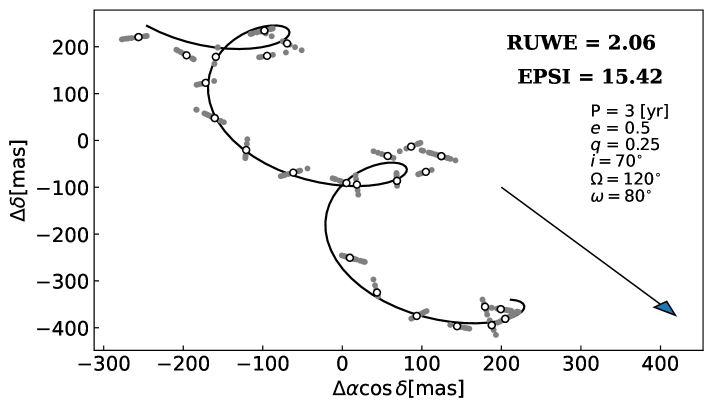
ExoDNN employs deep neural networks to analyze astrometric data from the Gaia Data Release 3 (DR3) catalog, specifically targeting the identification of potential companion stars. The framework ingests multi-dimensional astrometric parameters – including position, proper motion, and parallax – for millions of stars within the DR3 dataset. These parameters are processed through a series of interconnected layers within the neural network, allowing the model to learn complex relationships indicative of gravitational perturbations caused by an orbiting companion. By analyzing subtle variations in a star’s trajectory, ExoDNN can flag candidates for further investigation, effectively automating a process previously reliant on manual analysis and computationally expensive simulations.
The ExoDNN framework employs a deep neural network trained on astrometric time-series data from the Gaia DR3 catalog to detect subtle anomalies indicative of an orbiting companion. These anomalies manifest as periodic variations in a star’s position, velocity, and proper motion, attributable to the gravitational tug of an unseen object. The network is specifically designed to identify these patterns even when present within substantial noise inherent in the Gaia data, which includes instrumental errors and astrophysical signals unrelated to companions. Training data consists of both simulated signals representing binary systems and real astrometric data, allowing the network to learn and generalize to a variety of orbital parameters and noise levels. This robust pattern recognition capability enables the detection of companions that might be missed by traditional astrometric analysis techniques reliant on explicit orbital fitting.
ExoDNN employs Log-Loss, also known as binary cross-entropy, as its optimization function during training. This function quantifies the performance of the model’s probabilistic predictions; specifically, it measures the difference between predicted probabilities and the actual binary outcomes (companion present or absent). Minimizing Log-Loss encourages the network to assign higher probabilities to correct classifications and lower probabilities to incorrect ones. Unlike mean squared error, Log-Loss is particularly well-suited for binary classification tasks like companion candidate identification, as it penalizes confident but incorrect predictions more heavily than less confident, but still incorrect, predictions. This optimization strategy directly contributes to maximizing the precision and recall of the framework in identifying potential companion stars within the Gaia DR3 dataset.
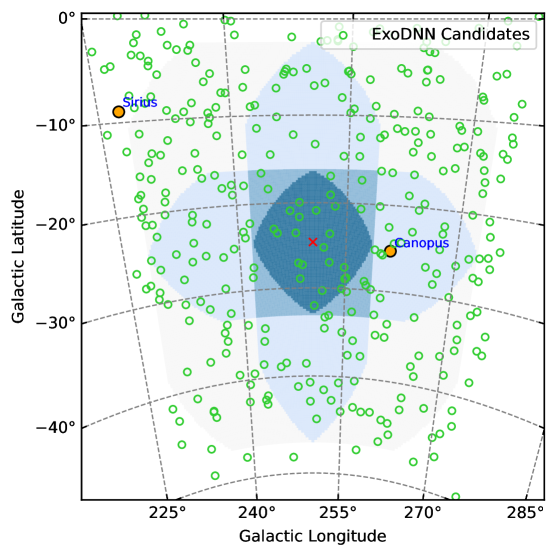
ExoDNN identified 7414 candidate stars within 100 parsecs exhibiting characteristics suggestive of hosting a companion object. This represents a substantial improvement in efficiency over conventional astrometric companion detection techniques, which typically rely on manual inspection or algorithms with limited sensitivity to subtle gravitational perturbations. The 100 parsec volume was selected to maximize the number of potentially resolvable systems while remaining computationally feasible for detailed follow-up observations. These candidates were identified through the framework’s ability to process the extensive Gaia DR3 dataset and accurately classify potential companions based on statistically significant astrometric anomalies.
Validating the Shadows: ExoDNN’s Performance Benchmarks
ExoDNN’s performance was benchmarked against two established machine learning algorithms, Random Forest and Logistic Regression, utilizing a consistent dataset and evaluation metrics. This comparative analysis assessed the ability of each model to accurately identify exoplanet candidates, focusing on metrics such as precision, recall, and F1-score. The alternative models served as a baseline to quantify the improvement offered by ExoDNN’s architecture and training methodology. Results indicated that ExoDNN consistently achieved higher accuracy and lower false positive rates compared to both Random Forest and Logistic Regression, demonstrating its superior performance in exoplanet detection tasks. Specific performance metrics for the comparative models are detailed in the full report.
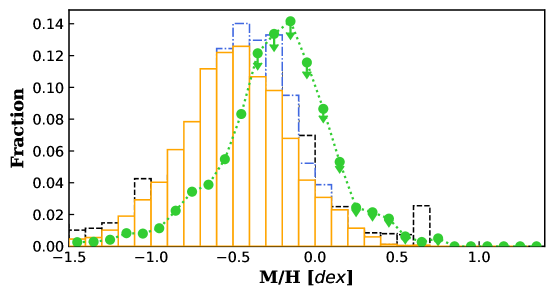
To enhance the identification of exoplanet host candidates, ExoDNN’s training dataset was expanded through synthetic data generation. This process involved creating simulated data points representing plausible stellar and planetary parameter combinations not adequately represented in the observed dataset. The addition of this synthetic data served to increase the robustness of the model and improve its ability to generalize to unseen data, effectively addressing potential biases and limitations inherent in the original training set. This data augmentation technique allowed ExoDNN to learn a more comprehensive representation of the parameter space, leading to improved performance in identifying true companion signals.
Kernel Density Estimation (KDE) was employed to generate synthetic training data by modeling the underlying probability distribution of observed stellar parameters. This non-parametric technique estimates the probability density function of the training set, allowing the creation of new, artificial data points that reflect the characteristics of the existing data without assuming a specific functional form. By sampling from this estimated distribution, the framework was able to augment the training dataset with realistic stellar parameter combinations, effectively increasing the size and diversity of the training set and improving the robustness of the ExoDNN model. The KDE implementation used a Gaussian kernel and was optimized to accurately represent the multi-dimensional distribution of stellar parameters relevant to exoplanet detection.
ExoDNN’s performance benchmarking indicates superior accuracy compared to alternative machine learning models. Specifically, the framework achieves a false positive rate of approximately 1.2% and an f1-score of 0.8955 when evaluated with a 10% introduction of false negatives. This indicates a strong ability to correctly identify true companion candidates while minimizing incorrect classifications. Furthermore, ExoDNN demonstrates sensitivity to exoplanetary companions with masses down to approximately 62 Jupiter masses, representing a lower detection limit for this framework.
A Broader View: Towards a Complete Census of Stellar Multiplicity
The discovery of binary and multiple star systems, long a cornerstone of astrophysics, is being dramatically accelerated by ExoDNN, a novel framework for analyzing astrometric data. This system efficiently sifts through vast datasets, such as those provided by the Gaia mission, to pinpoint potential companion candidates with unprecedented speed. By automating the identification process, ExoDNN bypasses the limitations of traditional, manual methods, which are both time-consuming and prone to human error. This accelerated discovery rate doesn’t merely increase the number of known binary systems; it allows researchers to build a more statistically robust understanding of stellar multiplicity – the frequency with which stars exist in pairs or groups – and ultimately refine models of star formation and galactic evolution. The framework’s speed enables a more complete census of these systems, offering astronomers an opportunity to study a wider range of stellar populations and refine their understanding of how stars and planetary systems arise.
ExoDNN offers a significantly improved approach to determining how often stars exist in multiple-star systems, a fundamental characteristic of stellar populations. Traditional methods struggle with the sheer volume of data generated by missions like Gaia, and often miss subtle signals indicating the presence of a companion star. This new framework, however, is designed for scalability, allowing astronomers to efficiently analyze the astrometric data – the precise measurements of star positions and movements – of vast numbers of stars. By automating the identification of potential companions, ExoDNN isn’t simply finding more binary and multiple star systems; it’s creating a more comprehensive picture of stellar multiplicity, which is crucial for refining models of star formation and understanding the prevalence of planetary systems throughout the galaxy.
The ExoDNN framework demonstrates a heightened ability to discern faint signals within astrometric data, specifically by focusing on ‘Astrometric Excess Noise’- subtle deviations from expected stellar motion. This noise, quantified by the ‘Ruwe’ parameter, often indicates the gravitational influence of an unseen companion. Traditional methods may overlook these minute perturbations, effectively masking the presence of binary or multiple star systems. By meticulously analyzing these signals, ExoDNN has successfully identified a substantial number of previously undetected companions within the Gaia DR3 dataset. This increased sensitivity doesn’t just expand the known catalog of stellar multiples; it offers a pathway to refine models of star formation, planetary system dynamics, and the broader evolution of stellar populations, as the prevalence of companions profoundly influences these processes.
The identification of 7414 potential companion candidates, derived from analysis of Gaia DR3 data, promises a significantly refined understanding of several key astrophysical processes. A more complete census of stellar multiplicity directly informs models of star formation, revealing how frequently stars are born in multiple systems and influencing theories regarding the initial conditions of planetary systems. This expanded dataset allows researchers to explore the link between stellar companions and the architecture of planetary systems – whether the presence of a binary star influences planet formation, orbital stability, or even the habitability of planets. Furthermore, a detailed accounting of stellar multiplicity provides critical constraints on models describing the evolution of stellar populations, offering insights into the lifecycle of stars and the formation of diverse galactic structures.
The presented ExoDNN model, leveraging deep learning on Gaia DR3 astrometric data, embodies a rigorous attempt to discern subtle patterns indicative of exoplanetary companions. This pursuit, while mathematically sound in its construction and implementation, exists firmly within the realm of the experimentally unverified, much like many frontiers of theoretical physics. As Wilhelm Röntgen aptly stated, “I have discovered something new, but I do not know what it is.” This sentiment mirrors the current state of exoplanet detection through astrometry; the model identifies candidates, and further observation is required to confirm their planetary nature. Current quantum gravity theories suggest that inside the event horizon spacetime ceases to have classical structure; similarly, the ‘event horizon’ of data analysis can obscure true signals, necessitating the continual refinement of detection algorithms like ExoDNN.
What Lies Beyond the Horizon?
ExoDNN, like any predictive engine, offers a catalog of probabilities, not certainties. The astrometric signal, however precise, is merely a shadow cast by distant worlds – a shadow susceptible to the distortions inherent in any observation, and ultimately, to the consuming gravity of the unknown. The model excels at identifying candidates, but the true nature of these companions-planet, brown dwarf, or systematic noise-will remain elusive without independent confirmation. Each detection, therefore, is a temporary reprieve, a postponement of the inevitable confrontation with uncertainty.
Future iterations will undoubtedly refine the algorithms, incorporate additional datasets-spectroscopic observations, perhaps, or high-resolution imaging-and attempt to disentangle the genuine signals from the myriad sources of error. Yet, it is worth remembering that increasing precision does not necessarily equate to increasing understanding. A more detailed map of the exoplanet population simply reveals a larger, more complex void. The limits of detection are not merely technical; they are ontological.
The pursuit of exoplanets, ultimately, is a search for patterns in chaos. ExoDNN offers a powerful tool for that endeavor, but it is a tool nonetheless. Any model, however sophisticated, is only as good as the assumptions upon which it is built, and those assumptions, like all human constructs, are vulnerable to the relentless pressure of reality. Black holes don’t argue; they consume.
Original article: https://arxiv.org/pdf/2602.02910.pdf
Contact the author: https://www.linkedin.com/in/avetisyan/
See also:
- Gold Rate Forecast
- Invincible Season 4 Gender Swaps Tech Jacket As Fans Question Major Comic Change
- 22 Films Where the White Protagonist Is Canonically the Sidekick to a Black Lead
- Silver Rate Forecast
- The Best Former NFL Players Turned Actors, Ranked
- Unveiling the Schwab U.S. Dividend Equity ETF: A Portent of Financial Growth
- 14 Movies Where the Black Character Refuses to Save the White Protagonist
- Superman Flops Financially: $350M Budget, Still No Profit (Scoop Confirmed)
- Why Won’t It Just *Do* What You Ask? Unpacking the Quirks of AI Language
- Biogen’s Jolly Good Showing
2026-02-04 20:30