Author: Denis Avetisyan
A new generation of AI-powered research agents is dramatically improving the identification of promising drug assets worldwide.
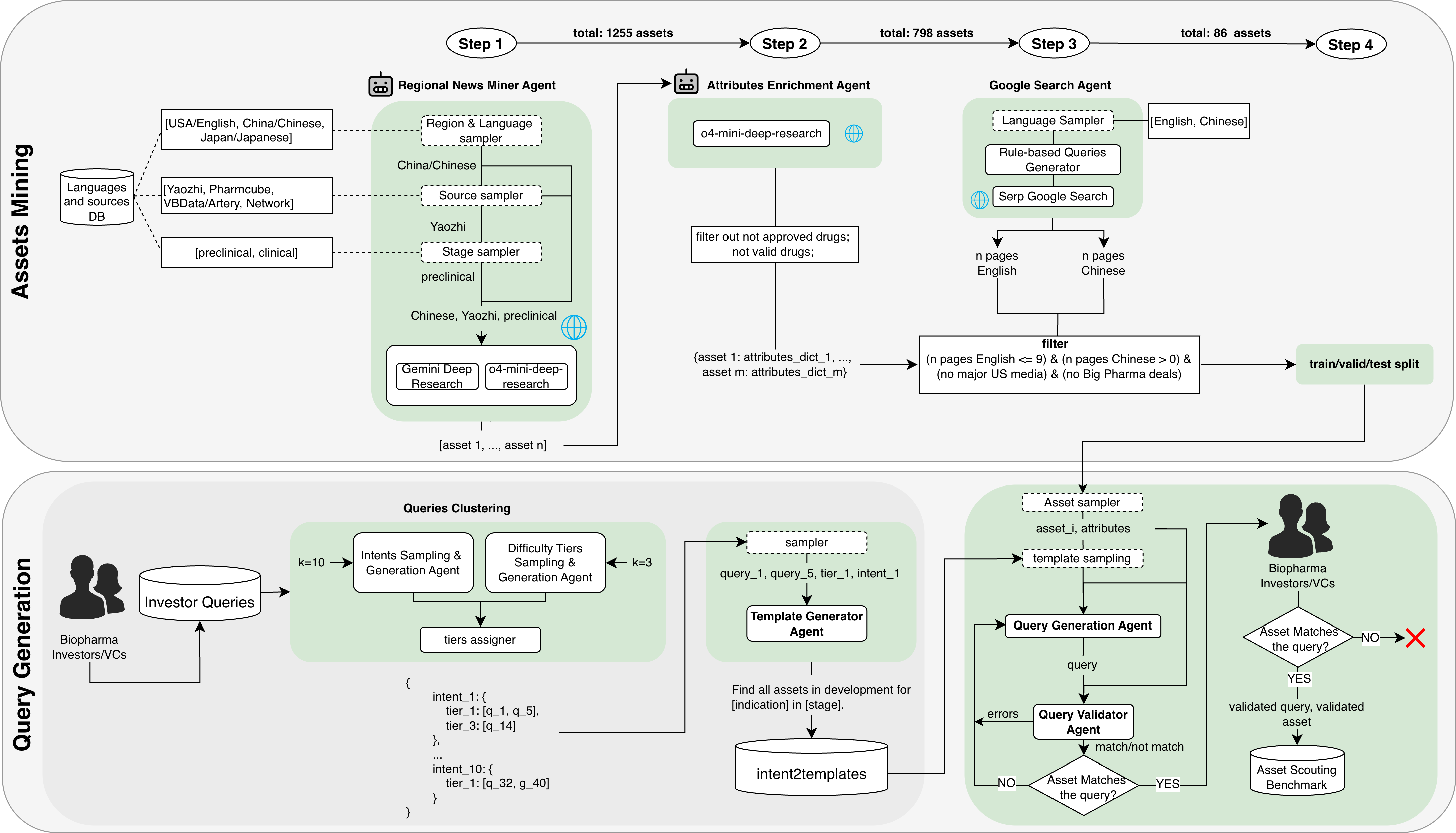
This review introduces a completeness benchmark and demonstrates a tree-based, multilingual system surpassing commercial solutions in recall and precision for drug asset scouting.
Despite increasing globalization of biopharmaceutical innovation, identifying promising drug assets outside traditional U.S.-centric channels remains a significant challenge. This is addressed in ‘Hunt Globally: Deep Research AI Agents for Drug Asset Scouting in Investing, Business Development, and Search & Evaluation’, which introduces a novel completeness benchmark and a tree-based deep research system, Bioptic Agent, designed to overcome limitations in recall and precision. Our results demonstrate that Bioptic Agent substantially outperforms leading commercial large language models – achieving a 79.7% F1 score compared to benchmarks ranging from 26.9% to 56.2% – suggesting that improved algorithmic architecture and compute can unlock more complete asset discovery. Will this approach redefine the landscape of pharmaceutical scouting and accelerate the translation of global innovation into viable therapies?
The Burden of Discovery: Navigating a Sea of Data
Historically, the identification of promising drug candidates-a process known as asset scouting-has been remarkably labor-intensive. Researchers traditionally pore over scientific literature, patents, and conference proceedings, supplemented by relatively narrow web searches. This manual approach, while thorough in its intent, is inherently limited by the sheer volume of available data and the cognitive biases of individual reviewers. Consequently, crucial information-such as early-stage research at smaller institutions, obscure patents detailing novel compounds, or negative results that might preclude further investment-is often overlooked. The result is an incomplete understanding of the available therapeutic landscape, potentially leading to missed opportunities for innovation and redundant research efforts. This reliance on manual processes not only increases the time and cost associated with drug discovery but also introduces a significant risk of failing to identify genuinely promising assets hidden within the vast expanse of biomedical information.
Modern pharmaceutical asset scouting faces a significant hurdle in its inability to effectively integrate information dispersed across a multitude of languages and data formats. While relevant intelligence exists globally-in patents, scientific literature, clinical trial registries, and news reports-current systems often treat each source as a silo. This fragmented approach necessitates extensive manual curation, introduces potential for translation errors, and limits the capacity to identify subtle connections or emerging trends. Consequently, valuable drug candidates or crucial competitive intelligence can remain obscured, hindering comprehensive analysis and potentially delaying the development of life-saving therapies. A truly effective scouting system requires sophisticated natural language processing capable of seamlessly synthesizing information from diverse sources, regardless of origin or format, to provide a holistic and actionable understanding of the pharmaceutical landscape.
The increasing reliance on large language models (LLMs) for drug asset scouting presents a significant challenge: a propensity for ‘hallucinations,’ or the generation of plausible but factually incorrect information. These false positives can mislead researchers, diverting resources towards non-existent compounds or inaccurate data, and ultimately hindering drug discovery efforts. Consequently, a robust scouting system must move beyond simple LLM output and prioritize verifiable data sources, employing techniques like knowledge graph integration and automated fact-checking to validate claims. Such a system would not merely present information, but actively assess its reliability, ensuring that scouting results are grounded in scientific truth and minimizing the risk of pursuing unproductive leads. This emphasis on factual accuracy is crucial for transforming LLMs from potentially misleading tools into dependable assets in pharmaceutical research.
Bioptic Agent: A System for Deliberate Discovery
Bioptic Agent utilizes a tree-based exploration strategy to optimize the investigation of potential drug assets. This approach begins with an initial set of seed compounds or targets, and iteratively expands the search space by branching out to related entities – such as proteins, pathways, diseases, and publications – forming a hierarchical tree structure. Compute resources are allocated dynamically, prioritizing nodes in the tree based on relevance scores derived from GPT-5.2 analysis and pre-defined criteria, ensuring efficient exploration of the most promising avenues while minimizing redundant analysis. This systematic approach allows Bioptic Agent to comprehensively map the landscape of drug discovery, identifying connections and opportunities that may be missed by less structured search methods.
Bioptic Agent incorporates multilingual parallelism by simultaneously processing information from a diverse range of languages, exceeding the limitations of English-only research. This capability is achieved through the utilization of machine translation and natural language processing techniques applied in parallel across multiple linguistic datasets. By extending data coverage beyond English, the system identifies potentially valuable drug assets and research findings that would otherwise remain obscured, enabling the discovery of novel insights and opportunities not accessible through monolingual approaches. The parallel processing architecture significantly reduces research time and expands the scope of investigation, leading to a more comprehensive understanding of the available data landscape.
Bioptic Agent utilizes GPT-5.2 as its primary reasoning engine, enabling the system to perform advanced deep research tasks and complex data analysis. GPT-5.2’s capabilities facilitate the processing of diverse data types, including scientific literature, patents, and clinical trial reports, to identify potential drug candidates and therapeutic targets. The model’s sophisticated natural language processing allows for nuanced understanding of complex biological relationships and the extraction of critical insights from unstructured data. Furthermore, GPT-5.2’s predictive capabilities contribute to hypothesis generation and the prioritization of research avenues, increasing the efficiency of the drug discovery process.
Validation Through Precision and Recall: A Balanced Assessment
Bioptic Agent employs both Precision and Recall Graders, both driven by the GPT-5.1 large language model, to evaluate the quality of predicted assets. The Precision Grader assesses the accuracy of the predictions, focusing on minimizing false positives – instances where the system identifies an asset that is not actually valid. Conversely, the Recall Grader focuses on identifying all valid assets, minimizing false negatives. By utilizing both graders in tandem, Bioptic Agent aims to provide a balanced assessment of prediction quality, capturing both the correctness and completeness of the predicted asset list.
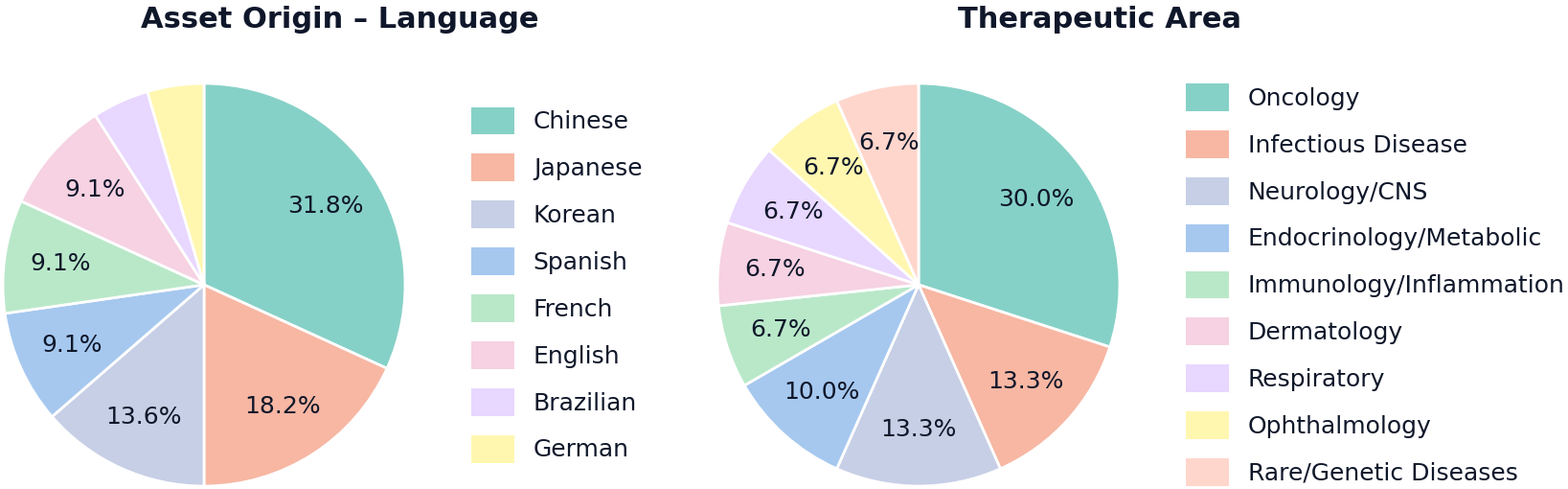
The Bioptic Agent’s evaluation framework incorporates a Completeness Benchmark designed to assess the system’s ability to identify all relevant information. This benchmark is constructed using two primary data sources: validated program records, representing confirmed factual data, and a corpus of investor queries, reflecting real-world information needs. By evaluating predictions against both confirmed data and representative queries, the benchmark ensures comprehensive coverage and assesses the system’s performance in retrieving all pertinent assets, rather than solely focusing on accurate identification of known facts.
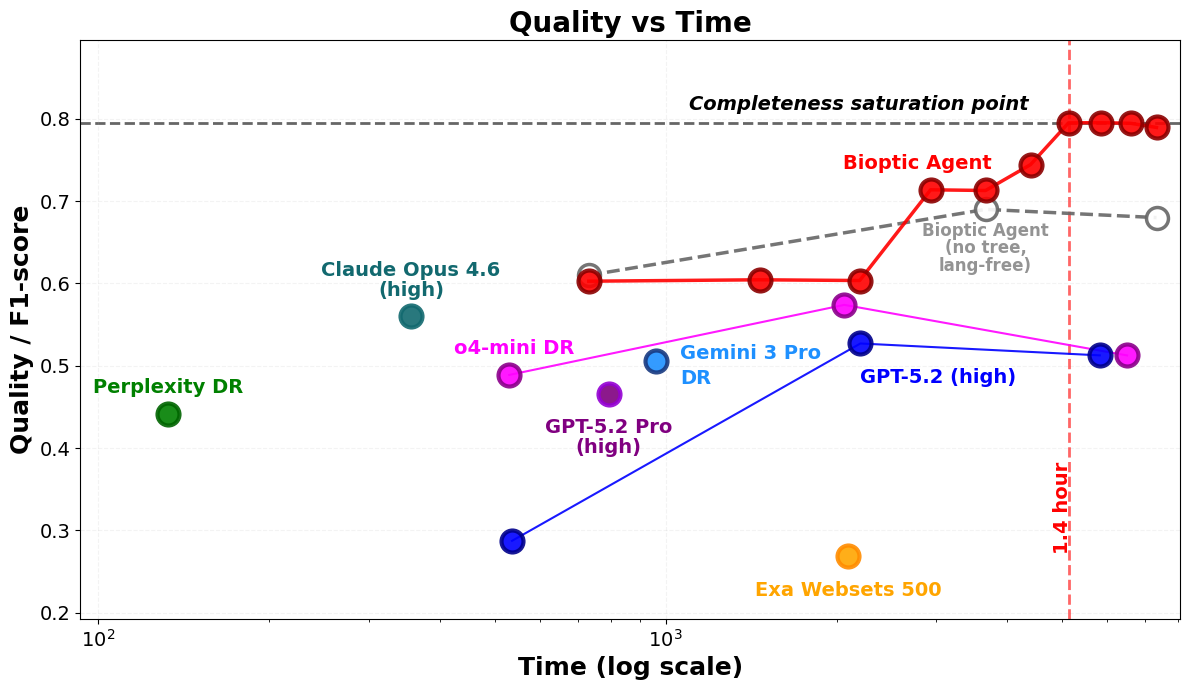
Bioptic Agent’s performance on the completeness benchmark yielded an F1-score of 0.797, representing the harmonic mean of its precision and recall. This score indicates a strong balance between minimizing false positives and false negatives in predicted asset assessment. Specifically, the system achieved a Precision of 0.877, meaning 87.7% of its positively predicted assets were validated as correct. Correspondingly, the Recall measured 0.730, indicating that Bioptic Agent successfully identified 73.0% of all valid assets present in the benchmark dataset.
Comparative evaluation demonstrates Bioptic Agent’s superior performance against leading commercial deep-research models. On the completeness benchmark, Bioptic Agent achieved an F1-score of 0.797, exceeding the performance of Claude Opus 4.6 (0.562) and Gemini 3 Pro Deep Research (0.506). This outperformance extends to individual metrics, with Bioptic Agent’s Precision (0.877) and Recall (0.730) both significantly higher than those of the tested baselines. These results indicate a quantifiable advantage in identifying and validating predicted assets compared to currently available commercial solutions.
Sustained Performance: The Cycle of Self-Improvement
Bioptic Agent distinguishes itself through a dynamic operational model, actively scrutinizing its own performance to optimize search efficacy. Unlike conventional systems, it doesn’t simply execute pre-programmed parameters; instead, the agent continually assesses the outcomes of its asset scouting, identifying patterns of success and failure. This self-reflective process allows it to recalibrate its search strategies – adjusting weighting factors, refining keyword selections, and even modifying its algorithms – based on empirical results. By internalizing lessons from each search iteration, Bioptic Agent progressively hones its ability to pinpoint promising drug assets, ensuring an increasingly accurate and efficient scouting process that transcends the limitations of static, pre-defined approaches.
Bioptic Agent’s effectiveness isn’t simply programmed; it’s cultivated through a continuous process of self-learning. The system doesn’t just execute a search – it meticulously analyzes the results of each iteration, identifying patterns of success and failure. This allows it to refine its algorithms, progressively enhancing its ability to pinpoint promising drug assets while simultaneously reducing the incidence of inaccurate identifications. Each completed search loop functions as a training exercise, subtly recalibrating the system’s parameters to prioritize characteristics indicative of viable candidates and de-emphasize those that lead to false positives. Consequently, Bioptic Agent becomes increasingly discerning with each cycle, exhibiting a dynamic improvement in performance that surpasses static, pre-defined search parameters.
Bioptic Agent’s sustained leadership in drug asset scouting isn’t a result of initial programming alone, but rather a dynamic process of continuous learning and refinement. The system actively integrates new data and performance evaluations, allowing it to progressively enhance its ability to identify promising drug candidates and minimize the incidence of false positives. This adaptive capacity means Bioptic Agent doesn’t simply react to the evolving landscape of pharmaceutical research; it proactively shapes its strategies, expanding its knowledge base with each iteration and ultimately maximizing its impact on accelerating drug discovery efforts. The result is a continuously improving system, poised to remain at the cutting edge of identifying and assessing potential therapeutic assets.
The pursuit of comprehensive drug asset scouting, as detailed in the research, echoes a fundamental principle of efficient information retrieval. The Bioptic Agent’s tree-based exploration, striving for completeness in a vast information space, finds resonance in the sentiment expressed by David Hilbert: “We must be able to answer every question.” This isn’t merely about accumulating data, but about structuring it for lossless comprehension – a deliberate reduction of noise to reveal the signal. The agent’s focus on recall and precision isn’t just a metric, but a manifestation of Hilbert’s ideal: a system where nothing relevant is omitted, and extraneous details do not obscure the core insights.
Where Do We Go From Here?
The pursuit of ‘completeness’ in drug asset scouting-a metric this work rightly questions-often resembles building a cathedral to house a thimble. The Bioptic Agent offers improved recall and precision, certainly, but the real advance may lie in exposing the inadequacy of existing benchmarks. They called it ‘coverage’; it was, more accurately, a confidence game. The system doesn’t merely find more assets; it forces a reckoning with how little anyone truly knew about what existed in the first place.
Future iterations will undoubtedly focus on scaling-more languages, more data, more agents. However, a more pressing concern is discerning signal from noise. The system’s ability to surface previously hidden assets raises the immediate problem of verification. Automation, it seems, will simply shift the burden of due diligence, not alleviate it. A truly intelligent system will not only find the needle in the haystack but also assess the quality of the hay.
The architecture, while elegant, remains a tree-a fundamentally hierarchical structure imposed on a world that rarely cooperates with such neat organization. Perhaps the next step isn’t deeper branching, but a move towards genuinely distributed intelligence-a system that doesn’t ‘explore’ but ‘emerges’, adapting and evolving beyond the constraints of its initial design. Simplicity, after all, is not the goal; it’s the inevitable byproduct of ruthless efficiency.
Original article: https://arxiv.org/pdf/2602.15019.pdf
Contact the author: https://www.linkedin.com/in/avetisyan/
See also:
- Top 20 Dinosaur Movies, Ranked
- 20 Movies Where the Black Villain Was Secretly the Most Popular Character
- Celebs Who Narrowly Escaped The 9/11 Attacks
- 25 “Woke” Films That Used Black Trauma to Humanize White Leads
- Spotting the Loops in Autonomous Systems
- The 10 Most Underrated Jim Carrey Movies, Ranked (From Least to Most Underrated)
- Gold Rate Forecast
- The Best Directors of 2025
- Transformers Under the Microscope: What Graph Neural Networks Reveal
- Every Notable ‘Star Trek: The Original Series’ Actor Who Died
2026-02-17 13:12