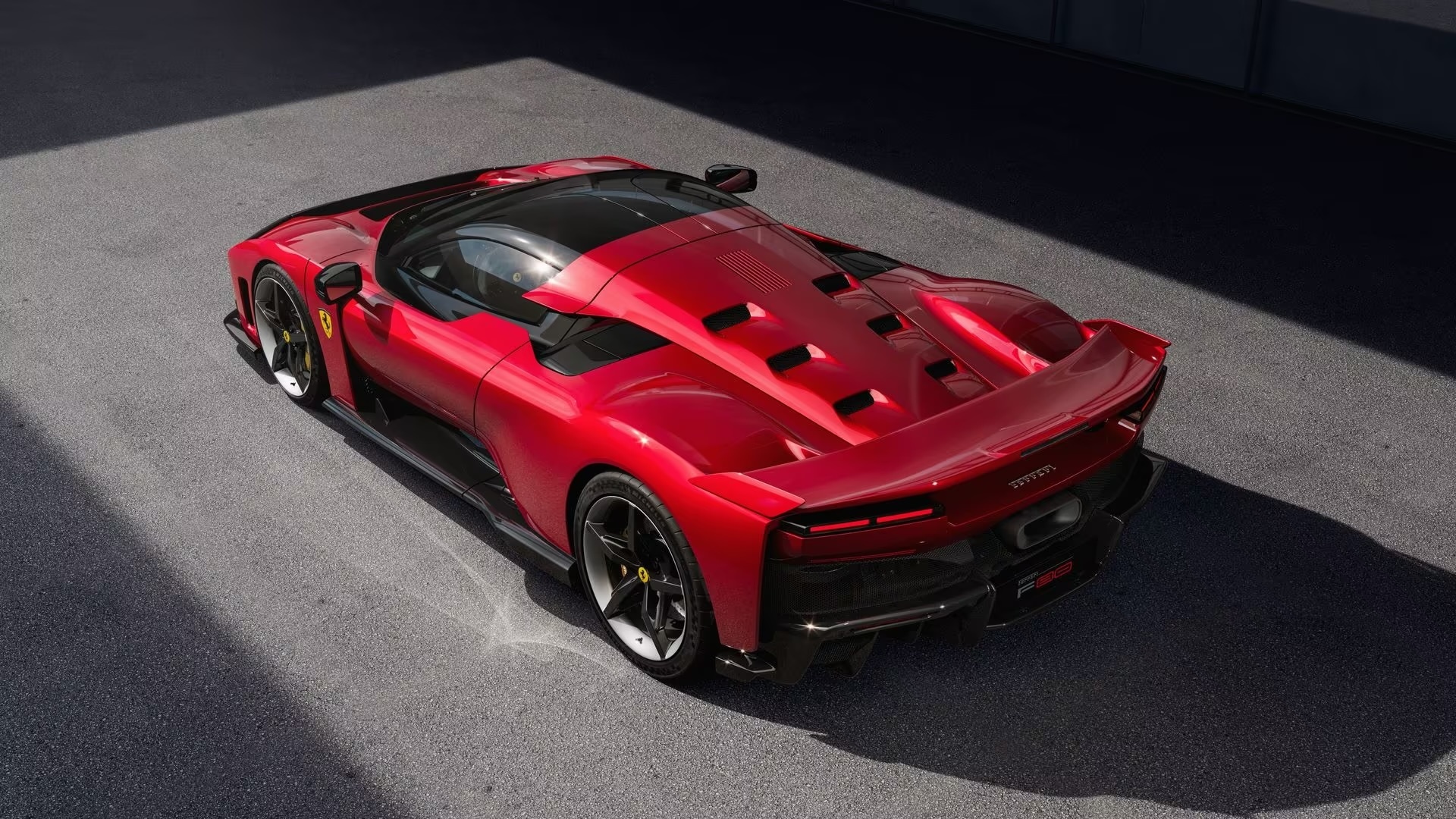
The pursuit of swift enrichment, a common affliction of our age, rarely leads one to contemplate the automotive industry. Yet, within its labyrinthine complexities—a realm of combustion and obsolescence—lies a peculiar anomaly. We are told of revolutions in artificial intelligence, the promise of electric locomotion, the phantom of fully autonomous vehicles. These, however, are mere distractions, shimmering mirages in the desert of capital. The true object of contemplation, if one seeks not velocity but a sustained, if glacial, accrual of value, is a certain Italian marque: Ferrari.
It is not merely a manufacturer of automobiles, but a constructor of dreams—and, more importantly, a curator of scarcity. The conventional wisdom dictates volume, a relentless pursuit of economies of scale. Ferrari operates under a different theorem. It understands that desire, like a well-tended flame, requires oxygen—and that oxygen is limitation. A forgotten text, De Rerum Scarcitate attributed to the Alexandrian scholar Philo Mechanicus, posited that true value resides not in abundance, but in the exquisite tension between longing and attainment. Ferrari, it seems, has internalized this ancient principle.
Consider the matter of pricing. Most manufacturers engage in a delicate dance of cost and competition. Ferrari, however, operates as if governed by a different set of axioms. Its clientele, composed of those who have already navigated the more conventional labyrinths of wealth, are not swayed by mere numerical considerations. For them, price is not a barrier, but a validation—a signal of exclusivity. One recalls the apocryphal story of the Venetian merchant, Marco Alvise, who paid a king’s ransom for a single crimson silk thread, not for its intrinsic worth, but for the sheer audacity of the transaction.
The F80, a fleeting apparition of engineering and artistry—limited to a mere 799 instances—serves as a compelling illustration. Its price, a figure bordering on the astronomical, was not a deterrent, but a catalyst. It vanished, as if absorbed into a parallel dimension, leaving only echoes of desire in its wake. This is not mere marketing; it is a form of applied metaphysics—the creation of value through the deliberate manipulation of scarcity.
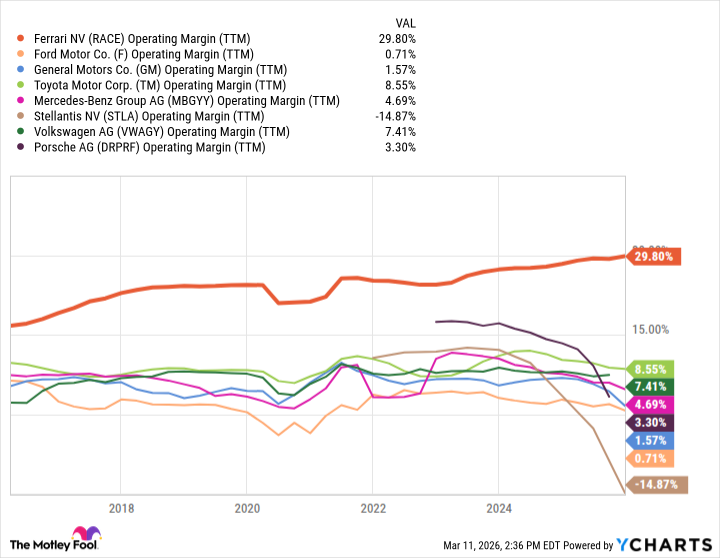
The margins, as the chart reveals, are not merely impressive; they are anomalous—a deviation from the predictable curves of the automotive universe. They suggest a reality operating under a different set of physical laws—a realm where desire, exclusivity, and meticulous craftsmanship conspire to defy the conventional forces of supply and demand. It is a world where the pursuit of profit is not the primary objective, but a consequence of a more profound and elusive principle.
Do not mistake this for a promise of overnight riches. Ferrari is not a shooting star, but a slow-burning ember—a source of sustained, if unhurried, accretion. Over the past decade, it has outpaced the S&P 500—a modest triumph, perhaps, but a testament to the enduring power of scarcity and the allure of the unattainable. The current price-to-earnings ratio, while not insignificant, is a reasonable toll for entry into this peculiar and captivating universe.
To own Ferrari is not merely to invest in a company; it is to participate in a carefully constructed illusion—a slow calculus of value, unfolding over time. It is a reminder that true wealth is not measured in fleeting gains, but in the enduring power of desire, and the exquisite art of limitation.
Read More
- Invincible Season 4 Gender Swaps Tech Jacket As Fans Question Major Comic Change
- Silver Rate Forecast
- Gold Rate Forecast
- Building Agents That Learn and Improve Themselves
- 15 Films That Were Shot Entirely on Phones
- 22 Films Where the White Protagonist Is Canonically the Sidekick to a Black Lead
- 20 Movies Where the Black Villain Was Secretly the Most Popular Character
- Celebs Who Narrowly Escaped The 9/11 Attacks
- 18 TV Series Filming Rehearsals as Bonus Content
- Games That Faced Bans in Countries Over Political Themes
2026-03-15 21:52