Author: Denis Avetisyan
A new study reveals previously unseen oscillatory behavior in the traces of elliptic curves, discovered through the innovative application of machine learning to number theory.
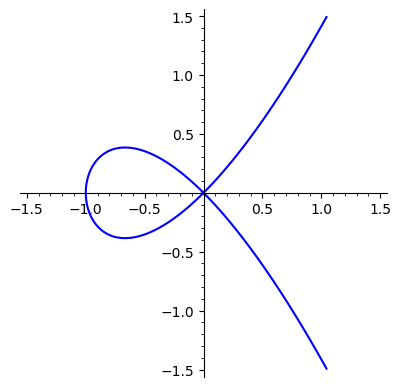
Computational analysis and machine learning techniques reveal ‘murmurations’ – a recurring pattern in the Frobenius traces of elliptic curves, offering new insights into their rank and associated L-functions.
Despite longstanding pursuits in number theory, subtle patterns within arithmetic data often remain obscured. This is addressed in ‘Murmurations: a case study in AI-assisted mathematics’, which details the discovery of ‘murmurations’ – previously undetected oscillatory behavior in the distribution of Frobenius traces associated with elliptic curves. Revealed through a novel combination of computational analysis and machine learning techniques-including tools for interpretability like saliency curves-these murmurations encode information relevant to central conjectures such as Birch and Swinnerton-Dyer, and connect to perspectives from random matrix theory. Could these AI-assisted discoveries offer new avenues for exploring the deep structure of arithmetic and furthering our understanding of L-functions?
The Echoing Architecture of Primes
The quest to understand prime numbers and elliptic curves represents a longstanding pursuit within mathematics, stretching back centuries. Primes – those indivisible building blocks of all numbers – appear deceptively chaotic in their distribution, prompting investigations into whether underlying order exists beyond randomness. Similarly, elliptic curves, defined by specific algebraic equations, possess a rich geometric and algebraic structure that has fascinated mathematicians. These curves aren’t simply abstract concepts; their properties are fundamental to modern cryptography and data security. The challenge lies in discerning patterns within seemingly unpredictable sequences and structures, a task that has driven mathematical innovation and continues to inspire new approaches to number theory. Investigations into these areas aren’t merely academic exercises; they represent a fundamental attempt to uncover the hidden architecture of numbers themselves, with potential implications extending far beyond pure mathematics.
While long-established statistical analyses remain valuable tools in number theory, their efficacy diminishes when confronted with the intricate dependencies within systems like prime number distribution and elliptic curves. These methods often rely on assumptions of randomness or specific distributional forms, which may not accurately capture the nuanced relationships at play. Subtle correlations, existing beyond the scope of conventional tests, can remain obscured by noise or misinterpreted as chance occurrences. Consequently, researchers increasingly recognize the limitations of solely relying on traditional statistics when investigating the deeply layered structure of these mathematical objects, prompting exploration into more adaptive and data-driven approaches capable of discerning patterns previously hidden from view.
Driven by the persistent quest to understand the underlying architecture of mathematical systems, researchers are increasingly turning to modern machine learning techniques. These methods offer a powerful toolkit for identifying subtle dependencies within the seemingly chaotic realms of prime numbers and elliptic curves-structures that often defy traditional statistical analysis. Algorithms capable of learning complex patterns from vast datasets are being employed to detect relationships previously obscured by the limitations of conventional approaches. This computational exploration isn’t simply about finding correlations, but rather about potentially revealing fundamental principles governing these mathematical objects, offering a new lens through which to view the elegance and order hidden within complexity. The hope is that these machine learning insights will not only refine existing theorems but also inspire entirely new avenues of mathematical inquiry.

Murmurations of Elliptic Curves: A Collective Resonance
Analysis of elliptic curve Frobenius traces – specifically, the difference between the trace and its expected value – reveals previously undocumented oscillatory patterns, termed ‘murmurations’. These patterns manifest as recurring, localized concentrations and rarefactions within the distribution of these traces across a statistically significant sample of curves. The observed oscillations are not attributable to known arithmetic properties of elliptic curves or limitations in computational precision; rather, they appear as emergent behavior when examining the collective distribution of traces from a large number of curves. The frequency and amplitude of these murmurations are currently under investigation, with preliminary data suggesting a potential relationship to the rank of the curves.
Analysis of extensive datasets of elliptic curves reveals the emergence of ‘murmurations’ – oscillatory patterns in the distribution of Frobenius traces that were not predicted by current mathematical models. These patterns are observed when examining the collective behavior of a statistically significant number of curves, indicating a previously unrecognized interdependence in their arithmetic properties. The existence of murmurations challenges the assumption that the statistical distribution of Frobenius traces is solely determined by individual curve characteristics and suggests a need for revised theoretical frameworks to account for these emergent collective phenomena. The scale of the datasets-containing millions of curves-is critical to observing these patterns, as they are not readily apparent in smaller samples.
Detection of murmurations in Frobenius trace distributions necessitates the application of machine learning methodologies due to the complexity and high dimensionality of the data. Specifically, convolutional filters were employed to identify recurring patterns within the trace distributions, effectively acting as feature detectors. These filters were then used to generate saliency curves, which quantify the prominence of these patterns across the dataset. Supporting this analytical approach is the observed scale invariance in average Frobenius traces; as the size of the elliptic curve dataset increases, the observed murmurations maintain consistent characteristics, suggesting a non-random underlying structure and validating the reliability of the machine learning-derived patterns. This scale invariance reinforces the hypothesis that the detected patterns are intrinsic properties of the distribution of elliptic curves, rather than artifacts of the analysis.

Isogeny Classes: The Architecture of Interconnection
Isogeny classes, as applied to the analysis of murmurations, represent groupings of elliptic curves that share structural similarities defined by the existence of a non-trivial isogeny – a special type of map – between them. Formally, two elliptic curves E_1 and E_2 belong to the same isogeny class if there exists a map \phi: E_1 \rightarrow E_2 that is a homomorphism of algebraic groups with finite kernel. This grouping is significant because curves within the same isogeny class exhibit predictable relationships in their algebraic properties, such as their rank and torsion points, allowing for a systematic investigation of patterns observed in the murmurations that would not be apparent when treating each curve as isolated data. The identification of these classes provides a framework for understanding the underlying structure driving the collective behavior.
The conductor, denoted as N, is a positive integer that characterizes an isogeny class by representing the greatest common divisor of the orders of torsion points on the elliptic curve. Specifically, it is the smallest positive integer such that the curve has no non-trivial isogenies of degree dividing N. This parameter allows for the categorization of elliptic curves; curves sharing the same conductor belong to the same isogeny class and exhibit similar arithmetic properties. Comparing conductors between curves provides a quantifiable metric for assessing the relatedness of their underlying mathematical structures, enabling statistical analysis of murmurations based on shared characteristics within defined isogeny classes.
Analysis of murmurations, or groupings of elliptic curves, demonstrates they are not attributable to random data distribution. Statistical analysis, specifically Principal Component Analysis (PCA) performed on elliptic curves categorized by their rank, reveals distinct separation between curves belonging to different isogeny classes. This observed separation indicates a systematic relationship between murmurations and the underlying mathematical structure of these curves, supporting the hypothesis that murmurations represent inherent properties of specific isogeny classes rather than stochastic phenomena. The consistent clustering in PCA projections provides quantifiable evidence against the null hypothesis of random noise.
![The average value of <span class="katex-eq" data-katex-display="false">a_p(E)</span> exhibits a clear distinction between even (blue) and odd (red) rank isogeny classes across varying conductor ranges of [5000, 10000], [10000, 20000], and [20000, 40000].](https://arxiv.org/html/2603.09680v1/mur-7.png)
Echoes of the Conjecture: Towards a Deeper Understanding
Recent investigations into the collective behavior of elliptic curves – specifically, patterns resembling “murmurations” observed when curves are grouped by isogeny classes – offer compelling empirical support for aspects of the Birch and Swinnerton-Dyer conjecture. Isogeny classes, which define connections between curves based on shared structural properties, reveal that curves are not isolated mathematical entities but exist within interconnected families. The distribution and relationships within these classes demonstrate statistical properties that align with predictions made by the conjecture regarding the rank of elliptic curves and the behavior of their associated L-functions. These murmurations, visualized through computational analysis, suggest a deeper, underlying structure to the distribution of curve ranks than previously understood, providing valuable data for testing and refining current theoretical models and potentially illuminating pathways towards a proof of this long-standing problem in number theory.
A central challenge in number theory, the Birch and Swinnerton-Dyer conjecture posits a connection between the arithmetic of an elliptic curve and the behavior of its associated L-function at the point s = 1. Recent investigations have focused on meticulously analyzing this relationship, revealing that the rank of an elliptic curve – a measure of the number of rational solutions – appears to be directly linked to the vanishing or non-vanishing of the L-function’s derivative at s = 1. Specifically, a higher-rank curve tends to correlate with a greater likelihood of the derivative being zero, offering a potential pathway toward proving the conjecture. This analysis extends beyond merely confirming the conjecture for individual curves; it seeks to uncover the underlying mechanisms governing this connection, potentially leading to a broader understanding of the distribution of rational points on elliptic curves and, ultimately, advancing the field of algebraic number theory.
The Landscape of Mordell Curves Database (LMFDB) represents a pivotal advancement in the study of elliptic curves, functioning as an expansive repository that consolidates computational data for a vast number of these mathematical objects. This comprehensive collection allows researchers to rigorously test conjectures, particularly those surrounding the Birch and Swinnerton-Dyer conjecture, by providing readily available data on curve ranks and associated L-functions. Leveraging this resource, recent studies have demonstrated a surprising degree of accuracy in predicting the rank of elliptic curves using logistic regression models – achieving predictive power significantly beyond chance. The LMFDB’s contribution isn’t merely archival; it actively facilitates the development and validation of computational approaches, transforming the field from primarily theoretical exploration to one increasingly driven by empirical analysis and statistical modeling.
Predictive Harmonies: A New Era of Exploration
Recent investigations have revealed that logistic regression can be a surprisingly effective tool for predicting the rank of elliptic curves. Utilizing a comprehensive dataset of curves and their associated ranks from the LMFDB (Lattices and Modules for the Function Field Database), researchers trained a logistic regression model to estimate this crucial algebraic property. The model demonstrated a significant capacity to accurately forecast rank, exceeding expectations for a relatively simple machine learning technique. This success suggests that patterns exist within the data that are accessible to these statistical methods, offering a new perspective on the distribution of ranks and potentially enabling more efficient exploration of the vast landscape of elliptic curves.
The ability to accurately predict the rank of elliptic curves, facilitated by machine learning techniques, represents a significant leap forward in number theory research. Previously, determining the rank of these curves – a crucial step in understanding their properties and potential applications – demanded extensive and computationally expensive calculations. Now, researchers can efficiently survey a far broader range of elliptic curves, identifying those most likely to exhibit specific, desired characteristics. This predictive power isn’t simply about speed; it enables a shift from exhaustive searching to targeted investigation, fostering the discovery of previously inaccessible patterns and relationships within the complex landscape of elliptic curves and potentially accelerating advancements in areas like cryptography and data security that rely on these mathematical structures.
Investigations are now directed towards enhancing the precision of these machine learning algorithms through techniques like hyperparameter optimization and the exploration of more complex model architectures. Beyond elliptic curves, researchers aim to adapt this predictive methodology to other challenging problems within number theory, such as predicting the properties of modular forms or the distribution of prime numbers. This expansion could involve feature engineering tailored to each new domain and the development of models capable of handling the unique characteristics of different mathematical structures, ultimately offering a powerful new toolkit for tackling long-standing questions in the field and potentially revealing hidden patterns within seemingly intractable problems.

The study of elliptic curves, as detailed in the paper, reveals a landscape where patterns emerge not from inherent simplicity, but from the complex interplay of computational forces. This resonates with Sergey Sobolev’s observation, “Every commit is a record in the annals, and every version a chapter.” The ‘murmurations’ discovered aren’t pre-ordained features of the number theory itself, but rather emerge as a consequence of examining numerous iterations of Frobenius traces-each a ‘commit’ in the ongoing chronicle of mathematical exploration. The oscillatory patterns represent chapters in the evolving understanding of these curves, discovered only through the accumulation and analysis of extensive computational data, highlighting how even in seemingly abstract fields, version history-and time-are fundamental to progress.
What’s Next?
The discovery of these ‘murmurations’ within the distribution of Frobenius traces is less a resolution than a sharpening of the question. The patterns observed are, at present, descriptive. The underlying mechanism-why these oscillations manifest-remains elusive. It is tempting to cast this as a purely computational artifact, a ghost in the machine learning algorithm, but the consistency of the murmurations suggests a deeper connection to the arithmetic of elliptic curves, one that existing theory has yet to fully illuminate. Stability is an illusion cached by time; the current models, while predictive within a defined parameter space, will inevitably exhibit divergence given sufficient extrapolation.
Future work must address the limitations of the current approach. The reliance on computational power introduces a form of latency-the tax every request must pay-that obscures the fundamental relationships at play. A purely analytical characterization of these murmurations, independent of brute-force computation, would represent a significant advance. The connection to L-functions, though suggestive, requires rigorous formalization. The current methods reveal that something is oscillating, but not why, nor what information-if any-this oscillation conveys about the rank of the curve.
Ultimately, the exploration of these murmurations is a reminder that even within the seemingly ordered landscape of number theory, there exist currents of unpredictability. These patterns are not anomalies to be corrected, but rather signals of the inherent complexity of the system. The goal is not to eliminate the noise, but to understand the language in which it speaks.
Original article: https://arxiv.org/pdf/2603.09680.pdf
Contact the author: https://www.linkedin.com/in/avetisyan/
See also:
- 20 Movies Where the Black Villain Was Secretly the Most Popular Character
- Top 20 Dinosaur Movies, Ranked
- Celebs Who Narrowly Escaped The 9/11 Attacks
- 25 “Woke” Films That Used Black Trauma to Humanize White Leads
- The 10 Most Underrated Jim Carrey Movies, Ranked (From Least to Most Underrated)
- Every Notable ‘Star Trek: The Original Series’ Actor Who Died
- The Best Directors of 2025
- Transformers Under the Microscope: What Graph Neural Networks Reveal
- 22 Films Where the White Protagonist Is Canonically the Sidekick to a Black Lead
- Trading on Thin Air: AI Agents Conquer Crypto Volatility
2026-03-11 17:07