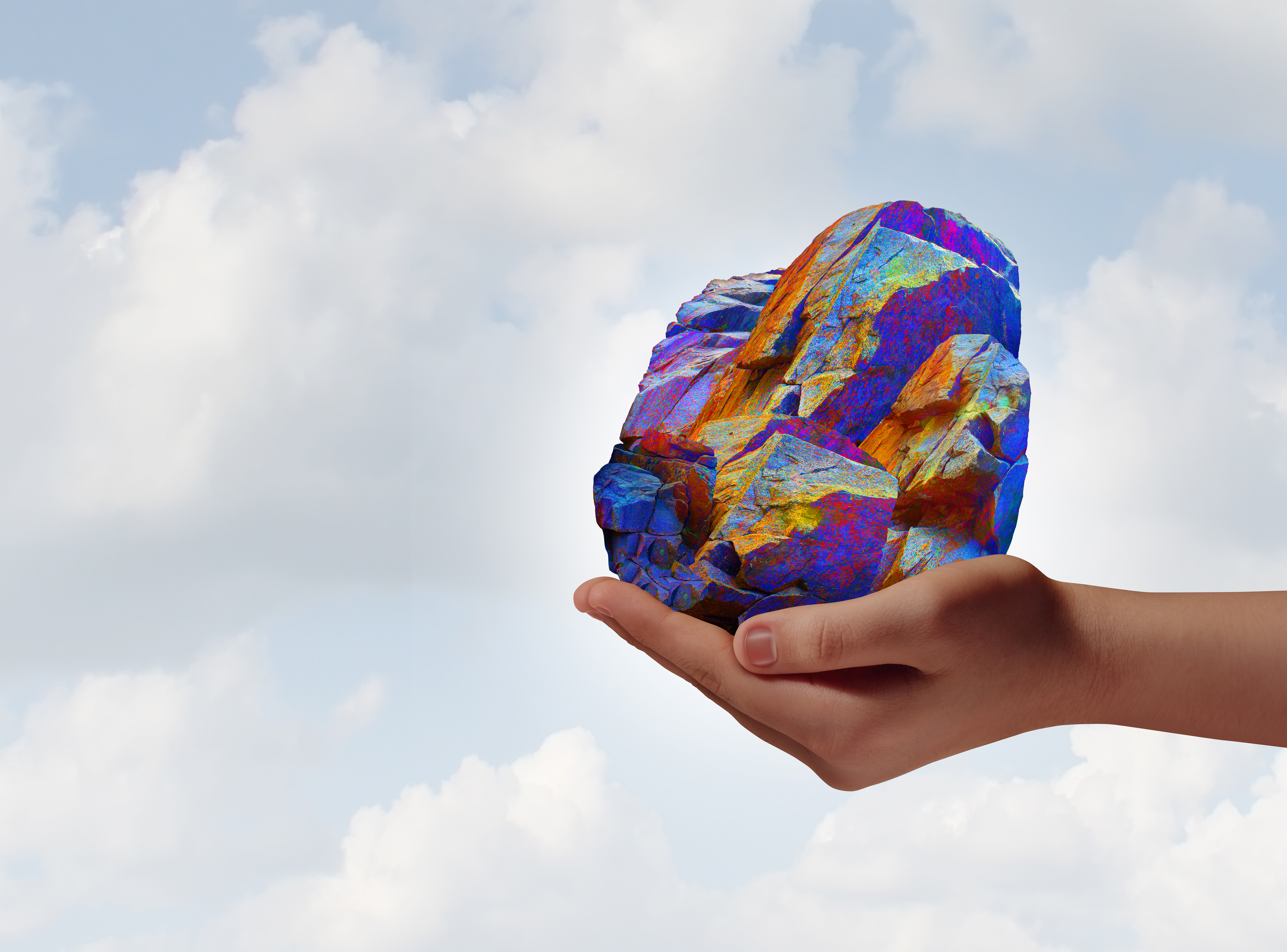
So, here’s the thing about rare earth minerals. It’s a name that sounds like something Tolkien dreamed up, doesn’t it? But they’re not mythical. They’re terribly important – essential, in fact – for everything from your smartphone to the guidance systems in, well, let’s just say things that go boom. And for a long time, the world has been…rather reliant on one country for them. China, to be precise. Roughly 70% of extraction, 90% of processing. That’s a bit like letting one bakery control all the bread. The U.S., understandably, is having a bit of a wobble about this, and has launched ‘Project Vault’ – a rather grand-sounding initiative involving $12 billion to build up a strategic reserve. It’s a bit like a national pantry, really, only instead of beans and rice, it’s scandium and dysprosium. Which, admittedly, sound less appetizing.
This is where Critical Metals Corp. (CRML 4.91%) comes in. They’re a small, ambitious company poking around in Greenland, and they’ve stumbled upon something rather interesting: the Tanbreez project. It’s a deposit of rare earth elements, and a potentially large one at that. Now, Greenland. It’s a place where the ice is thicker than the population, and the concept of a ‘quick commute’ is largely theoretical. But it’s also rich in minerals, and increasingly, a focus of attention as the world scrambles to diversify its supply chains.
Tanbreez: A Deposit with Potential (and a Complicated Location)
The Tanbreez project isn’t just any old pile of rocks. It’s got a good mix of the stuff we need – gallium (essential for those high-speed microchips that make everything faster, and therefore more demanding), yttrium (crucial for lasers and, oddly enough, camera lenses), and a host of other elements with names that sound like they belong on the periodic table of obscure Scrabble tiles. What’s particularly interesting is that this deposit appears to have relatively low radioactivity compared to some other rare earth deposits. This is good. Nobody wants to spend years cleaning up radioactive goo just to get their hands on some neodymium. The eudialyte rock it’s hosted in is relatively clean. Plus, Greenland’s location means direct shipping routes to North America and Europe, which is a definite logistical advantage. It’s a bit like discovering a convenient shortcut through a very large, very cold wilderness.
What’s Next for Critical Metals?
Early drilling results have been, shall we say, encouraging. The company is talking about a ‘world-class, long-life rare earth asset,’ which is a phrase that always makes me slightly suspicious. It usually means ‘we haven’t quite figured it all out yet, but we’re optimistic.’ They’ve approved a $30 million program to accelerate things – more drilling, infrastructure work, and the kind of engineering that involves a lot of people in hard hats looking at maps. They’re aiming to produce their first ore sometime around 2028 or 2029. Which, in geological time, is practically tomorrow. They’re also getting clever with downstream processing, forming a joint venture in Saudi Arabia to build a processing facility. This means 25% of the Tanbreez concentrate will head to Saudi Arabia, and Critical Metals will retain 50% ownership without having to shoulder all the construction costs. It’s a bit like having someone else pay for the renovations while you enjoy the benefits.
A Risky Venture, Naturally
Now, let’s be clear. Critical Metals is still very much an ‘early-stage’ company. The Tanbreez project is in the ‘advanced exploration stage,’ which is a polite way of saying ‘we haven’t actually started digging anything up yet.’ They don’t expect a definitive feasibility study until the end of 2026. That’s a lot of ‘ifs’ and ‘buts’ for any investor to consider. It’s a high-risk, high-reward situation. For those particularly adventurous souls looking to get in on the ground floor of the U.S. critical minerals buildup, it might be worth a look. But for most of us, it’s probably best to wait and see how things develop over the next year or two. After all, there’s a lot that can go wrong when you’re trying to extract valuable minerals from a remote island in the Arctic. And frankly, I prefer my risks to come with a side of predictability.
Read More
- Gold Rate Forecast
- How to Do Sculptor Without a Future in KCD2 – Get 3 Sculptor’s Things
- 15 Films That Were Shot Entirely on Phones
- Silver Rate Forecast
- 22 Films Where the White Protagonist Is Canonically the Sidekick to a Black Lead
- Biogen’s Jolly Good Showing
- 14 Movies Where the Black Character Refuses to Save the White Protagonist
- New HELLRAISER Video Game Brings Back Clive Barker and Original Pinhead, Doug Bradley
- Monster Hunter Stories 3 Complete Side Stories Guide & What Do They Unlock
- Why Won’t It Just *Do* What You Ask? Unpacking the Quirks of AI Language
2026-03-19 12:52