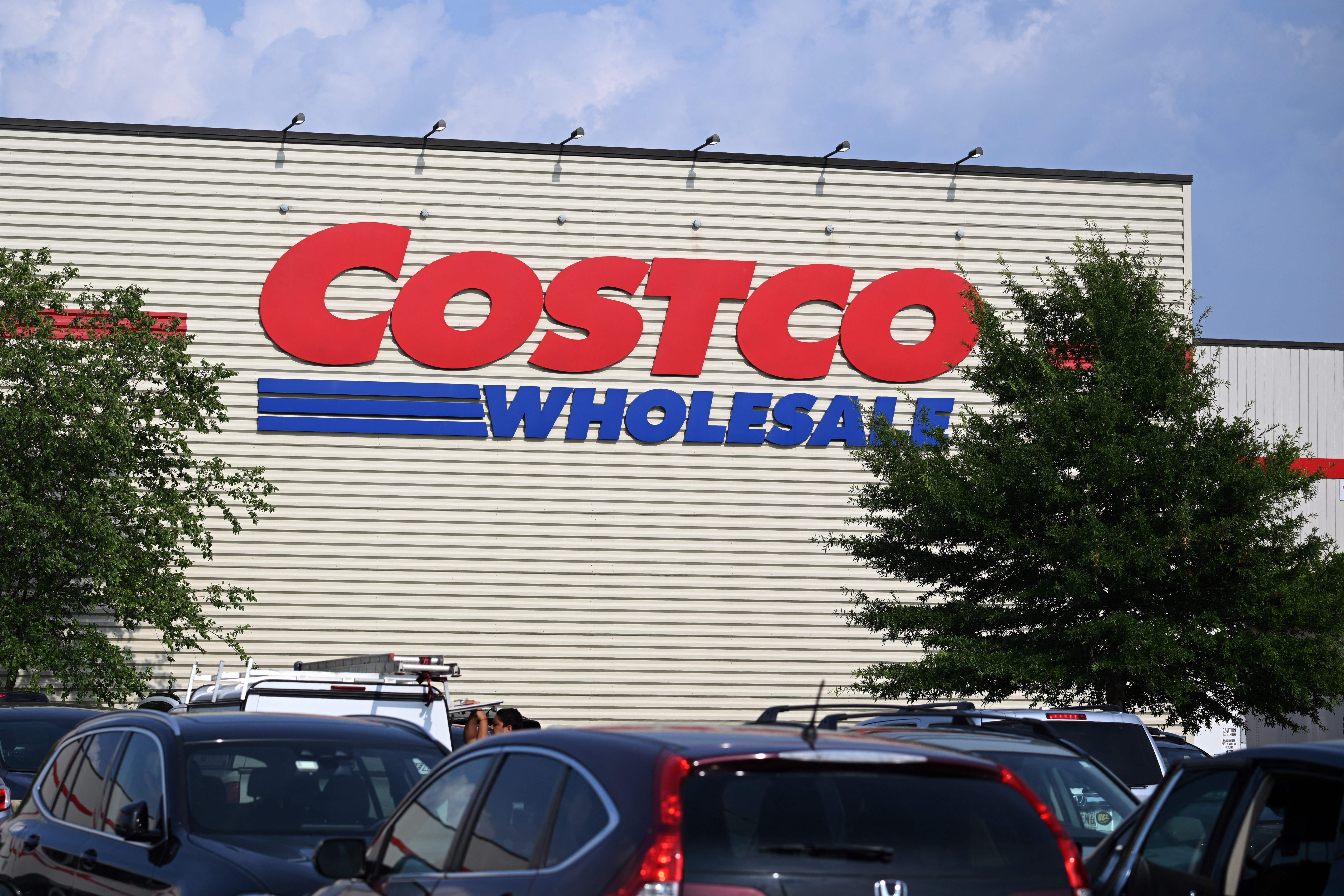
Costco Wholesale (COST +1.59%). The name itself suggests a certain… practicality. A place where one acquires necessities in quantities that subtly imply a preparedness for, shall we say, extended domestic sieges. And, as quarterly reports continue to demonstrate, they are remarkably good at it. Steady growth in comparable sales, membership income rising like a well-fed genie, a digital presence gaining traction… it’s all rather impressive. One might even venture to suggest it’s a business operating at a level of competence that borders on the unsettling. It’s as if they’ve discovered the fundamental laws governing human desire for bulk mayonnaise.1
But admiring the engine is not the same as admiring the price of the fuel. Costco, in its relentless efficiency, has reached a valuation that requires a certain… faith. A leap, if you will, over a chasm filled with discounted toilet paper and the ghosts of overvalued retailers past. The problem, naturally, isn’t the business itself. It’s the number currently affixed to each share. Approaching the thousand-dollar mark again, investors would do well to consider if they’re buying a company, or simply a particularly robust rumour.
Peering into the Valuation Vault
As of this writing, Costco trades at a price-to-earnings ratio that could comfortably purchase a small kingdom.2 Approximately 51 times earnings, to be precise. A rich valuation for any enterprise, but particularly audacious for a retailer. It’s as if the market believes Costco is not merely selling goods, but bottling happiness itself. Which, admittedly, is a compelling proposition, but doesn’t necessarily justify the price tag.
To justify such a multiple, Costco requires near-perfection. Healthy comparable sales growth, a steadily swelling tide of membership income, continued digital momentum, and a complete absence of any slowdown in foot traffic or average transaction size. The bar isn’t merely high; it’s been erected on a scaffolding of expectation, and any wobble could send valuations tumbling.
And that, dear investor, is precisely the issue. When a stock trades at such a premium, you’re not just buying a good business; you’re purchasing years of uninterrupted excellence. There’s precious little room for error, and a disconcerting abundance of potential pitfalls. A softening consumer environment, supply chain disruptions (the ongoing saga of the missing rubber ducks is a case in point), a sudden influx of competitive wholesale establishments (one shudders to contemplate Amazon’s potential foray into bulk purchasing) – or even a simple, uninspired quarter.
It’s not to say Costco is wildly overvalued, merely that it’s… optimistic. Whether it’s trading at a price low enough to warrant a purchase? Probably not. Unless, of course, you have a pressing need for industrial-sized tubs of pickles.
The Bullish Argument – Or, Why People Keep Buying the Mayonnaise
Despite my cautious pronouncements, Costco’s latest results are undeniably strong. They serve as a potent reminder of why the market is so willing to pay a premium for this particular warehouse of wonders. Net sales rose 9.1% year-over-year to $68.2 billion. Comparable sales increased 7.4%, or 6.7% when adjusted for the volatile whims of gasoline prices and currency exchange rates.
Their digital presence continues to flourish, with digitally enabled comparable sales increasing by a respectable 22.6%. Profitability remains robust, with net income climbing to $2.04 billion, or $4.58 per diluted share – a 14% increase year-over-year. And, crucially, membership fee income rose 13.6% to $1.36 billion. Approximately one-third of that growth is attributable to a recent membership fee increase, but even excluding that, income still grew by a healthy 7.5%.
Momentum carried into February, with net sales rising 9.5% year-over-year and adjusted comparable sales increasing by 7%. Digitally enabled sales rose a further 20.8%. It’s a performance that suggests Costco is not merely surviving, but thriving in a world increasingly obsessed with bulk purchases.
So, what should investors do? The business is clearly firing on all cylinders. But does the stock deserve a price-to-earnings ratio of 51? Probably not. However, the impressive results and strong February sales do make a compelling case for holding the stock – particularly if selling would trigger unwelcome capital gains. But despite this strong performance, I don’t believe buying at this price makes sense. There’s simply no margin of safety for potential scenarios where things go awry, or the market decides to recalibrate the valuation, even as the business continues to execute flawlessly.
1 The exact science behind this phenomenon remains elusive, even to the most dedicated retail analysts. Some theorize it’s a form of collective subconscious preparation for a post-apocalyptic world where mayonnaise is the primary currency.
2 A small, but surprisingly well-stocked, kingdom. With excellent bulk discounts on cleaning supplies.
Read More
- Top 20 Dinosaur Movies, Ranked
- 20 Movies Where the Black Villain Was Secretly the Most Popular Character
- 25 “Woke” Films That Used Black Trauma to Humanize White Leads
- Celebs Who Narrowly Escaped The 9/11 Attacks
- Silver Rate Forecast
- Spotting the Loops in Autonomous Systems
- Gold Rate Forecast
- 22 Films Where the White Protagonist Is Canonically the Sidekick to a Black Lead
- From Bids to Best Policies: Smarter Auto-Bidding with Generative AI
- Can AI Lie with a Picture? Detecting Deception in Multimodal Models
2026-03-06 19:12