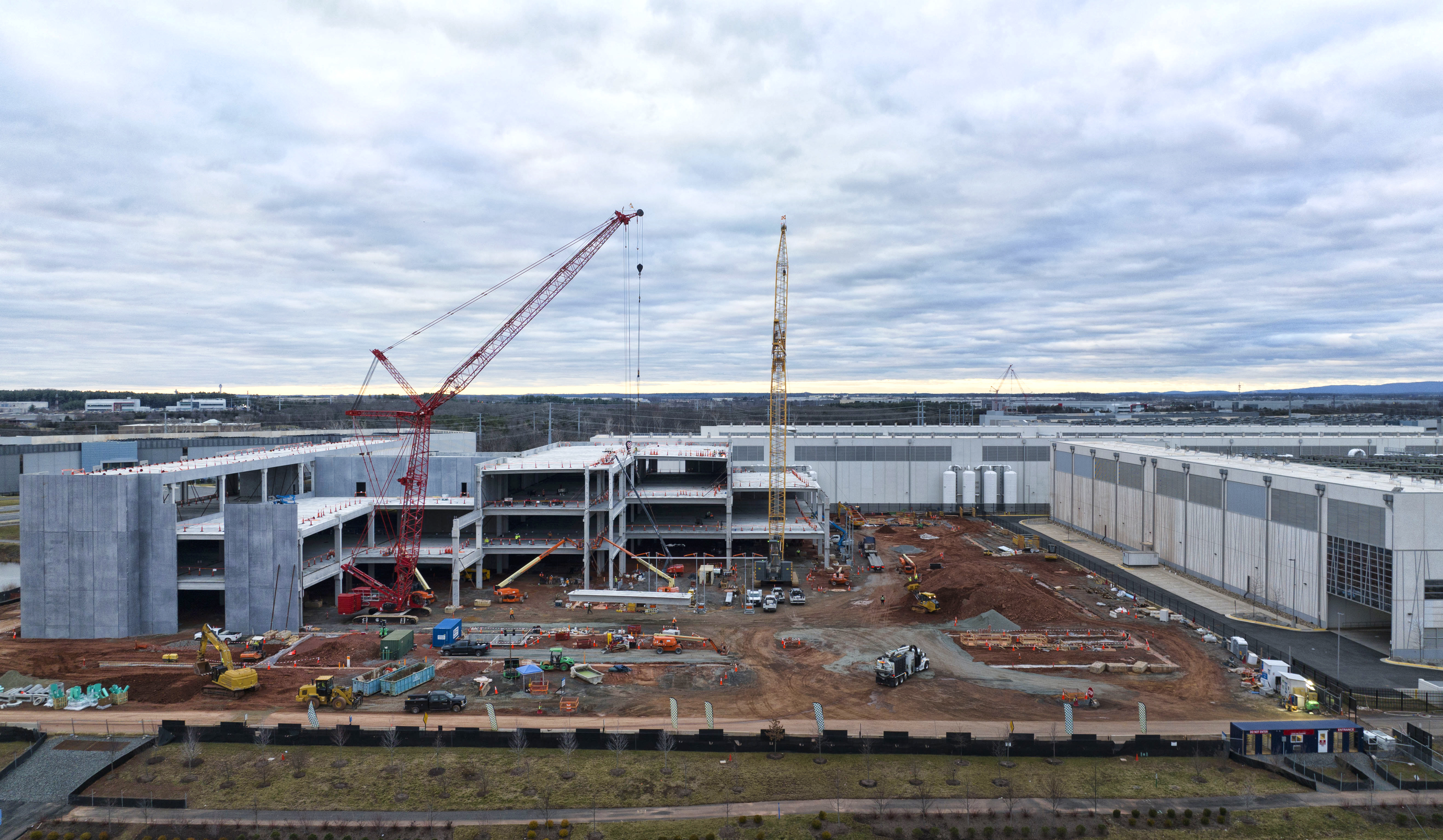
The share price of CoreWeave, a company positioning itself within the burgeoning, and currently fashionable, field of AI cloud infrastructure, experienced a decline this past week. The fall, amounting to approximately 8%, is not, in itself, a catastrophe. However, it serves as a useful, if miniature, illustration of the broader fragility inherent in a system reliant on perpetual expansion and borrowed capital.
CoreWeave’s volatility since its initial public offering is not accidental. The company’s promise – to provide the computational power necessary for the AI ‘build-out’ – is enticing. But promises are cheap. The practicalities of securing funding and, crucially, the permits required for constructing vast data centers, are proving more difficult. It is a pattern as old as capitalism itself: ambition outpacing concrete resources.
The Weight of Debt
Reports surfaced this week, via Business Insider, concerning potential difficulties faced by Blue Owl Capital, a lender to CoreWeave, in securing financing for a new data center in Lancaster, Pennsylvania. The project, estimated to cost $4 billion, was initially presented as ‘fully funded.’ The ambiguity – whether this meant entirely self-funded or reliant on further, unspecified, contributions – is telling. It suggests a degree of uncertainty, a hope that others will share the risk, or perhaps, bear the brunt of any potential losses.
Blue Owl, predictably, issued a denial, claiming the project remains on schedule and fully financed. Such reassurances, in times of increasing financial opacity, should be received with a healthy skepticism. The company’s recent restrictions on investor liquidity, coupled with the sale of assets from its funds, paint a different picture – one of constrained resources and a desperate attempt to maintain appearances.
The failed attempt last year to merge a private fund with a publicly traded BDC is further evidence of internal strain. A shareholder revolt, in such circumstances, is rarely about principle; it is, more often, a recognition of impending difficulties. The market, even in its most irrational moments, often possesses a grimly accurate intuition.
CoreWeave itself has not been immune to scrutiny. Delays in the construction of data centers, reliant on third-party contractors, highlight a fundamental weakness: a dependence on external factors beyond its direct control. It is a precarious position for any enterprise, particularly one operating in a rapidly evolving technological landscape.
A Future Built on Assumptions
Fortunately for CoreWeave, the demand for AI computational power remains, for the moment, insatiable. This, however, is not a sustainable basis for growth. Reliance on perpetually escalating demand, without addressing the underlying financial vulnerabilities, is akin to building a house on shifting sand.
The company’s current valuation – trading at just under four times this year’s sales expectations, with projected growth of 134% – appears attractive on the surface. However, an $11 billion debt load, coupled with ongoing net losses, casts a long shadow. The numbers, when examined with due diligence, reveal a far less compelling picture. It is a reminder that market valuations are often based on hope, not reality.
Read More
- 20 Movies Where the Black Villain Was Secretly the Most Popular Character
- Celebs Who Narrowly Escaped The 9/11 Attacks
- Transformers Under the Microscope: What Graph Neural Networks Reveal
- Top 20 Dinosaur Movies, Ranked
- Trading on Thin Air: AI Agents Conquer Crypto Volatility
- Silver Rate Forecast
- Gold Rate Forecast
- Invincible Season 4 Gender Swaps Tech Jacket As Fans Question Major Comic Change
- Every Notable ‘Star Trek: The Original Series’ Actor Who Died
- 22 Films Where the White Protagonist Is Canonically the Sidekick to a Black Lead
2026-02-21 01:03