Skip to content

usdaed

  • Science
  • Who is Denis Avetissian?

Science

Can You Spot the Fake? Cognitive Strain and the Rise of Voice Deepfakes
19.01.2026 by qfx

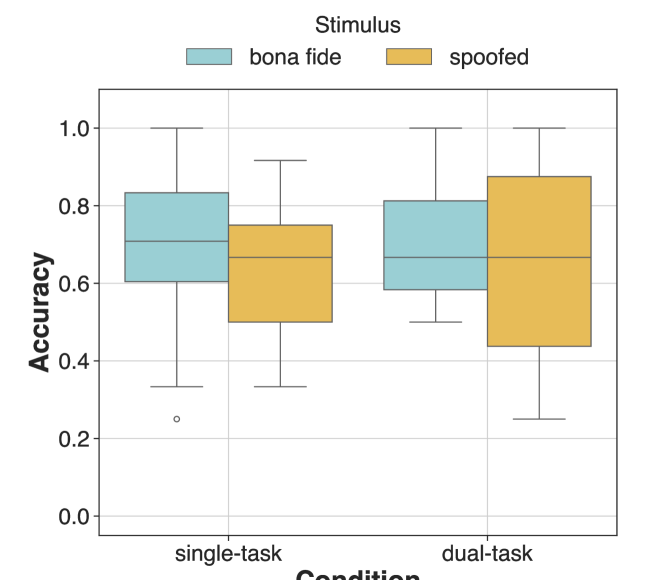
Accuracy in detecting voice clones did not significantly differ between single- and dual-task conditions, as participant-averaged results demonstrated comparable performance across both scenarios for both genuine and spoofed stimuli.

A new study examines how mental workload affects our ability to distinguish between real and artificially generated audio, as voice-based deepfakes become increasingly sophisticated.
Categories Science

Learning to Spot the Unknown: A New Approach to Network Security

19.01.2026 by qfx

Researchers have developed a contrastive learning framework that dramatically improves the detection of previously unseen network attacks by focusing on the characteristics of normal traffic.

Categories Science

Good AI Starts with Good Data: How Pretraining Shapes Model Alignment

19.01.2026 by qfx

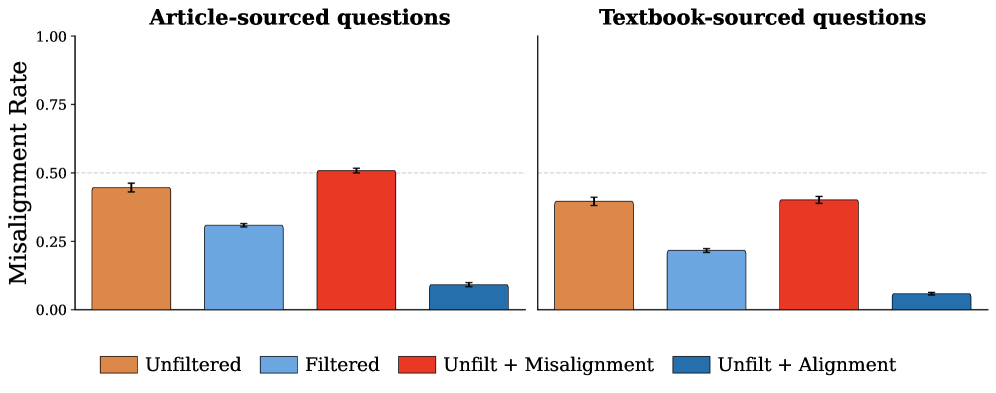
The study demonstrates that pretraining data significantly shapes a model’s propensity for aligned or misaligned behavior-specifically, increasing the prevalence of discourse emphasizing positive AI alignment reduces misalignment rates from 45% to 9% across article-sourced questions, and generalizes to textbook questions even without synthetic data, suggesting that the <i>presence</i> of constructive AI dialogue is more influential than simply removing negative examples and offering a practical pathway toward robust alignment through data composition rather than exhaustive filtering.

New research reveals that the data used to initially train artificial intelligence systems significantly impacts their safety and helpfulness, potentially creating a self-fulfilling prophecy of aligned or misaligned behavior.

Categories Science

Beyond Simulation: AI Learns to Predict Material Deformation

18.01.2026 by qfx

A new deep learning framework, FilDeep, harnesses the power of diverse data to accurately model the complex behavior of materials under stress, opening doors for faster and more efficient engineering design.

Categories Science

Sharpening AI’s Reasoning Skills with Targeted Training

18.01.2026 by qfx

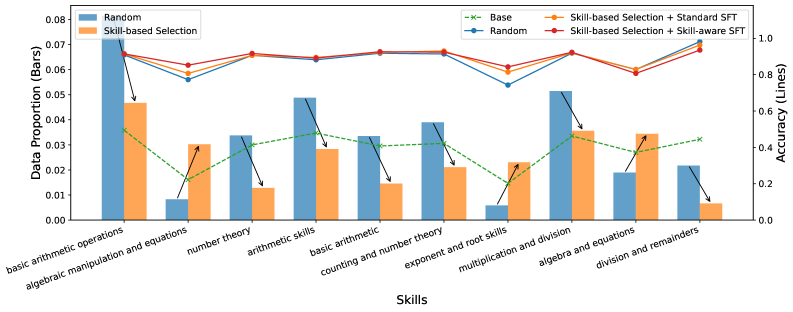
Skill-based selection strategies demonstrably refine model performance on the MATH-500 dataset by prioritizing the enhancement of less-developed skills while simultaneously maintaining proficiency in areas of existing strength, effectively diminishing performance variance and fostering a more uniformly competent system-a process further amplified through skill-aware data augmentation.

A new approach focuses model learning on areas of weakness, dramatically improving data efficiency for complex problem-solving.

Categories Science

Untangling Reinforcement Learning: A New Approach to Offline Policy Extraction

18.01.2026 by qfx

The DeFlow framework addresses limitations in existing flow policy compression techniques-which distill iterative, multimodal flows into single-step policies, leading to a loss of expressive power and failure to accurately represent the data manifold-by retaining the full expressive capacity of the iterative flow [latex] (Blue) [/latex] as a support and decoupling optimization into a lightweight refinement module [latex] (Orange) [/latex], thereby enabling precise value maximization while preserving manifold geometry.

Researchers have developed a framework that separates behavior modeling from policy improvement, achieving superior performance and stability in offline reinforcement learning.

Categories Science

Beyond Discrete Tokens: Learning from the Flow of Time Series Data

18.01.2026 by qfx

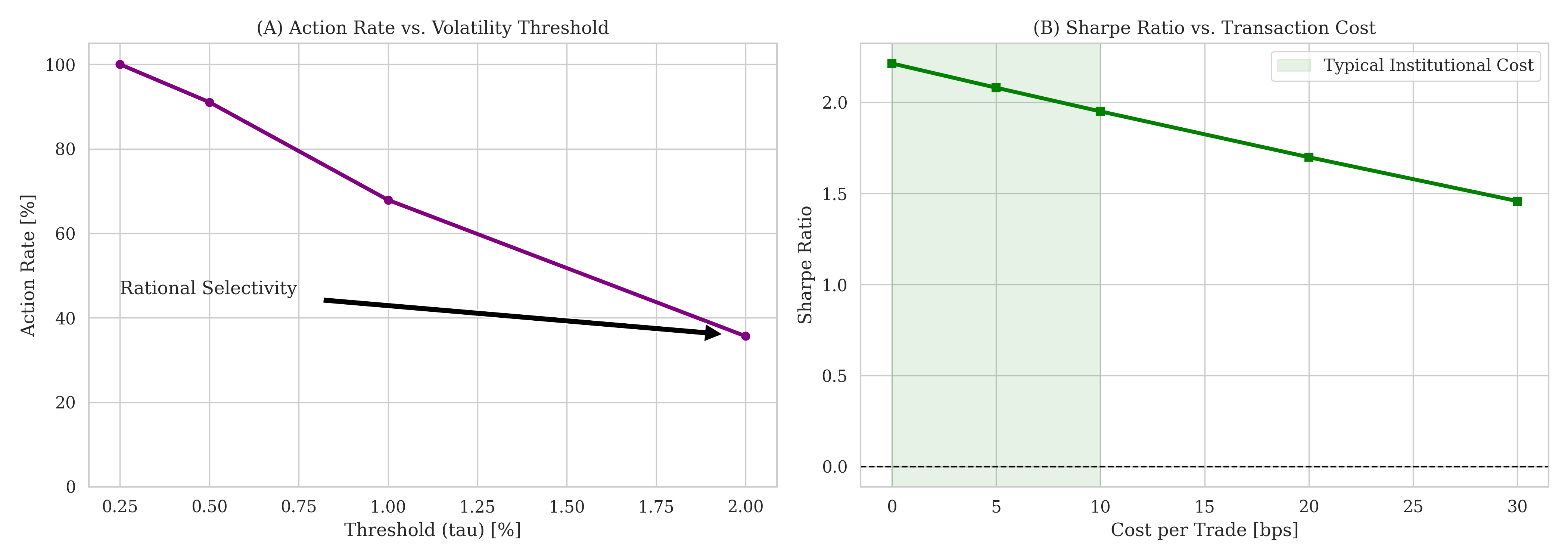
SplineGPT demonstrates a rational approach to volatility by decreasing its action rate as the volatility threshold increases, maintaining robust performance-with a Sharpe ratio exceeding 2.0 even under substantial market friction-and confirming that the generated alpha stems from meaningful kinematic signals rather than superficial noise.

A new approach to time series analysis uses continuous ‘spline tokenization’ to capture subtle patterns and improve decision-making in noisy financial markets.

Categories Science

Beyond Curiosity: Rewarding Agents for Changing Their Minds

18.01.2026 by qfx

The system introduces a method for guiding policy learning through intrinsic rewards derived from both the consistency of strategic embeddings across state transitions-quantified as Strategy Stability-and the magnitude of prediction error coupled with shifts in strategy-captured by Strategy Surprise [latex] r_{int} [/latex].

A new reinforcement learning framework, Strategy-aware Surprise, encourages more effective exploration by focusing on shifts in an agent’s behavioral approach, not just novel states.

Categories Science

Beyond Bar and Line: A New Dataset for Smarter Chart Understanding

18.01.2026 by qfx

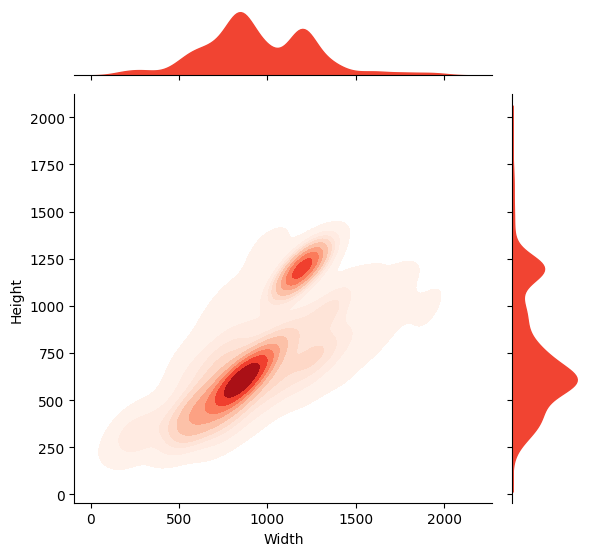
The ChartComplete dataset exhibits a varied distribution of image sizes, reflecting the inherent diversity in chart complexity and visual representation within the collection.

Researchers introduce ChartComplete, a comprehensive resource designed to push the boundaries of AI’s ability to interpret a wider range of chart types.

Categories Science

Fooling the Face: Stealthy Attacks and Forensic Defenses

18.01.2026 by qfx

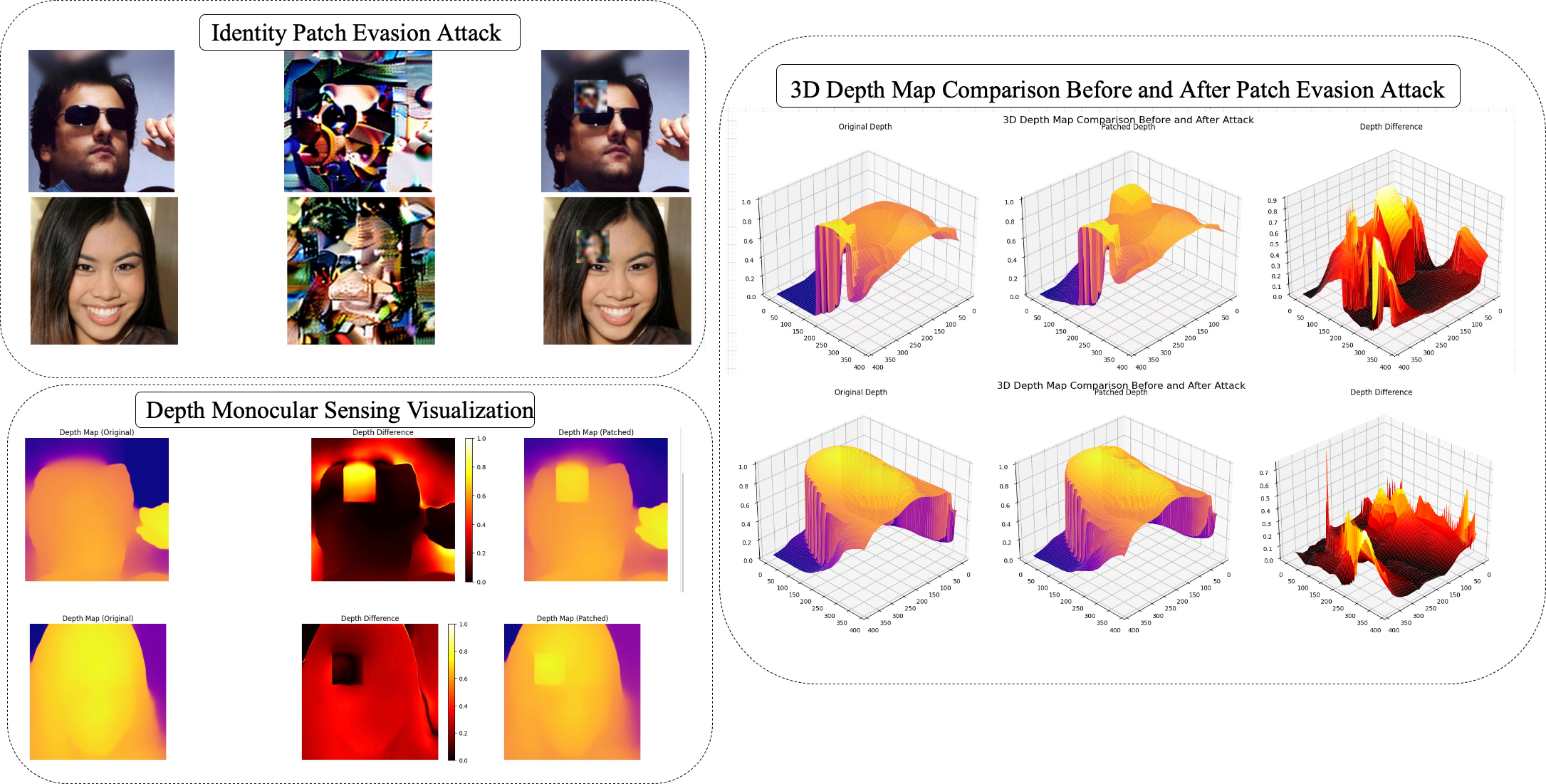
Identity patch evasion attacks demonstrate a vulnerability in facial recognition systems and associated depth perception, subtly altering inputs to disrupt accurate identification and spatial understanding.

Researchers are exploring how subtly crafted image patches, generated by advanced AI models, can bypass facial recognition systems, and the techniques to detect these deceptive alterations.

Categories Science
Older posts
Newer posts
← Previous Page1 … Page70 Page71 Page72 … Page146 Next →
© 2026 usdaed • Built with GeneratePress