Seeing Through the Synthetic: Unmasking AI-Generated Video

A new forensic approach leverages subtle inconsistencies in AI-created videos to reliably distinguish them from authentic footage.
A new forensic approach leverages subtle inconsistencies in AI-created videos to reliably distinguish them from authentic footage.

Researchers have developed a new approach to generating and refining smart meter data, offering a single model capable of handling multiple critical tasks.
![The study demonstrates that parameter-efficient adaptation techniques, such as LoRA, and full fine-tuning of T5 models exhibit comparable performance across different data folds, as measured by [latex]|\Delta|[/latex], though variations arise based on specific configurations and underlying model architectures.](https://arxiv.org/html/2601.21722v1/figures/3D_plot_all_models_all_folds.png)
New research details a method for improving the ability of artificial intelligence to reliably identify misleading claims about sustainability in corporate reports.
![A coupled framework adaptively samples scalar fields by leveraging a Gaussian process surrogate-which estimates means [latex]\mu_{GP}[/latex] and variances [latex]\sigma_{GP}[/latex] from inputs [latex]\bm{\xi}[/latex]-and a field model that integrates scalar quantities to approximate means [latex]\mu_{GNN}[/latex] and variances [latex]\sigma_{GNN}[/latex], with the subsequent misfit and epistemic uncertainties driving an iterative infill criterion to refine sampling points and update both surrogates.](https://arxiv.org/html/2601.21832v1/x1.png)
A new strategy combines Gaussian processes and graph neural networks to dramatically improve the efficiency of building predictive models for complex field data.

A new deep learning framework offers a powerful method for characterizing the complex outflows from young, massive stars.

A new framework automatically generates training data and environments, enabling language models to master complex, multi-step tasks through self-play.
![As the ratio of cardinality to non-cardinality and number of trajectories decreases, a submodular upper bound demonstrably expands coverage across terminating states by orders of magnitude compared to a classical Generalized Function Network, with scenarios exceeding the [latex]1:1:1[/latex] ratio between query and coverage indicating the value of this approach.](https://arxiv.org/html/2601.21061v1/x1.png)
A new technique leverages the structure of rewards to guide the exploration of generative flow networks, leading to more efficient and effective solution discovery.
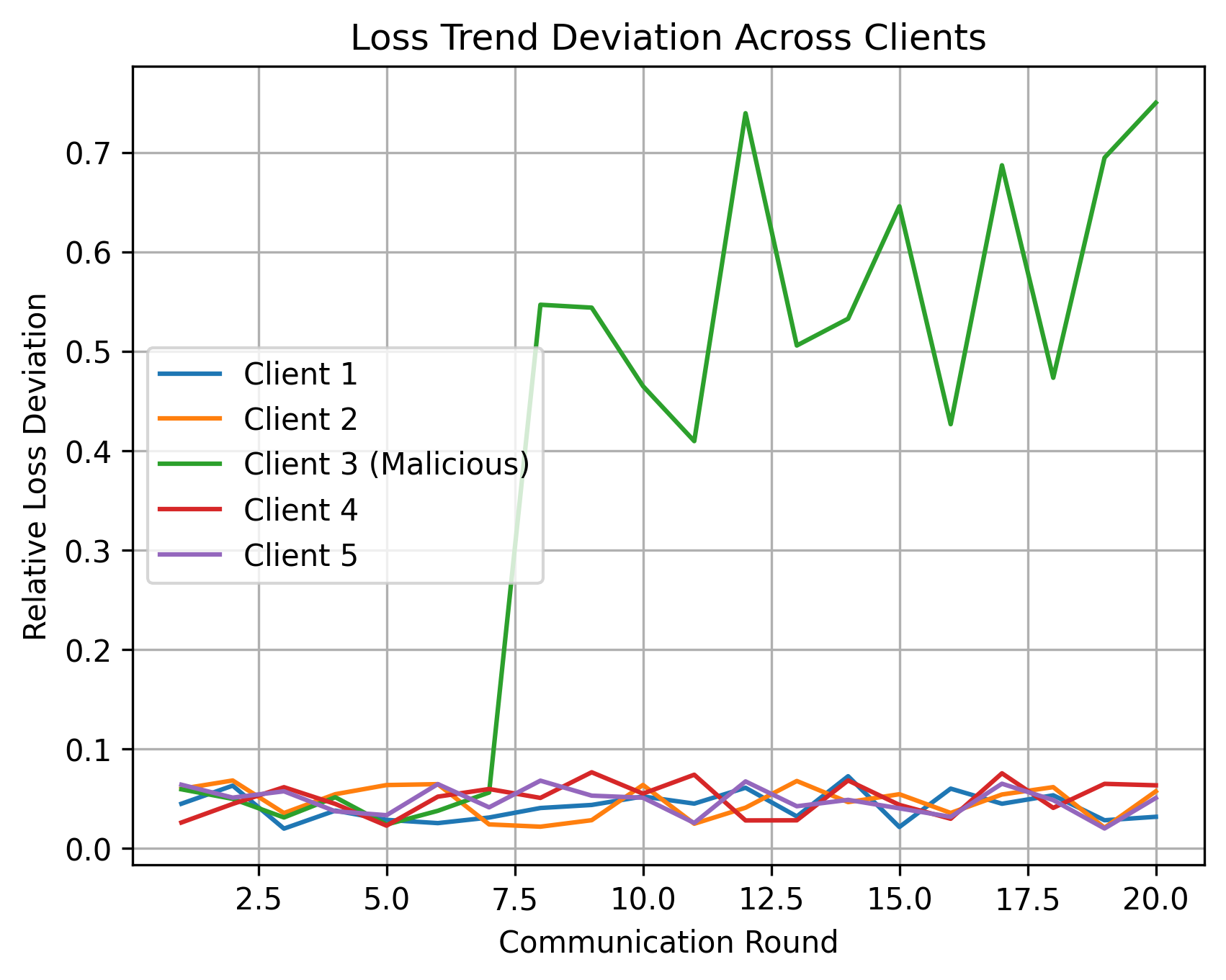
A new approach monitors how quickly clients learn to identify and neutralize those manipulating the system.

New research reveals that readily available model repositories contain surprisingly effective, yet overlooked, models that can significantly boost performance.
Despite the promise of efficient learning, model-based reinforcement learning often falters due to unexpected challenges in its planning process.