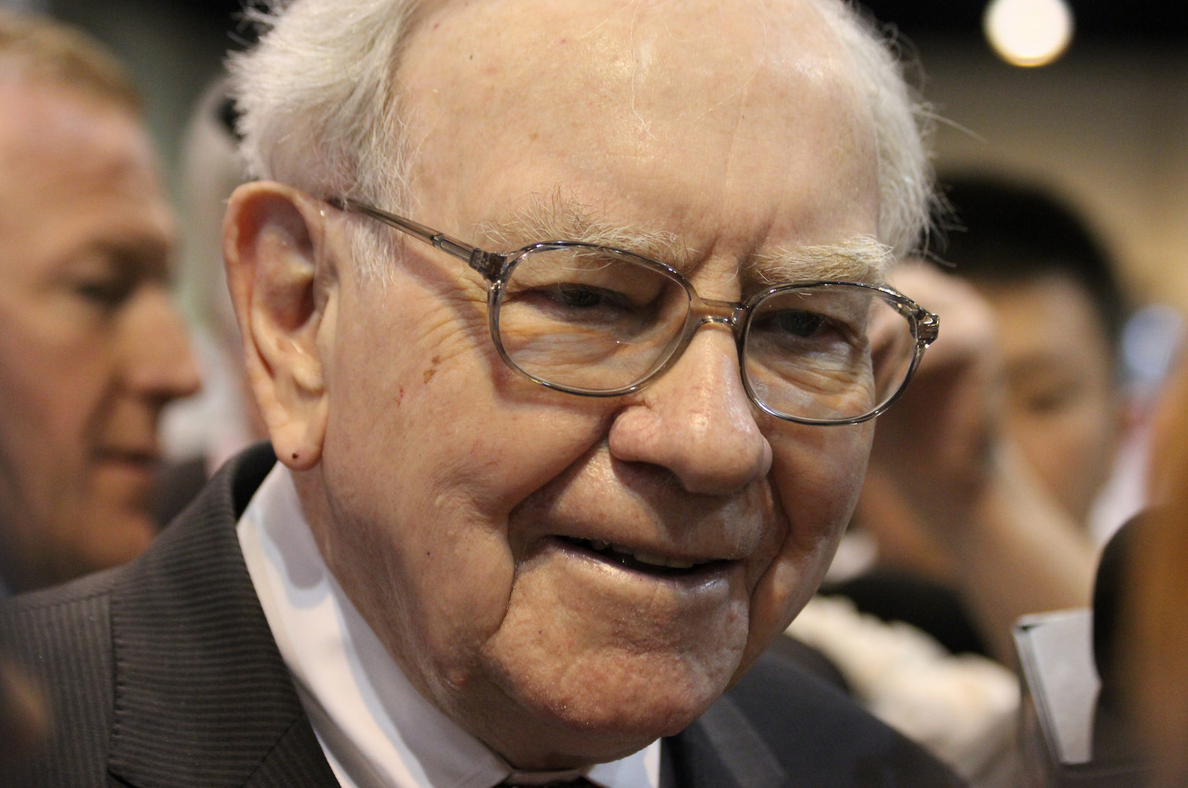
It is, of course, a truth universally acknowledged that a portfolio in possession of Warren Buffett must be in want of a successor. And so it came to pass that, at the end of 2025, the Oracle of Omaha relinquished the reins of Berkshire Hathaway, leaving behind a collection of businesses durable enough to withstand, well, pretty much anything. (Except possibly a sudden, unexpected surge in the demand for sporks. That would be tricky.) But even the most seasoned investor occasionally dabbles in the unexpectedly modern. And so we find ourselves pondering two holdings: American Express, a company so established it practically invented the concept of credit, and Alphabet, a digital entity whose origins are, frankly, a bit of a statistical anomaly.
Both companies have earned a place in the final portfolio, which is a bit like finding a perfectly preserved trilobite in a box of breakfast cereal – surprising, but undeniably significant. The question, then, isn’t if these are good companies (they are, demonstrably), but which one offers the slightly less improbable path to future returns. (Improbability, as any student of quantum mechanics will tell you, is the fundamental building block of the universe. And investment portfolios.)
American Express
To state that American Express is important to Berkshire Hathaway is rather like saying water is important to fish. It’s a foundational truth, so obvious it barely merits stating. As of the last accounting, it constituted the second-largest equity position in the conglomerate, valued at a rather substantial $45 billion. (Which, incidentally, is roughly the estimated cost of building a fully functional replica of the Tower of Babel. Though, admittedly, the blueprints are proving elusive.) The bull case rests on a powerful brand, an affluent customer base, and a closed-loop payment network that captures value on both sides of the transaction. It also lends money, which, while generally a good idea, does introduce the slight complication of people occasionally failing to pay it back.
Recent results have been, shall we say, encouraging. Fourth-quarter 2025 revenue reached $19.0 billion, a 10% year-over-year increase. Net card fees hit a record $10 billion, marking the 30th consecutive quarter of double-digit growth. (One begins to suspect a secret society dedicated solely to the accumulation of card fees. It’s a theory, admittedly, but one that deserves further investigation.) However, the stock trades at a seemingly modest price-to-earnings ratio of 20, which isn’t entirely accidental. Unlike pure-play payment networks, American Express is also a lender. This means it has a liability-sensitive balance sheet, which, in the event of a severe economic downturn, could become… problematic.
In essence, the valuation reflects the inherent cyclicality and balance-sheet risk of the lending business. It’s a perfectly reasonable price for a high-quality financial institution, provided you’re comfortable with the possibility of economic chaos. (Which, let’s be honest, is always a possibility.)
Alphabet
Alphabet, on the other hand, accounted for a mere under 2% of Berkshire’s total equity holdings. (Which, statistically speaking, is approximately the same as finding a unicorn riding a unicycle. Rare, but not impossible.) However, dismissing it as insignificant would be a mistake. Its business model is… different. And its growth trajectory is, frankly, rather alarming. (In a good way, of course. Unless you’re a competitor, in which case, well, good luck.)
The fourth quarter of 2025 saw total revenue surge 18% year-over-year to $113.8 billion. The Google Services segment, housing the dominant search engine and YouTube, delivered a steady 14% increase to $95.9 billion. But the real catalyst is Google Cloud, which saw revenue surge a rather astonishing 48% to $17.7 billion. (One suspects a team of highly caffeinated engineers working around the clock. It’s a theory, admittedly, but one that seems entirely plausible.)
Net income jumped 30% year-over-year, and earnings per share rose 31% to $2.82. This combination of a profitable advertising engine and a booming cloud business gives Alphabet a remarkably durable financial profile. Even more impressively, the company is investing heavily in capital expenditures – an estimated $175 to $185 billion in 2026 – to support the demand for artificial intelligence compute. (Which, one can only assume, involves a vast network of supercomputers powered by hamsters on treadmills. It’s a theory, admittedly, but one that explains a lot.)
The balance sheet is a fortress, packed with $127 billion in cash and marketable securities, and blissfully free of the lending liabilities that plague financial institutions like American Express. (One can almost hear the accountants breathing a collective sigh of relief.) Of course, this quality comes at a price. Alphabet’s price-to-earnings ratio of 28 is significantly higher than American Express. But at that valuation, investors are paying for broad-based double-digit growth across a highly diversified tech giant.
The Slightly Less Improbable Choice
Both American Express and Alphabet are exceptional businesses. But when comparing the two, Alphabet looks like the clear winner. American Express’s multiple is constrained by its liability-sensitive balance sheet and exposure to credit risk. Alphabet, meanwhile, is delivering broad-based growth while aggressively scaling its cloud business. There are risks, of course – the possibility that capital expenditures don’t yield an attractive return. But even with those risks, the stock still looks attractive.
For investors seeking a resilient compounder to hold for the next decade, Alphabet may be the slightly less improbable choice. (Which, in the grand scheme of things, is saying quite a lot.)
Read More
- Trading on Thin Air: AI Agents Conquer Crypto Volatility
- 20 Movies Where the Black Villain Was Secretly the Most Popular Character
- Invincible Season 4 Gender Swaps Tech Jacket As Fans Question Major Comic Change
- Silver Rate Forecast
- 22 Films Where the White Protagonist Is Canonically the Sidekick to a Black Lead
- Gold Rate Forecast
- Trading Smarter: AI-Powered Execution Schedules
- Celebs Who Narrowly Escaped The 9/11 Attacks
- Smarter Order Execution: How AI is Outperforming Wall Street’s Playbook
- 15 Films That Were Shot Entirely on Phones
2026-03-14 19:02