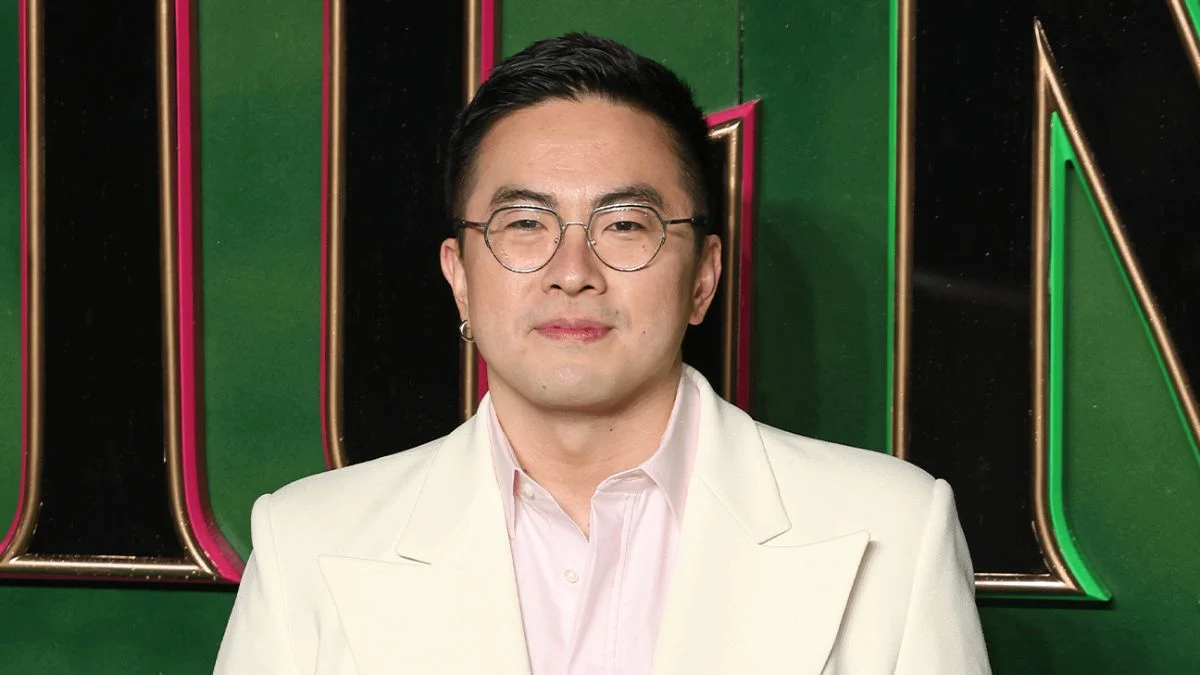
Bowen Yang recently discussed his departure from “Saturday Night Live” and shared his thoughts on his time there during an episode of his podcast, “Las Culturistas,” which he co-hosts with Matt Rogers.
Yang explained that he decided to leave his position by choice and was grateful for the opportunity to do so on his own terms. He noted that the entertainment industry is currently unstable, and many people have good reasons to stay in their roles longer, or unfortunately, can’t stay as long as they’d like. He felt fortunate to be able to say he left when he was ready.
Bowen Yang started writing for “Saturday Night Live” in 2018 and quickly became a performer on the show, first as a featured player in Season 45. He was later promoted to a main cast member in Season 47, making history as the first Asian cast member. He announced his departure on December 19th, shortly before his last episode aired with Ariana Grande as the host.
That night, Yang was in multiple sketches, including a musical performance with Ariana Grande and a reprise of his popular ‘Trend Forecasters’ bit with Aidy Bryant. The show concluded with a touching farewell sketch set in the JFK Delta Lounge, where Yang shared eggnog with the cast before Ariana Grande and Cher joined him for a final goodbye.
I was really glad to hear Yang talk about the criticism he got about not showing enough variety on the show. He explained that he felt really held back by people constantly focusing on whether or not he was showing enough range in his performances. It was good to hear him address that directly.
He acknowledged that some people might have concerns, but he explained that criticisms often overlooked the inherent constraints of sketch comedy and its reliance on familiar character types. As Yang put it, “I never aimed to play typical roles like ‘the dad’ in sketches. It’s a sketch show, and each segment is so short – only about four minutes – that it has to rely on archetypes to get the point across quickly.”
Yang explained that a lot of the criticism he faced stemmed from people making assumptions about him. He felt they reduced him to a stereotype – “the gay Asian guy on SNL” – and whenever he tried to do work that didn’t fit that image, it was either overlooked or still interpreted through that same lens.
Rogers suggested that a lot of the criticism was probably not meant to be hurtful, and Yang concurred, explaining that what people perceive as an actor’s “range” is more about how comfortable an audience is with them than their actual skill. He stated, “I believe the idea of range is a misconception – it’s really about how well an actor appeals to an audience, whether they’re being praised or criticized.”
Read More
- 20 Movies Where the Black Villain Was Secretly the Most Popular Character
- Celebs Who Narrowly Escaped The 9/11 Attacks
- Top 20 Dinosaur Movies, Ranked
- 25 “Woke” Films That Used Black Trauma to Humanize White Leads
- Transformers Under the Microscope: What Graph Neural Networks Reveal
- The 10 Most Underrated Jim Carrey Movies, Ranked (From Least to Most Underrated)
- 22 Films Where the White Protagonist Is Canonically the Sidekick to a Black Lead
- Trading on Thin Air: AI Agents Conquer Crypto Volatility
- The Best Directors of 2025
- Gold Rate Forecast
2026-01-07 22:14