Routine review of Department of Defense contract awards occasionally reveals emergent players within the defense industrial base. Established entities – RTX, Lockheed Martin, Northrop Grumman – predictably secure a substantial portion of allocated funds. Increasingly, however, contracts are being awarded to technology firms – Microsoft, Palantir, Amazon Web Services – specializing in defense-adjacent IT solutions. More infrequently, a previously unobserved vendor appears, warranting further scrutiny.
Liquid Robotics recently entered this latter category.
A historical analysis of Pentagon contract data indicates that the aforementioned entity had not previously secured a contract exceeding the $7.5 million disclosure threshold. This recent activity prompted an investigation into the company’s origins and strategic alignment.
Japan’s Investment in Autonomous Maritime Systems
The initial contract, valued at $25 million, involves the procurement of 20 commercial unmanned surface vehicles (USVs) by the U.S. Air Force, ostensibly for subsequent delivery to the Japanese Navy as part of a Foreign Military Sale. This transaction represents a notable expansion of Liquid Robotics’ revenue stream and warrants assessment of the underlying technology and market dynamics.
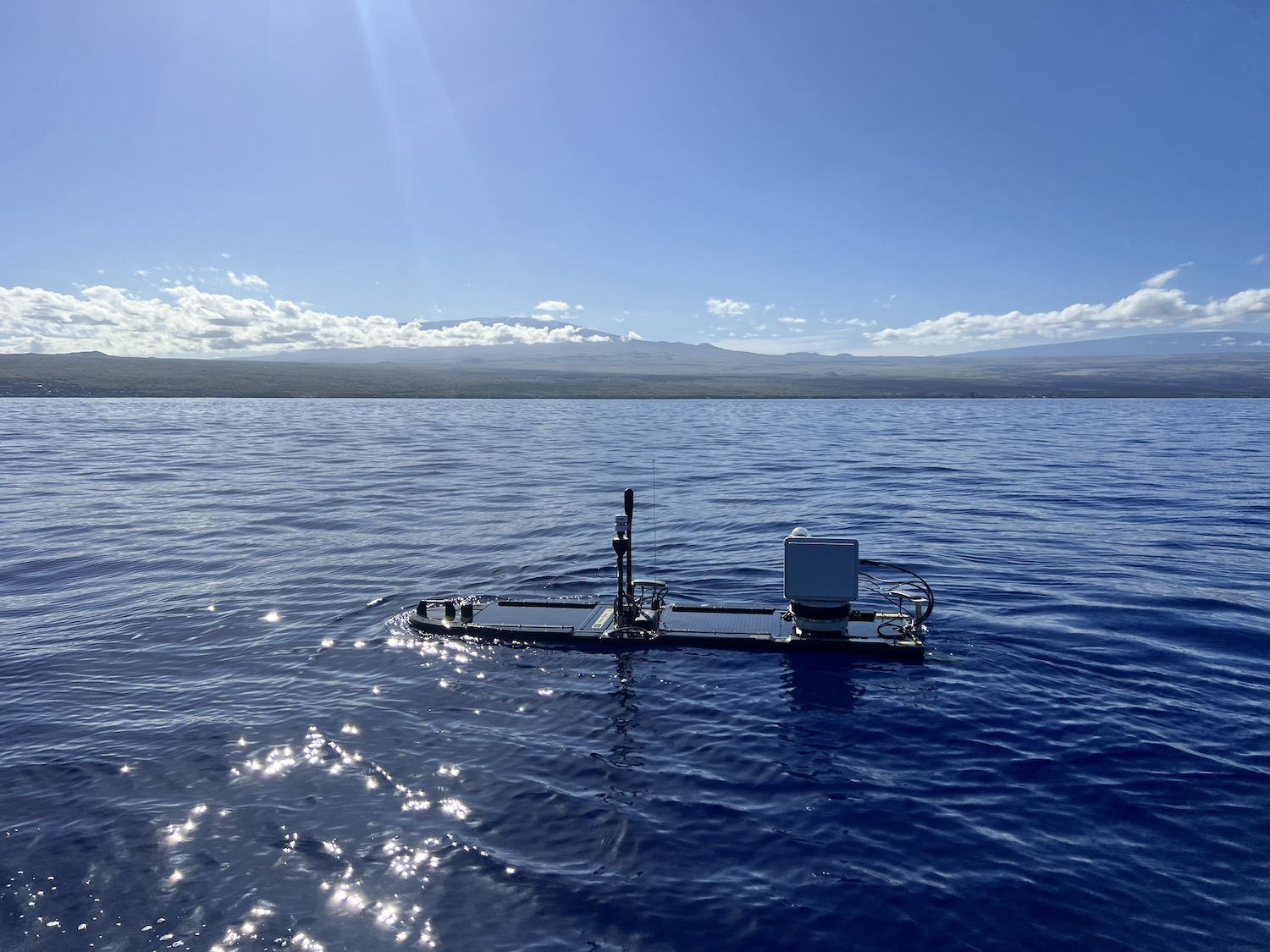
Liquid Robotics operates as a subsidiary of Boeing (BA +4.08%), having been acquired in December 2016. The acquisition positioned Boeing within the rapidly evolving sector of autonomous maritime systems, specifically through the Wave Glider USV, the sole product currently offered by the subsidiary. The Wave Glider is characterized as a low-observable, mobile platform designed for over-the-horizon surveillance, incorporating both surface and subsurface payload capabilities.
Despite its relatively compact size (15 feet in length for the largest variant), the Wave Glider can deploy sonar for underwater threat detection while simultaneously housing sensors and communications equipment for surface and aerial surveillance. Data transmission capabilities are integral to the platform’s functionality. Propulsion is achieved through a combination of solar and wave energy, enabling autonomous operation for up to 12 months. Operational endurance has been demonstrated through a single voyage exceeding 9,300 nautical miles, though maximum speed is limited to two knots.
Implications for Boeing’s Portfolio
While the $25 million Japanese contract constitutes a modest fraction of Boeing’s $89.5 billion annual revenue, it signals a strategic diversification into a potentially high-growth sector. The acquisition of Liquid Robotics appears, in retrospect, to have been predicated on the anticipation of increased demand for autonomous maritime surveillance capabilities.
Historical pricing data indicates that Wave Gliders were previously sold for approximately $300,000 per unit. The current contract implies a substantial increase in per-unit cost, exceeding $830,000. This escalation raises questions regarding manufacturing efficiencies, component costs, and the incorporation of advanced technologies. The increased pricing suggests potential for improved EBITDA margins, contingent upon sustained demand and effective cost management.
The viability of this business line is, however, subject to several factors:
- Geopolitical Risk: Increased global instability may drive demand for enhanced maritime surveillance, benefitting Boeing’s autonomous systems portfolio.
- Technological Advancement: Continued innovation in sensor technology, data analytics, and autonomous navigation is crucial to maintaining a competitive advantage.
- Regulatory Environment: Evolving regulations governing autonomous systems operations may impact deployment strategies and market access.
- Competition: The emergence of competing vendors offering similar USV capabilities could exert downward pressure on pricing and market share.
In conclusion, while the Japanese contract represents a relatively small contribution to Boeing’s overall financial performance, it underscores a strategic initiative with potential for long-term growth. Further analysis is warranted to assess the sustainability of this business line and its contribution to shareholder value.
Read More
- Top 20 Dinosaur Movies, Ranked
- 20 Movies Where the Black Villain Was Secretly the Most Popular Character
- 25 “Woke” Films That Used Black Trauma to Humanize White Leads
- Celebs Who Narrowly Escaped The 9/11 Attacks
- Spotting the Loops in Autonomous Systems
- Gold Rate Forecast
- 22 Films Where the White Protagonist Is Canonically the Sidekick to a Black Lead
- The 10 Most Underrated Jim Carrey Movies, Ranked (From Least to Most Underrated)
- Silver Rate Forecast
- From Bids to Best Policies: Smarter Auto-Bidding with Generative AI
2026-03-07 13:12