Author: Denis Avetisyan
Researchers are leveraging the power of artificial intelligence to dynamically optimize wireless communication signals, potentially unlocking unprecedented levels of spectral efficiency.
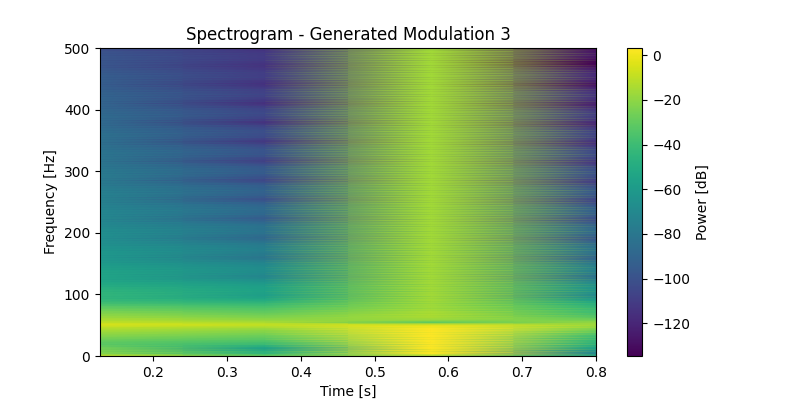
This review explores the application of Transformer models, including GPT-2, to generate and adapt modulation schemes for cognitive radio systems.
Achieving optimal spectral efficiency in dynamic wireless environments remains a significant challenge for cognitive radio systems. This is addressed in ‘Transformer-Based Cognitive Radio: Adaptive Modulation Strategies Using Transformer Models’, which explores the innovative application of Transformer models to automatically generate novel modulation schemes. The research demonstrates that a GPT-2 architecture can produce modulation strategies competitive with, and sometimes exceeding the performance of, traditional methods in terms of signal quality and spectral characteristics. Could this approach unlock a new era of adaptable and robust wireless communication systems capable of intelligently navigating increasingly congested radio frequencies?
The Inherent Limitations of Conventional Spectral Allocation
Traditional modulation techniques, while foundational to wireless communication, are increasingly hampered by spectral inefficiency. Methods like Amplitude Modulation (AM) and Frequency Modulation (FM) prioritize simplicity but sacrifice bandwidth, requiring wider channels for data transmission. Even more advanced schemes, such as Quadrature Amplitude Modulation (QAM), though capable of carrying more information, still exhibit limitations in packing data tightly within the available spectrum. This inefficiency stems from fixed signaling characteristics; these methods don’t dynamically adapt to varying channel conditions or data requirements. Consequently, valuable radio frequencies are underutilized, creating a “spectrum crunch” as demand for wireless services continues to escalate and pushing the need for novel approaches to maximize the use of this finite resource.
The proliferation of wireless devices and data-intensive applications is creating unprecedented demands on the radiofrequency spectrum, a finite natural resource. Current spectrum allocation policies, often based on static licensing, struggle to accommodate this exponential growth and lead to inefficiencies. Researchers are actively exploring dynamic spectrum access techniques, cognitive radio systems, and novel modulation schemes – like Orthogonal Frequency-Division Multiplexing (OFDM) – to improve spectral efficiency. These approaches aim to allow devices to intelligently utilize unused portions of the spectrum, adapt to varying channel conditions, and transmit more data within the same bandwidth. Ultimately, overcoming the spectrum crunch requires a paradigm shift from rigid, centrally-controlled allocation to flexible, adaptive, and intelligent spectrum management strategies to sustain the ever-increasing connectivity of modern life.
Traditional modulation techniques, while foundational to wireless communication, demonstrate limited responsiveness to the ever-changing demands of dynamic radio environments. The rigidity of methods like QPSK-which, under ideal conditions, achieves a Signal-to-Noise Ratio of 15.44 dB coupled with a Bit Error Rate of 0.0001-becomes a significant drawback when faced with interference, fading, or varying channel conditions. This inflexibility necessitates a constant trade-off between reliability and data throughput; as environmental factors shift, performance degrades unless transmission parameters are manually adjusted. Consequently, the pursuit of adaptable modulation schemes represents a critical frontier in wireless technology, aiming to maintain optimal performance across diverse and unpredictable channels without requiring constant recalibration.
Cognitive Radio: An Algorithmic Approach to Spectral Agility
Cognitive Radio (CR) represents a significant departure from traditional static spectrum allocation by allowing wireless devices to intelligently monitor and utilize available radio frequency (RF) bands. Unlike fixed-spectrum systems, CR systems employ spectrum sensing techniques – typically energy detection, feature detection, or cyclostationary feature detection – to identify unoccupied frequencies. This dynamic spectrum access enables CR devices to opportunistically utilize these bands without causing interference to licensed primary users. The core principle is to create a more efficient use of the RF spectrum by adapting transmission parameters – including frequency, modulation, and power – based on real-time environmental analysis. This adaptability aims to improve spectral efficiency, increase network capacity, and enable reliable communication in congested or dynamic radio environments.
Robust spectrum sensing is fundamental to cognitive radio operation, necessitating the reliable detection of unused frequency bands across a wide range of the radio frequency spectrum. This process typically involves techniques like energy detection, feature detection, and cyclostationary feature analysis to differentiate between licensed primary users and available spectrum. Accurate sensing requires overcoming challenges posed by noise, interference, and hidden primary signals; therefore, advanced algorithms and hardware implementations focus on minimizing false alarms and maximizing the probability of detection. The sensitivity and speed of the spectrum sensing directly impact a cognitive radio’s ability to opportunistically utilize available bandwidth without causing harmful interference to existing systems, and is often evaluated using metrics such as receiver operating characteristic (ROC) curves.
To fully leverage the adaptability of Cognitive Radio (CR) systems, modulation schemes must move beyond static techniques like Quadrature Phase-Shift Keying (QPSK) and implement dynamic adjustments based on real-time channel conditions. These advanced schemes incorporate techniques such as adaptive modulation and coding (AMC), where the modulation order (e.g., shifting from QPSK to 16-QAM or 64-QAM) and coding rate are altered to maximize spectral efficiency and maintain link reliability. Performance gains are achieved by selecting the modulation and coding scheme that best matches the instantaneous signal-to-noise ratio (SNR) and channel characteristics, thereby optimizing data throughput and minimizing bit error rates. This dynamic adaptation contrasts with traditional methods that utilize a fixed modulation scheme regardless of fluctuating channel conditions, and aims to improve overall system capacity and robustness in dynamic spectrum access scenarios.
Generative Modulation: Leveraging Language Models for Novel Design
A novel methodology utilizes the GPT-2 Transformer model to generate new modulation schemes. This process involves training GPT-2 on a dataset comprising existing modulation formulas, effectively allowing the model to learn the underlying patterns and relationships defining these schemes. The trained model then generates new formulas, which are evaluated for performance characteristics. This approach differs from traditional modulation design, which relies on manual derivation or exhaustive search algorithms, by leveraging the generative capabilities of a large language model to explore the design space and potentially discover innovative modulation techniques. The generated formulas are expressed mathematically and can be implemented in digital communication systems.
The GPT-2 model’s performance relies on a multi-stage training process initiated with data preprocessing. This stage involves cleaning and formatting a dataset of existing modulation scheme formulas into a tokenized representation suitable for the Transformer model. Specifically, formulas are parsed and converted into sequences of discrete tokens representing mathematical operators, variables, and constants. Data augmentation techniques, including slight variations of existing formulas, are applied to increase the dataset size and improve generalization. Following preprocessing, the model undergoes fine-tuning using a supervised learning approach, where it is trained to predict the next token in a sequence given the preceding tokens. Hyperparameters, such as learning rate and batch size, are optimized through validation on a held-out dataset to minimize prediction loss and ensure optimal performance in generating novel modulation schemes.
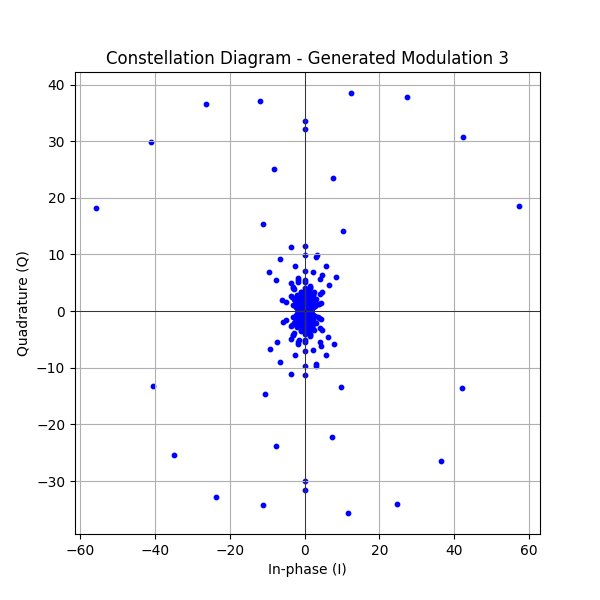
The GPT-2 model, utilizing the Transformer architecture, facilitates exploration of a substantial modulation scheme design space by generating novel formulas based on learned patterns. Evaluations demonstrate the generated schemes can achieve a Signal-to-Noise Ratio (SNR) of up to 20.71 dB. Critically, these generated schemes also maintain a low Bit Error Rate (BER) of 0.0005, indicating reliable performance in transmission. This performance is achieved through the model’s capacity to identify and extrapolate complex relationships within the training dataset, allowing for the creation of modulation schemes with potentially improved characteristics compared to existing designs.
Beyond Conventional Limits: Towards Secure and Adaptive Communication
Cognitive Radio systems traditionally face limitations in spectral efficiency and security, but recent advancements in modulation techniques are poised to redefine their capabilities. These newly generated modulation schemes move beyond conventional methods by dynamically adapting signal characteristics to the surrounding radio environment, allowing for more efficient use of available bandwidth. This adaptability isn’t simply about squeezing more data through the same channels; it also introduces a layer of security by making signals less predictable to unintended recipients. The result is a communication system that not only maximizes throughput but also minimizes the risk of eavesdropping and interference, representing a significant step forward in wireless communication technology and opening doors to more reliable and secure data transmission in increasingly congested spectra.
Adversarial modulation introduces a proactive defense against both eavesdropping and intentional interference in wireless communication. By intentionally crafting signals that appear as noise to unintended recipients, these novel modulation schemes effectively camouflage information. This isn’t simply about obscuring the signal; it’s about creating a signal specifically designed to be misinterpreted by adversaries. The technique leverages the principles of game theory, anticipating potential eavesdropping strategies and adapting the transmitted signal to maximize information security and minimize the impact of interference. Consequently, legitimate receivers, equipped with the appropriate decoding key, can reliably extract the intended message, while malicious parties are presented with unintelligible data, bolstering the confidentiality and integrity of wireless transmissions.
The proposed communication framework demonstrates significant potential when integrated with Deep Reinforcement Learning, enabling dynamic optimization within challenging wireless environments. This synergy allows the system to adapt in real-time, surpassing the performance of traditional Quadrature Phase-Shift Keying (QPSK) modulation. Specifically, simulations reveal an improvement in Signal-to-Noise Ratio (SNR) of 5.27 dB – achieving 20.71 dB compared to QPSK’s 15.44 dB. This substantial gain highlights the capacity of the DRL-enhanced framework to not only navigate interference and noise but also to proactively enhance signal clarity and reliability, paving the way for more robust and efficient wireless communication systems.
The pursuit of adaptive modulation, as demonstrated in this work, aligns with a fundamental principle of reliable systems. Robert Tarjan once stated, “The most effective programs are always the simplest ones.” While the Transformer model itself possesses inherent complexity, its application to generate modulation schemes strives for elegant solutions to spectral efficiency. The research champions a deterministic approach; the model, when presented with the same input, consistently generates predictable outputs, which is crucial for the robustness of wireless communication systems. This predictability allows for verifiable performance, moving beyond merely ‘working on tests’ to a provable solution – a hallmark of true algorithmic purity.
Beyond Signal Shapes
The successful application of Transformer models to modulation scheme design, as demonstrated, is less a breakthrough and more an inevitable consequence of applying sufficient computational force to a fundamentally mathematical problem. The spectral efficiency gains are encouraging, but they sidestep a crucial point: novelty does not equate to optimality. The generated modulation schemes are different, but proving their superiority – beyond empirical benchmarks – requires a more rigorous analytical framework. The field must move past simply measuring performance and towards demonstrating provable advantages in specific channel conditions and noise environments.
A significant limitation lies in the opaque nature of these ‘learned’ modulations. While the model can generate a signal, a complete understanding of why it performs well remains elusive. This lack of interpretability is not merely an academic concern; it hinders the ability to generalize and adapt these schemes to unforeseen circumstances. Future work should prioritize the development of techniques to extract mathematical insights from these models, revealing the underlying principles that govern their effectiveness.
The true test will not be in creating more complex modulation schemes, but in discovering the simplest scheme that satisfies a given set of constraints. Elegance, after all, is not measured in parameters, but in the reduction of complexity. The path forward demands a synthesis of data-driven learning and mathematical formalism – a pursuit of provable, interpretable, and ultimately, beautiful solutions.
Original article: https://arxiv.org/pdf/2601.10519.pdf
Contact the author: https://www.linkedin.com/in/avetisyan/
See also:
- Gold Rate Forecast
- Games That Faced Bans in Countries Over Political Themes
- Silver Rate Forecast
- 15 Films That Were Shot Entirely on Phones
- Unveiling the Schwab U.S. Dividend Equity ETF: A Portent of Financial Growth
- 22 Films Where the White Protagonist Is Canonically the Sidekick to a Black Lead
- 20 Movies Where the Black Villain Was Secretly the Most Popular Character
- The Best Directors of 2025
- Brent Oil Forecast
- Superman Flops Financially: $350M Budget, Still No Profit (Scoop Confirmed)
2026-01-17 12:59