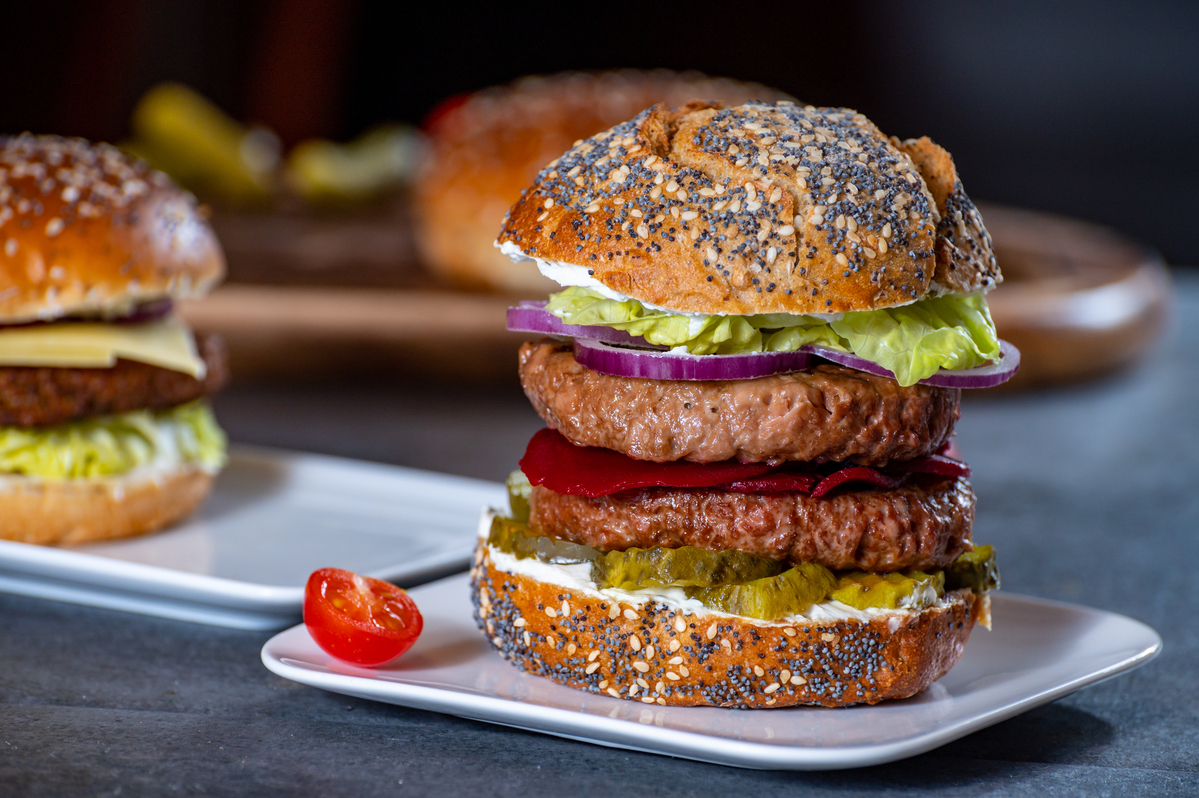
Beyond Meat.1 Once hailed as the harbinger of a future where cows might finally get a day off, it’s now exhibiting all the vibrancy of a forgotten turnip. Investors, it seems, are beginning to suspect that just because something can be made from pea protein doesn’t necessarily mean it should be. The stock, after a brief flirtation with meme-stock glory, is currently performing a rather dramatic impression of a lead balloon. Five years ago, it promised a revolution. Now? It’s mostly just… there.
It’s achieved a curious state of being. It’s not quite successful, not quite failed. It’s hovering in that liminal space reserved for companies that are, shall we say, creatively accounting for reality. A 19% gain year-to-date is less a sign of health and more a testament to the sheer unpredictability of the market – and the enduring power of a good internet joke.
The Debt and the Deliciously Complex Art of Shifting Numbers
Beyond Meat is currently burdened with a debt of $1.2 billion. A sum large enough to make even a dragon consider a second mortgage. The company, with a market capitalization of a mere $445 million, appears to be operating under the optimistic assumption that money grows on pea plants. The recent debt restructuring was, to put it mildly, a performance. A masterclass in moving liabilities around like pieces on a very precarious chessboard.
They swapped $800 million in convertible notes (interest-free, naturally – generosity knows no bounds) for new notes with a 7% APR, due in 2030. And, as a charming little bonus, threw in over 300 million shares. It’s the financial equivalent of saying, “I’ll pay you back… eventually… with these shiny pebbles.” Three extra years. A mere blink in the geological timescale of corporate desperation. The fact that revenue is stubbornly refusing to cooperate with this optimistic timeline is, shall we say, a minor detail.
Expenses and the Inexorable Laws of Thermodynamics (and Accounting)
Revenue has been declining for several years now. A trend that, one suspects, is not easily reversed by sheer force of will. This decline is occurring at the precise moment when net losses are, predictably, increasing. It’s a bit like trying to fill a bucket with a hole in the bottom while simultaneously adding more holes.
Q3 2025 saw a net loss of $110 million. Worse than Q3 2024. The first nine months of 2025 registered a loss of $193 million, compared to $115 million for the same period last year. These aren’t isolated incidents. Operating losses have been a consistent feature of the landscape throughout 2024 and 2025, including a hefty $112 million in Q3. A “remeasurement of warrant liability” – a phrase guaranteed to induce a coma in any auditor – masked the true extent of the operational woes. But beneath the accounting artistry, the fundamental problem remains: they’re spending more than they’re earning.
Operating losses, you see, are simply a reflection of the company’s performance before the accountants get their hands on it. Interest expenses, however, are unavoidable. And will, inevitably, become more pressing at a time when everything else is going wrong. The occasional meme rally might provide a temporary reprieve, but the long-term prognosis is… bleak. One suspects that bankruptcy isn’t a question of if, but when. And the only real mystery is whether the cows will be celebrating.
1 A company dedicated to the production of plant-based meat alternatives. Or, as some cynics might say, cleverly disguised vegetables.
Read More
- Gold Rate Forecast
- Silver Rate Forecast
- 22 Films Where the White Protagonist Is Canonically the Sidekick to a Black Lead
- 15 Films That Were Shot Entirely on Phones
- Unveiling the Schwab U.S. Dividend Equity ETF: A Portent of Financial Growth
- How to Do Sculptor Without a Future in KCD2 – Get 3 Sculptor’s Things
- 20 Movies Where the Black Villain Was Secretly the Most Popular Character
- Brent Oil Forecast
- New HELLRAISER Video Game Brings Back Clive Barker and Original Pinhead, Doug Bradley
- Superman Flops Financially: $350M Budget, Still No Profit (Scoop Confirmed)
2026-01-15 22:32