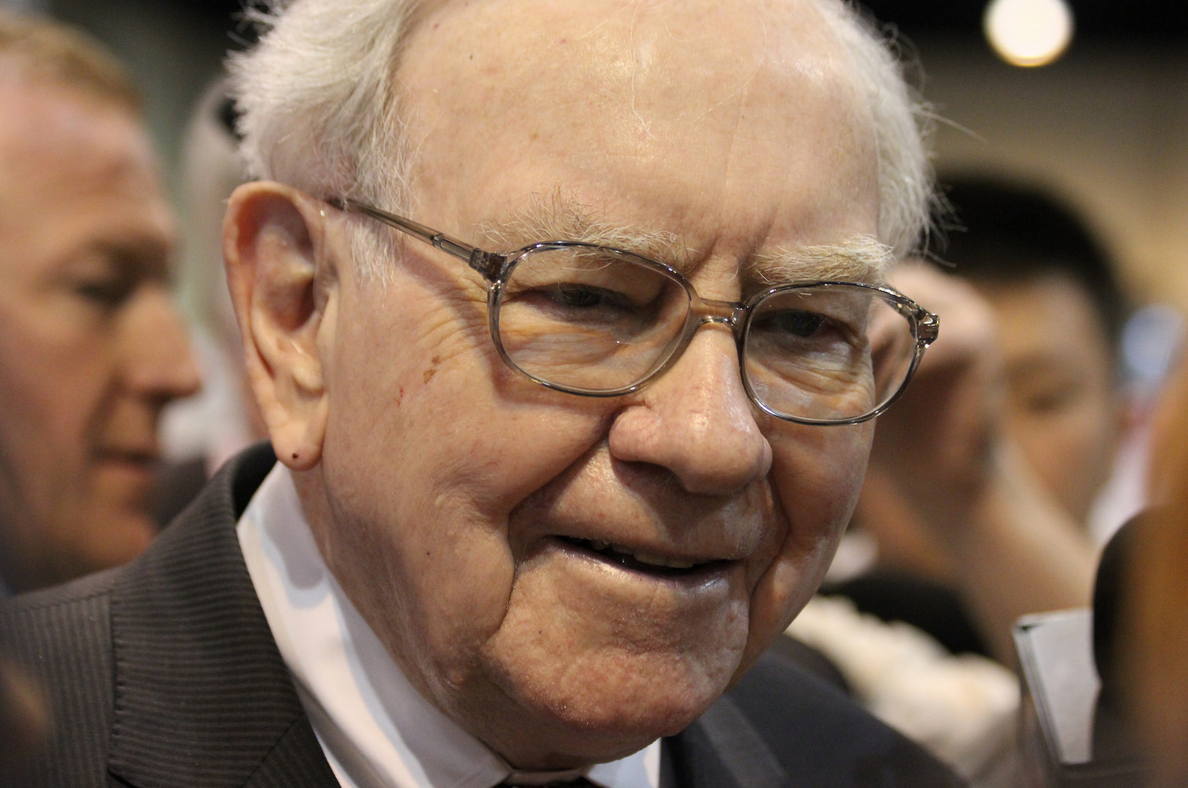
The departure of a founder casts a long shadow, a chill upon the accounts. Warren Buffett, having relinquished the formal mantle at Berkshire Hathaway, remains a spectral presence, a consulter in the dim light of decision. It is not merely a transition of power, but a testament to the enduring weight of accumulated capital, and the anxieties of those now charged with its stewardship. The recent resumption of share repurchases, after a near two-year dormancy, is not a bold stroke, but a careful calibration, a signal sent not to the markets’ exuberance, but to its inherent skepticism.
To repurchase one’s own shares is to acknowledge a dissonance, a perceived undervaluation in the eyes of the wider assemblage. It is a quiet rebuke to the collective judgment, a declaration that the company itself sees worth where others do not. This is not profligacy, nor a desperate attempt to prop up a failing edifice. Rather, it is a calculated act, a measured response to the slow erosion of perceived value, and a tacit affirmation of the principles established during the previous regime. That such a decision required consultation with the former helmsman is not a gesture of respect, but a recognition of the enduring authority of established valuation, a bulwark against the temptations of speculative excess.
The current CEO, Mr. Abel, has confirmed this process – a deferral to the founder’s judgment. This is not leadership, precisely, but a continuation of oversight, a form of institutional memory preserved through direct consultation. It suggests a cautious approach, a reluctance to deviate from the established path, and a deep-seated fear of disrupting the carefully constructed equilibrium. The company’s internal calculus – a determination of intrinsic value – remains the guiding principle, a shield against the capricious winds of market sentiment. To suggest that Buffett approves of this valuation is to imply a continuity of purpose, a reassurance to shareholders that the fundamental principles remain intact, even in the absence of the founder’s direct control.
A Valuation Rooted in Substance
The rationale for these repurchases lies not in accounting artifice, but in the underlying fundamentals of the enterprise. Berkshire Hathaway is not merely a collection of assets, but a complex organism, a conglomerate built upon decades of patient accumulation and shrewd investment. To assess its value is to delve into the labyrinthine structure of its holdings – the insurance operations, the railroad, the diversified energy businesses, the vast equities portfolio. A price-to-book ratio of 1.5, while seemingly modest, represents a reasonable assessment of this sprawling empire, a margin of safety against unforeseen contingencies.
The company’s operating earnings, robust at $44.5 billion in the last fiscal year, provide further validation. This is not a fleeting surge of profit, but a sustained level of performance, a testament to the underlying strength of the constituent businesses. A price-to-earnings multiple of 24 times this figure, while not negligible, is arguably attractive for an enterprise of this caliber, a reflection of its stability and long-term growth potential. The sheer scale of Berkshire’s cash hoard – exceeding $370 billion – and its equity portfolio – valued at approximately $300 billion – further enhances its allure, providing a cushion against economic downturns and the capacity for future acquisitions.
To deploy capital in this manner – to repurchase shares at this valuation – is not merely a financial calculation, but a demonstration of confidence, a signal to the market that the company believes its shares are undervalued. It is a recognition that the true worth of Berkshire Hathaway lies not in its market capitalization, but in the underlying assets and the enduring strength of its operating businesses. This is not speculation, but a grounded assessment, rooted in the principles of value investing.
The Illusion of Optionality
Some may argue that a return to share repurchases signals a lack of compelling investment opportunities. That with a vast cash pile, Berkshire should be deploying capital in more ambitious ventures. But this is a simplistic view, a failure to appreciate the complexities of capital allocation. Mr. Abel rightly points out that share repurchases are not mutually exclusive from other options. The company can simultaneously buy back its own shares, reinvest in existing businesses, acquire publicly traded equities, or pursue large-scale acquisitions. The war chest is ample enough to accommodate all of these priorities, if the right opportunities arise.
But to believe that such opportunities will materialize is to succumb to a dangerous illusion. The market is a relentless force, constantly seeking out undervalued assets. To find truly compelling investments requires patience, discipline, and a willingness to defy conventional wisdom. And in an era of rampant speculation and inflated valuations, such opportunities are increasingly rare. To repurchase shares, therefore, is not a sign of desperation, but a prudent allocation of capital in a challenging environment.
The resumption of share repurchases is, ultimately, a positive development for shareholders. It demonstrates that the new leadership is willing to act when the price is right, and it confirms that the fundamental principles of value investing remain intact. For investors seeking a durable business with a meaningful margin of safety, Berkshire Hathaway remains a compelling place to park capital. To buy shares alongside the company’s own repurchase program is a prudent move for long-term investors.
There are, of course, risks. If investors decide that Berkshire no longer deserves to trade at a premium to book value in a post-Buffett era, shares could underperform. But to believe that this will happen is to underestimate the enduring strength of the enterprise, and the legacy of its founder. Buffett has built something that could produce exceptional results over the long haul, a testament to the power of patient investing and disciplined capital allocation.
Read More
- 20 Movies Where the Black Villain Was Secretly the Most Popular Character
- Celebs Who Narrowly Escaped The 9/11 Attacks
- Top 20 Dinosaur Movies, Ranked
- 25 “Woke” Films That Used Black Trauma to Humanize White Leads
- Transformers Under the Microscope: What Graph Neural Networks Reveal
- The 10 Most Underrated Jim Carrey Movies, Ranked (From Least to Most Underrated)
- 22 Films Where the White Protagonist Is Canonically the Sidekick to a Black Lead
- Trading on Thin Air: AI Agents Conquer Crypto Volatility
- The Best Directors of 2025
- Gold Rate Forecast
2026-03-12 08:52