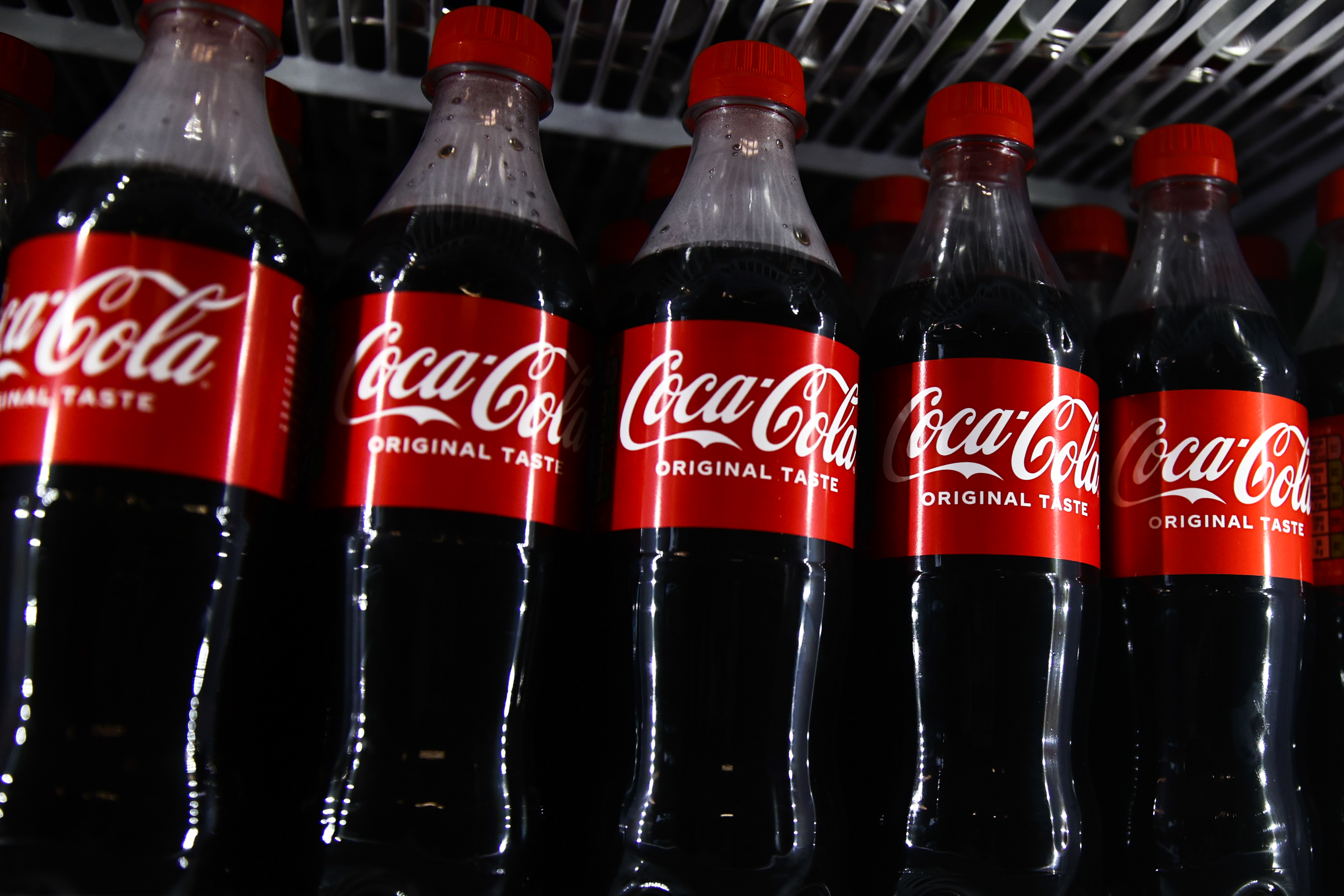
Right. So, Berkshire Hathaway. A company that, let’s be honest, mostly exists to accumulate things. And then accumulate more things. It’s a bit like a particularly industrious amoeba, but with better accountants. Specifically, they’ve been accumulating shares in Coca-Cola and American Express for, oh, several decades now. Nearly forty years, in fact. Which, when you consider the sheer, baffling randomness of existence, is frankly astonishing. Warren Buffett, the previous custodian of this particular hoard, declared he’d never sell them. A remarkably firm statement, considering the universe is constantly trying to convince everything to fall apart. Now, Greg Abel is at the helm, and he’s reassuringly not planning to dismantle the entire operation. Which is good. For everyone, probably.
In his first dispatch as CEO (a rather formal term, when you think about it – dispatch. Sounds like carrier pigeons are involved), Abel highlighted the dividend income from these long-held positions. The numbers, it turns out, are… substantial. Enough to make you question the very nature of money, and whether it isn’t, in fact, just a collective hallucination. But let’s not dwell on existential crises just yet. Let’s talk about the cash.
Dividend Yield and the Persistence of Time
Berkshire first acquired American Express stock back in 1964 – a year when things were, by all accounts, even stranger than they are now – and Coca-Cola in 1988. They’ve been steadily adding to those positions ever since, particularly in the mid-90s when they spent around $1.3 billion on each. (That’s a lot of fizzy drinks and credit card transactions, when you think about it.) Today, those holdings are worth a combined $84 billion. A truly remarkable figure, when you consider that most things, given enough time, tend to decay into dust.
The performance of the stocks themselves is, of course, commendable. But it’s the annual dividends that are really rather interesting. In 2025 alone, Berkshire received $816 million from Coca-Cola and $479 million from American Express. That’s a considerable sum. Enough to buy a small country, or perhaps a very large collection of rubber ducks. And, crucially, it’s increasing every year. (Which is fortunate, because everything else seems to be getting more expensive.)
Now, here’s where it gets a little bit… peculiar. Consider the cost basis. While Coca-Cola currently yields 2.6%, Berkshire’s actual yield is based on what they originally paid for the shares. They acquired around 400 million shares at an average cost of $3.25 each. The current dividend is $2.12 per share, resulting in an effective yield of… 65%. Yes, you read that correctly. Sixty-five percent. At this rate, Berkshire will soon be receiving more in dividends than they initially invested. It’s almost as if they discovered a loophole in the fabric of reality. (Don’t tell anyone.)
American Express is a similar story. Berkshire owns 151 million shares, with a cost basis of $8.60 per share. The annual dividend of $3.80 translates to a yield on cost of 44%. It’s a bit like planting a seed and then, decades later, harvesting a small planet. (Metaphorically speaking, of course.)
This dividend income isn’t just pocket change for Berkshire. It provides management with a substantial pool of capital, which they can use for acquisitions, investments, or simply… more accumulation. (See above.)
It’s Not Just About the Fizzy Drinks and Plastic Cards
Abel also highlighted Apple and Moody’s as other key holdings. Apple’s dividend yield isn’t particularly impressive (they’re more focused on designing expensive rectangles), and Berkshire has been selling off some of its shares. However, their cost basis on Moody’s stock is a hefty 42%. Apparently, predicting credit ratings is a surprisingly lucrative business.
Abel described these four companies as businesses they “understand well, have a high regard for their leaders, and expect will compound over decades.” A remarkably understated way of saying “we’re betting these companies will continue to generate profits for a very long time.” It’s a strategy that seems to be working, although it does require a certain amount of faith in the inherent stability of… well, everything. (A surprisingly difficult thing to maintain, given the aforementioned tendency of everything to fall apart.)
The compounding effect of dividend income, over time, can be quite substantial. When evaluating a dividend stock, it’s crucial to look beyond the current yield and consider the potential for growth and reliability. Coca-Cola, for example, has raised its dividend annually for the past 63 years. That’s a remarkable streak, and it provides a clear illustration of the power of long-term investing. And, perhaps, a subtle reminder that even in a chaotic universe, some things can, surprisingly, endure.
Read More
- Top 20 Dinosaur Movies, Ranked
- 20 Movies Where the Black Villain Was Secretly the Most Popular Character
- Celebs Who Narrowly Escaped The 9/11 Attacks
- 25 “Woke” Films That Used Black Trauma to Humanize White Leads
- Spotting the Loops in Autonomous Systems
- The 10 Most Underrated Jim Carrey Movies, Ranked (From Least to Most Underrated)
- The Best Directors of 2025
- Gold Rate Forecast
- Transformers Under the Microscope: What Graph Neural Networks Reveal
- Every Notable ‘Star Trek: The Original Series’ Actor Who Died
2026-03-10 15:22