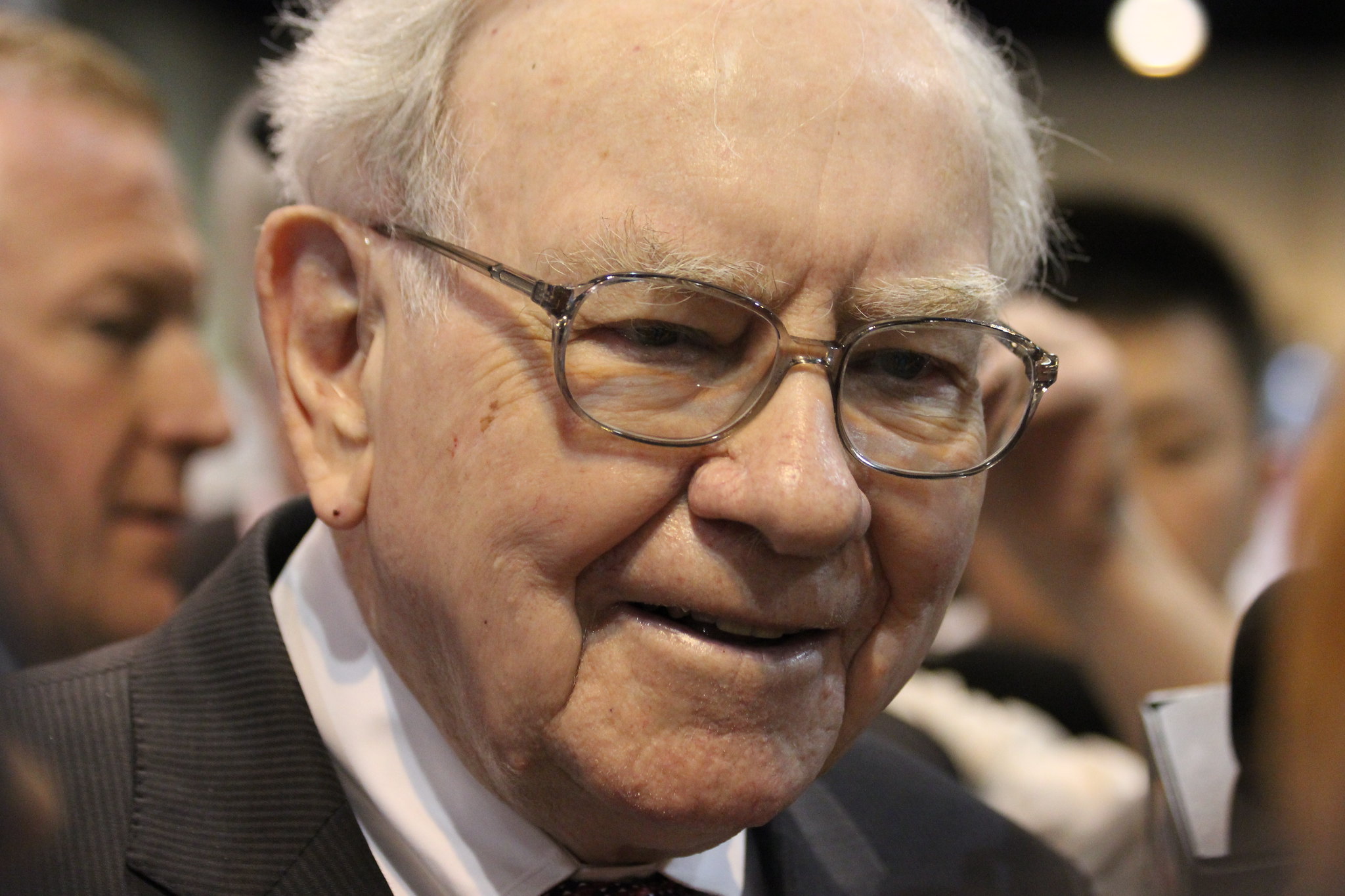
The question of whether a ten-thousand-dollar investment in Berkshire Hathaway might yield a million dollars is, predictably, simplistic. It is a question that appeals to the hope for easy wealth, a sentiment as old as markets themselves. While not impossible, to present it as a mere matter of time and compounding is to ignore the realities of capital accumulation, and the diminishing returns inherent in any large enterprise.
Over sixty years, Mr. Buffett steered Berkshire Hathaway to a growth rate substantially exceeding the broader market. The S&P 500, a benchmark of American industry, saw a roughly thirty-nine-thousand percent increase. Berkshire, however, achieved a staggering five million, five hundred thousand percent. These figures are often cited, but they belong to a different era. To extrapolate such growth into the future is a dangerous fallacy. The base from which Berkshire expanded was small; now it is a behemoth, and the laws of physics – or, in this case, economics – apply with greater force.
The Illusion of Easy Returns
The notion that a single ten-thousand-dollar investment, left to compound at twenty percent annually for twenty-five years, will reliably produce a million dollars is, frankly, irresponsible. It fosters a passive mindset, a belief in effortless wealth. While mathematically correct under those specific conditions, it ignores the inevitable fluctuations of the market, the impact of unforeseen events, and the simple truth that exceptional performance rarely endures indefinitely.
Over the past five years, Berkshire has averaged annual gains of fourteen point eight percent – respectable, but below its long-term average. This deceleration is not a cause for panic, but a signal that the company, like any other, is subject to the constraints of scale. To expect past performance to dictate future results is a common error, particularly amongst those who lack a clear understanding of the forces at play.
Consider the following, not as a prediction, but as an illustration of the power of consistent investment, even at more modest rates. These figures assume a monthly contribution of one thousand dollars, a discipline far more likely to yield positive results than a single, speculative bet.
| Investing $1,000 per month ($12,000 annually) for | Growing at 8% annually | Growing at 10% annually | Growing at 12% annually |
|---|---|---|---|
| Five years | $70,399 | $73,261 | $76,234 |
| 10 years | $173,839 | $191,249 | $210,585 |
| 15 years | $325,825 | $381,270 | $447,357 |
| 20 years | $549,144 | $687,300 | $864,629 |
| 25 years | $877,271 | $1,180,165 | $1,600,006 |
| 30 years | $1,359,399 | $1,973,928 | $2,895,992 |
| 35 years | $2,067,802 | $3,252,292 | $5,179,962 |
| 40 years | $3,108,678 | $5,311,111 | $9,205,097 |
Diligent, consistent investment, even at a conservative eight percent, can indeed accumulate a substantial sum. This is not a promise of riches, but a statement of mathematical probability. It requires discipline, patience, and a realistic assessment of risk.
The Value of a Diversified Holding
Why invest in Berkshire Hathaway? Not because it is a guaranteed path to wealth, but because it offers a degree of stability in an inherently unstable world. It is a conglomerate, owning dozens of businesses – GEICO, Benjamin Moore, NetJets, the BNSF railway – and substantial stakes in companies like Occidental Petroleum, American Express, Coca-Cola, and Bank of America. This diversification provides a buffer against the vagaries of any single industry or market sector.
With Mr. Buffett’s recent stepping back, Greg Abel now holds the reins. This transition should not be a cause for concern. He has been groomed for this role for years and understands the company’s philosophy and operations. Continuity of leadership is a valuable asset in any organization.
Berkshire shares are not cheap, but they are reasonably valued, with a forward price-to-earnings ratio of twenty-two, slightly above its five-year average. The company does not pay a dividend, but a change in this policy under Mr. Abel’s leadership is not inconceivable.
If you are inclined, a closer examination of Berkshire Hathaway is warranted. Consider it as one component of a well-diversified portfolio, a long-term holding with a history of stability and a reasonable expectation of continued growth. Avoid the allure of quick riches. True wealth is built through consistent effort, informed decisions, and a healthy dose of skepticism.
Read More
- Top 20 Dinosaur Movies, Ranked
- 20 Movies Where the Black Villain Was Secretly the Most Popular Character
- 25 “Woke” Films That Used Black Trauma to Humanize White Leads
- Silver Rate Forecast
- Gold Rate Forecast
- Spotting the Loops in Autonomous Systems
- From Bids to Best Policies: Smarter Auto-Bidding with Generative AI
- 22 Films Where the White Protagonist Is Canonically the Sidekick to a Black Lead
- Celebs Who Narrowly Escaped The 9/11 Attacks
- Can AI Lie with a Picture? Detecting Deception in Multimodal Models
2026-03-05 00:22